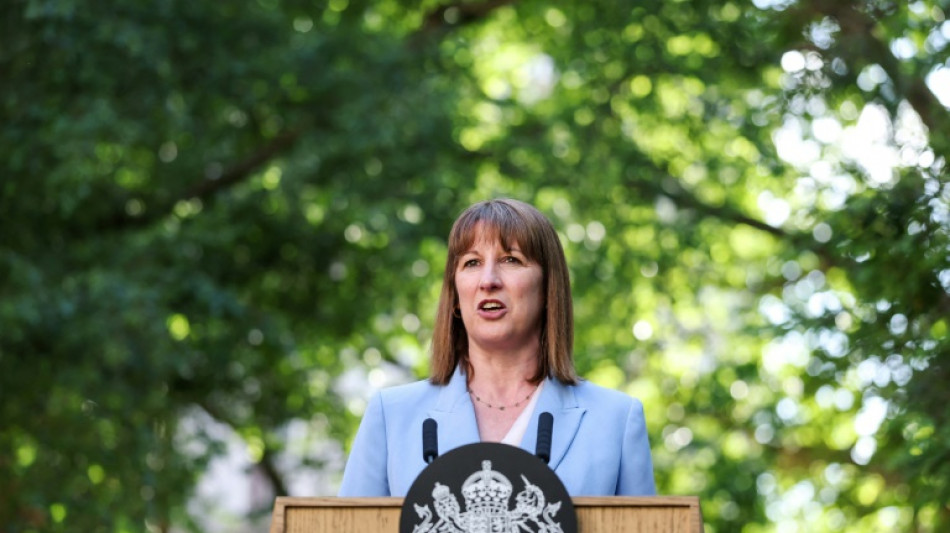
UK expected to boost defence, health in major spending review / Photo: © POOL/AFP

Britain's Labour government will unveil its day-to-day spending and investment plans for the coming years on Wednesday, with big funding increases to defence and healthcare expected, along with cuts elsewhere.
Finance minister Rachel Reeves is set to address parliament around midday, outlining her spending review in the hopes of boosting the country's sluggish growth, which risks added pressure from US President Donald Trump's tariffs onslaught.
Ahead of her speech, Reeves said the government would invest in security, health and the economy "so working people all over our country are better off".
She also promised to "invest in Britain's renewal".
Defence and the struggling National Health Service (NHS) are set for a funding boost, which leaves other ministries facing cuts.
Reeves, the chancellor of the exchequer, has amended her fiscal rules to allow the government more headroom for investment in the run-up to the spending review.
At the same time, she is looking to balance the books so that tax revenues match day-to-day spending, meaning the government borrows only to invest.
The minister has allowed the Treasury to borrow more, particularly for infrastructure projects across the vital housing and energy sectors.
This has handed her a windfall of £113 billion ($153 million) over five years.
- 'Balance the books' -
Ahead of the review, the government pledged billions of pounds for Britain's nuclear industry, notably for a new nuclear power plant, Sizewell C.
Citing Russia's invasion of Ukraine, the UK has already announced it will increase its defence budget to 2.5 percent of economic output by 2027 -- and up to 3.0 percent by 2034, helped by cutting international aid.
While the NHS is expected to receive a generous funding boost, £86 billion has also been earmarked for science and technology by 2030.
Public transport in England's urban regions will see investment more than double to over £15 billion by the end of the decade.
The government also recently reversed a policy to scrap a winter heating benefit for millions of pensioners following widespread criticism, including from within its own party.
And it announced late on Tuesday that Reeves was expected to confirm £39 billion for a programme to build affordable homes over the next 10 years, and "deliver the 1.5 million homes this country needs".
But the increased spending leaves other government departments facing funding squeezes.
Reeves "will need to balance the books by making cuts to unprotected department budgets", said Joe Nellis, economic adviser at consultancy MHA.
He suggested areas including the Home Office, transport, local authorities, the police or prisons.
The Treasury has reportedly clashed with the interior ministry, particularly regarding the police budget, as well as with the energy department amid fears for the UK's carbon reduction commitments.
Reeves has already announced drastic cuts to public budgets in recent months amid tight fiscal conditions.
Since Labour won power last July, ending years of rule by the Conservatives, it has made cuts to disability welfare payments, hoping to save more than £5 billion by 2030.
While Britain's economy beat forecasts in the first quarter to grow by 0.7 percent, analysts have cautioned that the bumper growth will likely not be sustained.
"If growth fails to emerge, then she (Reeves) will either have to cut further areas of public sector spending or raise taxes again in this year's Autumn Budget," said Nellis.
T.M.Dan--TFWP