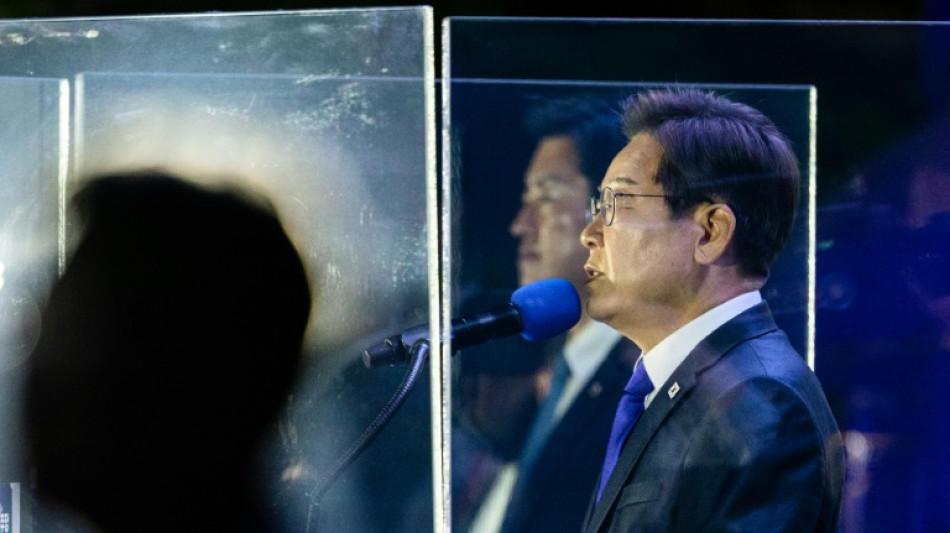
The challenges facing South Korea's new leader Lee / Photo: © AFP

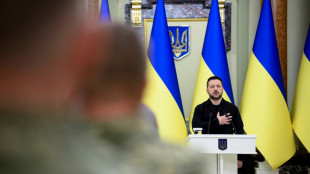
South Korea's incoming president Lee Jae-myung assumes office with a bulging in-tray, from a deepening economic slump and global trade war to mounting concerns over military ties between Pyongyang and Moscow.
He will also have to navigate a mounting superpower standoff between the United States, South Korea's traditional security guarantor, and China, its largest trade partner.
AFP takes a look at the new president's substantial to-do list:
- Trade tensions -
Chief among Lee's priorities will be steering South Korea's export-dependent economy -- Asia's fourth largest -- through economic turmoil sparked by US President Donald Trump and tariffs he has imposed on trading partners.
In the first quarter of the year, South Korea's economy grew less than expected as the export giant and chip powerhouse reeled from global economic tensions and chaos at home sparked by then-president Yoon Suk Yeol's brief imposition of martial law in December.
But Lee is seen by his supporters as a pragmatic and effective negotiator, with over a decade of experience as a city mayor and provincial governor.
On the campaign trail, Lee said Seoul needs to "start negotiations on tariffs immediately" with the Trump administration, promising to put "national interest first."
But he has stressed "there's no need for us to rush into a deal."
He also said it was crucial to diversify South Korea's export markets and products.
- Nefarious neighbour -
Lee's Democratic Party has taken a relatively dovish approach to the nuclear-armed North in the past, with former president Moon Jae-in holding several historic summits with Pyongyang's leader Kim Jong Un -- and Trump.
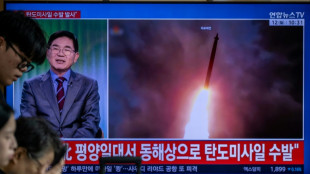
But Moon's efforts to normalise ties failed and Pyongyang has since bolstered relations with Russia, sent at least 14,000 troops to help Moscow's war in Ukraine, and declared the South its enemy state.
Lee has hinted that he will take a different approach compared to hawkish Yoon, under whom inter-Korean ties fell to their worst point in years.
On the campaign trail, Lee accused Yoon of deliberately provoking the North to justify his martial law bid -- prompting backlash from conservatives.
Under Yoon, Pyongyang blew up roads and railways connecting it to the South and erected what looked like walls near the border.
"Wasn't it out of fear that the South might push up with tanks that North Korea built those tank barriers?" Lee said.
- Superpower standoff -
Lee's tenure begins as Seoul finds itself in the middle of a growing superpower standoff between the US, its traditional security guarantor, and China, its largest trade partner.
US Secretary of Defense Pete Hegseth in May warned Beijing was "credibly preparing to potentially use military force to alter the balance of power in the Indo-Pacific".
He called on US allies in Asia such as Seoul to boost their defences in the face of mounting threats.
Lee, however, has suggested Seoul should pursue friendlier ties with Beijing, a long-time backer of Pyongyang.
He drew backlash last year by saying he would say "xie xie" -- thank you in Chinese -- to both China and the self-ruled island of Taiwan in the event of a conflict involving the two.
When asked during the campaign by TIME magazine whether he would come to Taiwan's aid if it were attacked by Beijing, Lee said: "I will think about that answer when aliens are about to invade the earth."
- Polarised politics -
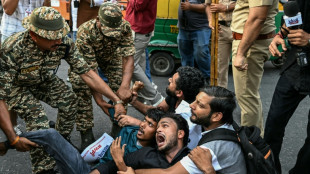
Lee must also lead a nation still reeling from the political turmoil triggered by Yoon's attempted martial law in December, and deeply divided.
If the new administration too aggressively goes after the conservatives, it will "only galvanise the far-rightists, ultimately undermining efforts to reduce political polarisation," Gi-Wook Shin, a sociology professor at Stanford University, told AFP.
During the campaign, Lee said he would push to amend the constitution to make it harder to impose martial law.
He also said it was necessary to launch a special investigation to identify those who may have been complicit with Yoon's bid to end civilian rule.
- Birth rate bottomed-out -
Lee's administration will also have to deal with one of the world's lowest birth rates, a soaring cost of living and growing inequality.
During the campaign, Lee said the younger generation's "sense of hopelessness" and deepening inequality was the main cause of South Korea's declining fertility rate.
Many young Koreans are not confident that "their children's lives will be any better than their own".
Lee has pledged to create a shorter work week, extend the retirement age, expand state-led care services for children, the disabled and the elderly, offer more housing options and increased support for small businesses and young Koreans, among others.
A.Williams--TFWP