The Fort Worth Press - Oil and gas emissions up to three times what is reported: monitor

USD -
AED 3.672504
AFN 63.000368
ALL 82.776172
AMD 376.396497
ANG 1.790083
AOA 917.000367
ARS 1391.503978
AUD 1.422273
AWG 1.8025
AZN 1.70397
BAM 1.687271
BBD 2.010611
BDT 122.494932
BGN 1.709309
BHD 0.377087
BIF 2954.923867
BMD 1
BND 1.276711
BOB 6.898158
BRL 5.313404
BSD 0.998318
BTN 93.32787
BWP 13.612561
BYN 3.028771
BYR 19600
BZD 2.007764
CAD 1.37265
CDF 2275.000362
CHF 0.78844
CLF 0.023504
CLP 928.050396
CNY 6.886404
CNH 6.906095
COP 3669.412932
CRC 466.289954
CUC 1
CUP 26.5
CVE 95.125739
CZK 21.149204
DJF 177.768192
DKK 6.457504
DOP 59.25894
DZD 132.24804
EGP 51.758616
ERN 15
ETB 157.330889
EUR 0.862704
FJD 2.21445
FKP 0.749593
GBP 0.749681
GEL 2.71504
GGP 0.749593
GHS 10.882112
GIP 0.749593
GMD 73.503851
GNF 8750.377432
GTQ 7.646983
GYD 208.85994
HKD 7.83525
HNL 26.423673
HRK 6.511304
HTG 130.966657
HUF 339.680388
IDR 16956.2
ILS 3.109125
IMP 0.749593
INR 94.01055
IQD 1307.768624
IRR 1315625.000352
ISK 124.270386
JEP 0.749593
JMD 156.839063
JOD 0.70904
JPY 159.240385
KES 129.327524
KGS 87.447904
KHR 3989.129966
KMF 427.00035
KPW 900.029607
KRW 1505.310383
KWD 0.30657
KYD 0.831903
KZT 479.946513
LAK 21437.260061
LBP 89404.995039
LKR 311.417849
LRD 182.685589
LSL 16.84053
LTL 2.95274
LVL 0.60489
LYD 6.39089
MAD 9.328473
MDL 17.385153
MGA 4162.53289
MKD 53.176897
MMK 2098.81595
MNT 3568.179446
MOP 8.05806
MRU 39.961178
MUR 46.510378
MVR 15.460378
MWK 1731.096062
MXN 17.898204
MYR 3.939039
MZN 63.903729
NAD 16.84053
NGN 1356.250377
NIO 36.733814
NOK 9.569995
NPR 149.324936
NZD 1.712622
OMR 0.384504
PAB 0.998318
PEN 3.451408
PGK 4.309192
PHP 60.150375
PKR 278.721304
PLN 3.69475
PYG 6520.295044
QAR 3.65052
RON 4.401504
RSD 101.324246
RUB 82.822413
RWF 1452.529871
SAR 3.754657
SBD 8.05166
SCR 13.69771
SDG 601.000339
SEK 9.344038
SGD 1.282504
SHP 0.750259
SLE 24.575038
SLL 20969.510825
SOS 570.504249
SRD 37.487504
STD 20697.981008
STN 21.136177
SVC 8.734849
SYP 110.711277
SZL 16.845965
THB 32.908038
TJS 9.588492
TMT 3.51
TND 2.948367
TOP 2.40776
TRY 44.252504
TTD 6.773066
TWD 32.036704
TZS 2595.522581
UAH 43.73308
UGX 3773.454687
UYU 40.227753
UZS 12170.987361
VES 454.69063
VND 26312
VUV 118.849952
WST 2.727811
XAF 565.894837
XAG 0.01471
XAU 0.000222
XCD 2.70255
XCG 1.799163
XDR 0.703792
XOF 565.894837
XPF 102.885735
YER 238.603589
ZAR 17.12748
ZMK 9001.203584
ZMW 19.491869
ZWL 321.999592
  • CMSD

    -0.2420

    22.658

    -1.07%

  • BCE

    0.0600

    25.79

    +0.23%

  • CMSC

    -0.2000

    22.65

    -0.88%

  • GSK

    -0.5300

    51.84

    -1.02%

  • BCC

    -1.5600

    68.3

    -2.28%

  • RIO

    -2.5000

    83.15

    -3.01%

  • AZN

    -5.3300

    183.6

    -2.9%

  • RBGPF

    -13.5000

    69

    -19.57%

  • BTI

    -1.3500

    57.37

    -2.35%

  • NGG

    -3.5400

    81.99

    -4.32%

  • JRI

    -0.3900

    11.77

    -3.31%

  • RYCEF

    -1.2600

    15.34

    -8.21%

  • RELX

    -0.4600

    33.36

    -1.38%

  • BP

    -1.0800

    44.78

    -2.41%

  • VOD

    -0.0900

    14.33

    -0.63%

Oil and gas emissions up to three times what is reported: monitor
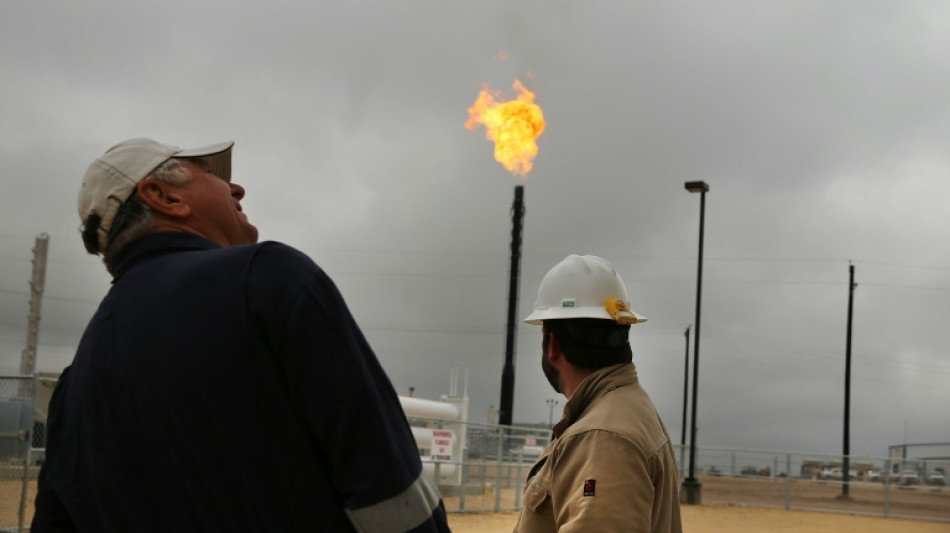
Oil and gas emissions up to three times what is reported: monitor / Photo: © GETTY IMAGES NORTH AMERICA/AFP/File

Oil and gas emissions up to three times what is reported: monitor

Planet-heating emissions from oil and gas production could be three times higher than reported, according to a satellite monitoring project launched Wednesday that the UN chief said made it harder to "cheat".

Text size:

The new tool -- unveiled at United Nations COP27 climate talks in Egypt -- has pinpointed more than 70,000 sites spewing emissions into the atmosphere.

The project, run by a group of research institutions, charities and companies, monitors sites including heavy industry, energy production, agriculture, transport, waste and mining.

Using artificial intelligence to analyse data from more than 300 satellites, as well as thousands of sensors on land and in the sea, the Climate TRACE monitor found that the top 14 largest emitters are all oil and gas extraction sites.

Of those, the biggest emitter on the planet is the Permian Basin in Texas -- one of the largest oilfields in the world -- said former US vice president Al Gore, a project founder.

"With new data on methane and flaring, we now estimate that the actual emissions are three times higher than what they have reported," Gore said.

Flaring is the burning off of unwanted natural gas from oil and gas wells.

Methane, emitted by leaks from fossil fuel installations as well as from other human-caused sources like livestock and landfills, is responsible for roughly 30 percent of the global rise in temperatures to date.

Dozens of countries last year pledged to act to cut pollution from the potent greenhouse gas.

- 'Wake-up call' -

United Nations chief Antonio Guterres praised the initiative for shining a light on actual emissions using direct observations.

"You are making it more difficult to greenwash or -- to be more clear -- to cheat," he said.

"This should be a wake-up call to governments and the financial sector, especially those that continue to invest in and underwrite fossil fuel pollution," he said.

Climate TRACE first determined what industrial activity was at a given site and therefore what type of emissions to look for, said Gavin McCormick, another co-founder and director of the US environmental technology nonprofit WattTime.

Every time a satellite passes over, they can then interpret "what are we seeing".

Gore, a Nobel Peace Prize winner for his climate advocacy, said the top 500 sources identified emit more per year than the United States -- and half of the pollution is from power plants.

All the data from the project is available free online at climatetrace.org to increase "transparency, collaboration and accountability for climate action", Gore added.

The International Energy Agency has decried the enormous amount of methane that leaks from fossil fuel operations, estimating the amount lost last year globally was broadly similar to all the gas used in Europe's power sector.

In October, NASA said a methane plume about two miles (3.3 kilometres) long was detected southeast of Carlsbad, New Mexico, in the Permian Basin.

D.Ford--TFWP