The Fort Worth Press - Plastic gobbling enzymes in worm spit may help ease pollution

USD -
AED 3.672503
AFN 65.999496
ALL 81.915831
AMD 380.151858
ANG 1.79008
AOA 916.99977
ARS 1451.999703
AUD 1.427022
AWG 1.8
AZN 1.706428
BAM 1.655536
BBD 2.022821
BDT 122.831966
BGN 1.67937
BHD 0.377002
BIF 2987.661537
BMD 1
BND 1.276711
BOB 6.964795
BRL 5.238302
BSD 1.004342
BTN 91.842522
BWP 13.228461
BYN 2.875814
BYR 19600
BZD 2.019858
CAD 1.36725
CDF 2155.00032
CHF 0.77799
CLF 0.021809
CLP 861.120171
CNY 6.946504
CNH 6.93417
COP 3629
CRC 498.70812
CUC 1
CUP 26.5
CVE 93.33655
CZK 20.617801
DJF 178.843207
DKK 6.33358
DOP 63.484264
DZD 129.987042
EGP 46.969403
ERN 15
ETB 156.676691
EUR 0.847956
FJD 2.20125
FKP 0.732491
GBP 0.73187
GEL 2.695045
GGP 0.732491
GHS 11.012638
GIP 0.732491
GMD 73.493234
GNF 8819.592694
GTQ 7.706307
GYD 210.120453
HKD 7.813865
HNL 26.532255
HRK 6.386498
HTG 131.728867
HUF 322.696025
IDR 16768
ILS 3.08755
IMP 0.732491
INR 90.31255
IQD 1315.670299
IRR 42125.000158
ISK 122.96017
JEP 0.732491
JMD 157.811362
JOD 0.709027
JPY 155.895503
KES 129.250232
KGS 87.450108
KHR 4046.744687
KMF 417.999643
KPW 899.987247
KRW 1449.299107
KWD 0.30739
KYD 0.836906
KZT 507.178168
LAK 21598.652412
LBP 89531.701448
LKR 311.010475
LRD 186.300651
LSL 16.079552
LTL 2.95274
LVL 0.60489
LYD 6.345176
MAD 9.158604
MDL 17.00314
MGA 4482.056104
MKD 52.273363
MMK 2100.119929
MNT 3568.429082
MOP 8.079484
MRU 39.911729
MUR 45.889979
MVR 15.449808
MWK 1742.758273
MXN 17.32664
MYR 3.932498
MZN 63.750072
NAD 16.079688
NGN 1393.90972
NIO 36.985739
NOK 9.686145
NPR 147.062561
NZD 1.657235
OMR 0.384506
PAB 1.004342
PEN 3.382683
PGK 4.306869
PHP 59.093501
PKR 281.341223
PLN 3.57981
PYG 6677.840135
QAR 3.671415
RON 4.320801
RSD 99.594009
RUB 76.950025
RWF 1469.427172
SAR 3.750281
SBD 8.058101
SCR 13.898006
SDG 601.499792
SEK 8.946297
SGD 1.27098
SHP 0.750259
SLE 24.474984
SLL 20969.499267
SOS 574.437084
SRD 38.024954
STD 20697.981008
STN 20.754973
SVC 8.788065
SYP 11059.574895
SZL 16.083999
THB 31.524989
TJS 9.380296
TMT 3.51
TND 2.897568
TOP 2.40776
TRY 43.497245
TTD 6.79979
TWD 31.58098
TZS 2586.539735
UAH 43.28509
UGX 3587.360437
UYU 38.963238
UZS 12278.117779
VES 371.640565
VND 26002
VUV 119.537583
WST 2.726316
XAF 555.683849
XAG 0.011452
XAU 0.000203
XCD 2.70255
XCG 1.81001
XDR 0.691072
XOF 555.251107
XPF 100.950591
YER 238.374989
ZAR 16.00885
ZMK 9001.199363
ZMW 19.709321
ZWL 321.999592
  • RBGPF

    0.1000

    82.5

    +0.12%

  • GSK

    0.5500

    53.02

    +1.04%

  • BTI

    0.4050

    61.395

    +0.66%

  • SCS

    0.0200

    16.14

    +0.12%

  • NGG

    0.5800

    85.19

    +0.68%

  • RIO

    2.5800

    95.1

    +2.71%

  • AZN

    1.5700

    189.98

    +0.83%

  • RYCEF

    0.2800

    16.95

    +1.65%

  • CMSC

    0.0380

    23.768

    +0.16%

  • BCC

    1.2250

    82.975

    +1.48%

  • VOD

    0.2250

    15.135

    +1.49%

  • JRI

    0.0100

    13.16

    +0.08%

  • RELX

    -5.0850

    30.445

    -16.7%

  • CMSD

    0.0000

    24.08

    0%

  • BCE

    0.1600

    25.99

    +0.62%

  • BP

    0.1800

    37.88

    +0.48%

Plastic gobbling enzymes in worm spit may help ease pollution
Plastic gobbling enzymes in worm spit may help ease pollution / Photo: © AFP/File

Plastic gobbling enzymes in worm spit may help ease pollution

Enzymes found in the saliva of wax worms can degrade one of the most common forms of plastic waste, according to research published Tuesday that could open up new ways of dealing with plastic pollution.

Text size:

Humans produce some 400 million tonnes of plastic waste each year despite international drives to reduce single-use plastics and to increase recycling.

Around a third is polyethylene, a tough plastic thanks to its structure, which traditionally requires heating or radiation before it starts to break down.

There have been several studies showing that microorganisms can release enzymes that start the degradation process on polyethylene, but the process has until now taken months each time.

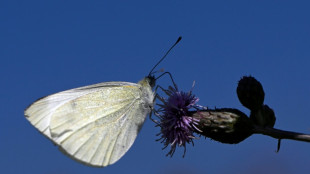
But those contained in the saliva the wax worm moth (Galleria mellonella) can act in only a few hours, Tuesday's research showed.

Researcher Federica Bertocchini, an avid beekeeper, said she originally stumbled on the idea that this small caterpillar had unusual powers when storing honeycombs a few years ago.

"At the end of the season, usually beekeepers put some empty beehives in a storage room, to put them back in the field in the spring," she told AFP.

"One year I did that, and I found my stored honeycombs plagued with wax worms. In fact, that is their habitat."

Bertocchini cleaned the honeycombs and put the worms in a plastic bag.

When she returned a short time later she found the bag "riddled with holes".

- Poured over plastics -

"That raised the question: is it the result of munching or there is a chemical modification? We checked that, doing proper lab experiments, and we found that the polyethylene had been oxidised," she told AFP.

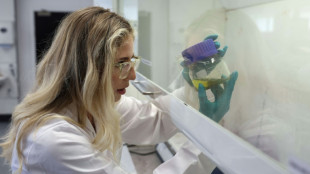
In her latest research Bertocchini, from Madrid's Margarita Salas Centre for Biological Studies (CIB) and her colleagues analysed proteins in the wax worm saliva and identified two enzymes that could break polyethylene down into small polymers in only a few hours at room temperature.

Writing in the journal Nature Communications they explained how they used another worm's saliva as a control experiment, which produced no degradation compared with the wax worm.

Bertocchini said her team were still trying to figure out precisely how the worms degraded the plastic.

While the study authors stressed that much more research was needed before Tuesday's findings could be implemented at any meaningful scale, there were a number of possible applications.

"We can imagine a scenario where these enzymes are used in an aqueous solution, and litres of this solution is poured over piles of collected plastic in a waste management facility," said Bertocchini, who said her team were still trying to figure out precisely how the worms degraded the plastic.

"We can also imagine small amounts that can reach more remote locations, like villages or small islands, where waste facilities are not available."

She said that further down the line the solution could be used in individual houses, where each family could degrade their own plastic waste.

T.Gilbert--TFWP