The Fort Worth Press - Change in livestock food could feed a billion people: study

USD -
AED 3.672498
AFN 66.278316
ALL 82.286767
AMD 381.405623
ANG 1.790403
AOA 917.00002
ARS 1450.564198
AUD 1.514417
AWG 1.8
AZN 1.697242
BAM 1.668053
BBD 2.013416
BDT 122.25212
BGN 1.66944
BHD 0.37697
BIF 2955.517555
BMD 1
BND 1.290672
BOB 6.907492
BRL 5.527305
BSD 0.999672
BTN 90.191513
BWP 13.210404
BYN 2.933001
BYR 19600
BZD 2.010516
CAD 1.379755
CDF 2263.999888
CHF 0.795601
CLF 0.023236
CLP 911.550398
CNY 7.04125
CNH 7.036685
COP 3863.71
CRC 498.08952
CUC 1
CUP 26.5
CVE 94.043045
CZK 20.766403
DJF 178.015071
DKK 6.37969
DOP 62.81557
DZD 129.63396
EGP 47.590799
ERN 15
ETB 155.468002
EUR 0.8539
FJD 2.283699
FKP 0.746974
GBP 0.747803
GEL 2.68995
GGP 0.746974
GHS 11.495998
GIP 0.746974
GMD 73.501218
GNF 8739.594705
GTQ 7.656257
GYD 209.143749
HKD 7.780745
HNL 26.330401
HRK 6.432501
HTG 130.92649
HUF 330.323966
IDR 16735.5
ILS 3.210505
IMP 0.746974
INR 89.672804
IQD 1309.515179
IRR 42125.000006
ISK 126.029813
JEP 0.746974
JMD 159.951556
JOD 0.708992
JPY 157.294501
KES 128.901985
KGS 87.449865
KHR 4003.445658
KMF 420.999696
KPW 899.985447
KRW 1478.840165
KWD 0.30732
KYD 0.83301
KZT 515.774122
LAK 21648.038141
LBP 89518.671881
LKR 309.300332
LRD 176.937412
LSL 16.761238
LTL 2.95274
LVL 0.60489
LYD 5.418406
MAD 9.162342
MDL 16.859064
MGA 4495.599072
MKD 52.551585
MMK 2099.831872
MNT 3551.409668
MOP 8.012145
MRU 39.906011
MUR 46.149573
MVR 15.459728
MWK 1733.41976
MXN 18.031765
MYR 4.077032
MZN 63.910399
NAD 16.761166
NGN 1457.903065
NIO 36.785119
NOK 10.18185
NPR 144.308882
NZD 1.74121
OMR 0.384499
PAB 0.999663
PEN 3.365814
PGK 4.308816
PHP 58.725048
PKR 280.102006
PLN 3.59715
PYG 6673.859367
QAR 3.645474
RON 4.3458
RSD 100.228971
RUB 80.525675
RWF 1455.461927
SAR 3.75079
SBD 8.140117
SCR 13.762717
SDG 601.497808
SEK 9.316225
SGD 1.292755
SHP 0.750259
SLE 24.096097
SLL 20969.503664
SOS 570.329558
SRD 38.67796
STD 20697.981008
STN 20.895879
SVC 8.747159
SYP 11057.107339
SZL 16.766099
THB 31.460123
TJS 9.231602
TMT 3.51
TND 2.921974
TOP 2.40776
TRY 42.80983
TTD 6.783
TWD 31.5475
TZS 2494.99991
UAH 42.222895
UGX 3571.01736
UYU 39.172541
UZS 12055.48851
VES 279.213402
VND 26312.5
VUV 121.400054
WST 2.789362
XAF 559.461142
XAG 0.015229
XAU 0.000231
XCD 2.70255
XCG 1.801636
XDR 0.695787
XOF 559.458756
XPF 101.714719
YER 238.450186
ZAR 16.77835
ZMK 9001.204375
ZMW 22.742295
ZWL 321.999592
  • SCS

    0.0200

    16.14

    +0.12%

  • RBGPF

    0.0000

    80.22

    0%

  • RYCEF

    0.5400

    15.4

    +3.51%

  • CMSD

    0.0000

    23.28

    0%

  • GSK

    -0.4200

    48.29

    -0.87%

  • CMSC

    0.0300

    23.29

    +0.13%

  • BP

    -1.1600

    33.31

    -3.48%

  • BTI

    -0.1300

    57.04

    -0.23%

  • NGG

    -0.7700

    76.39

    -1.01%

  • RIO

    0.4400

    77.63

    +0.57%

  • BCE

    -0.3000

    22.85

    -1.31%

  • RELX

    0.0900

    40.65

    +0.22%

  • VOD

    -0.0100

    12.8

    -0.08%

  • JRI

    0.0000

    13.43

    0%

  • BCC

    1.4100

    77.7

    +1.81%

  • AZN

    0.7500

    90.61

    +0.83%

Change in livestock food could feed a billion people: study
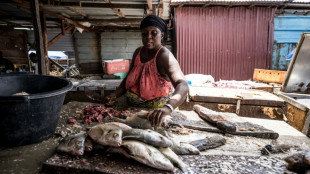
Change in livestock food could feed a billion people: study / Photo: © AFP/File

Change in livestock food could feed a billion people: study

Diverting grain and other feed for livestock to human consumption could boost food supply sufficiently to feed an additional billion people, according to research released on Monday.

Text size:

Many livestock animals and farmed fish are fed on foods such as cereals, fish and pulses that are edible for humans.

As the world struggles to feed hundreds of millions of people enough calories and nutrients to maintain their health, researchers in Finland examined what would happen if more food grown for animal consumption went to humans.

They analysed global food system data for crop, livestock and aquaculture production, focusing on feed use and the availability of other potential food sources for animals, such as by-products and residues of other farming processes that already exist.

Given the calorific needs of the world's animals and fish stocks, they calculated that switching out otherwise edible feed could increase global human food supply by 13 percent in terms of calories and by 15 percent in terms of protein.

"That's about one billion people," lead study author Vilma Sandstrom, from Finland's Aalto University, told AFP.

Around 15 percent of the more than six billion tonnes of animal feed consumed each year consists of products that could directly be used as human food.

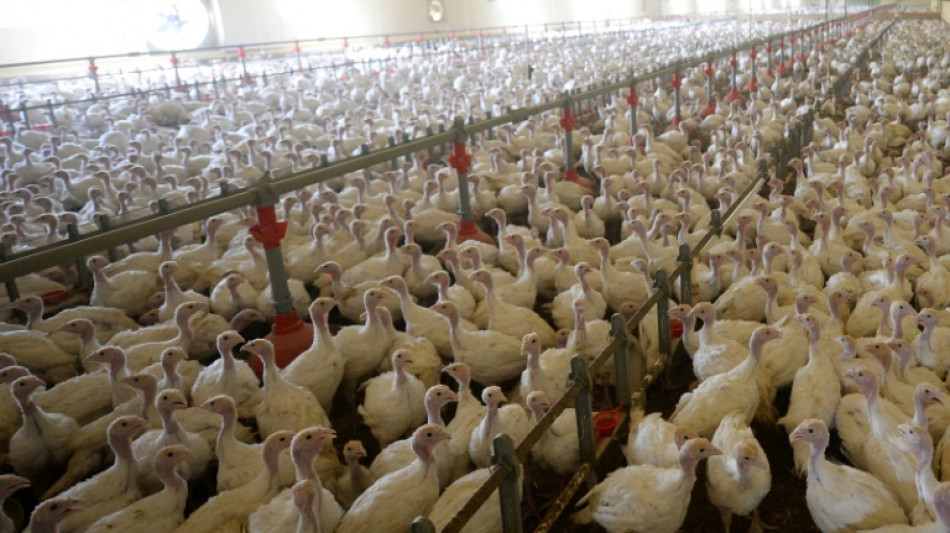
Globally, 49 percent of feed use in aquaculture, 68 percent in poultry and 38 percent in pork meat production consists of food that is edible for humans, the paper showed.

The researchers identified readily available alternatives that are only edible for animals.

These included crop production by-products such as straw, leaves, distiller's grains, sugar beet, rapeseed and cottonseed, as well as animal by-products such as meat and bone meal.

"A lot of these are just left in the field or are wasted," said Sandstrom. "They are not necessarily ready to feed to animals immediately but this is one potential we have."

United Nations Secretary-General Antonio Guterres warned in July that Russia's invasion of Ukraine had combined with the lingering trade impacts of Covid-19 to create an "unprecedented global hunger crisis".

As well as diverting vital calories away from hungry people, growing crops to feed to livestock has an outsized impact on the environment and climate.

Meat production alone accounts for over 14 percent of all greenhouse gas emissions and farming now uses more than three quarters of Earth's available freshwater.

"We are looking at different ways to help supply food for humanity within planetary boundaries," said Sandstrom.

"A lot of the feed that is fed now to livestock and aquaculture is something that we could consume. This is one of the leverage points we were looking for."

The study was published in the journal Nature Food.

H.Carroll--TFWP