California Dairy Hydrogen Project Sets Carbon-Intensity Record and Renews Biogas Debate

A hydrogen project beside the roughly 13,000-cow Bar 20 dairy in Kerman is using manure-derived biogas to generate electricity for electrolysis, earning the lowest carbon-intensity rating in California's Low Carbon Fuel Standard while intensifying concerns about local dairy pollution.
KERMAN, Calif. — A large dairy operation in California's San Joaquin Valley has become the site of a fuel project that state regulators describe as unprecedented, converting energy from cow manure into electricity and hydrogen while reopening a long-running dispute over the environmental consequences of dairy biogas.
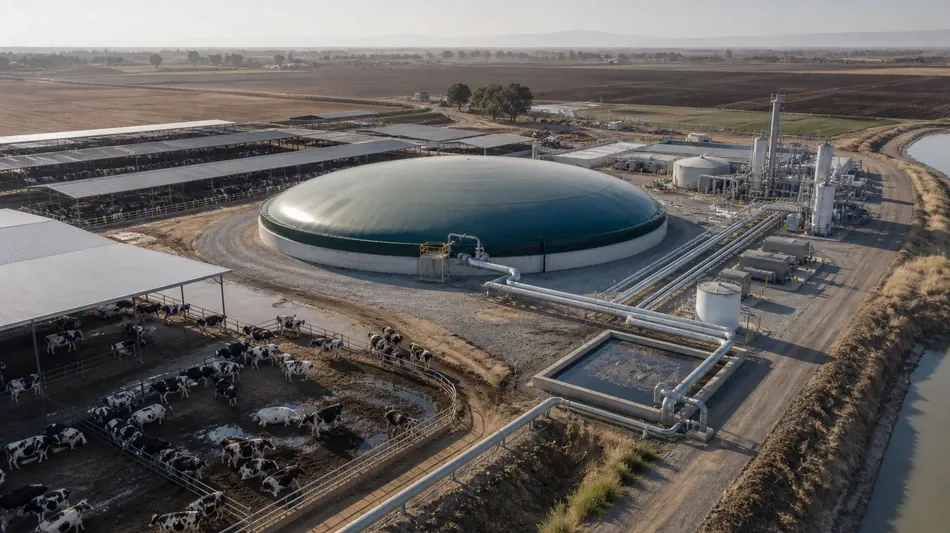
The project operates beside Bar 20, a dairy with roughly 13,000 cows near Kerman. H2B2 Electrolysis Technologies is using biogas captured from methane generated by dairy manure to produce electricity, with part of that electricity then used to make hydrogen through electrolysis.
California regulators say there is no other project in the state using this particular configuration. The California Air Resources Board, which administers the state's Low Carbon Fuel Standard, assigned the hydrogen produced at the site the lowest carbon-intensity rating in the program's history.
Carbon intensity under the LCFS measures the climate pollution associated with producing and delivering a unit of transportation energy. A low score can make a fuel more valuable within the credit system because fuels that perform better than the program's benchmark can generate credits.
At Bar 20, manure is processed in a covered-lagoon anaerobic digester that captures methane-rich biogas rather than allowing the methane to escape directly into the atmosphere. The captured gas is used to generate electricity through a fuel cell and a reciprocating engine, according to CARB. Some of the resulting electricity powers electrolysis, which separates hydrogen and oxygen from water.
The hydrogen is intended for transportation use under the LCFS. Supporters view the system as a way to reduce methane emissions from manure while producing a lower-carbon transportation fuel from material that would otherwise be treated as waste.
Environmental organizations and nearby residents dispute whether the climate accounting captures the full consequences of large dairy operations. Their concern is that methane capture does not eliminate other pollutants associated with manure lagoons, including nitrogen, phosphorus and ammonia, which can affect groundwater, air quality and surrounding communities.
The Bar 20 project has therefore become part of a broader argument over California's incentives for dairy digesters and biogas. Critics contend that valuable fuel credits can help sustain or expand intensive livestock operations without resolving local pollution burdens. Supporters argue that methane is a powerful greenhouse gas and that capturing it from existing manure systems can produce substantial climate benefits.
The dispute is especially significant in the San Joaquin Valley, where large agricultural operations coexist with communities that have long raised concerns about air and water quality. Decisions about how California assigns carbon values to manure-derived fuels can influence investment in digesters, hydrogen production and other projects across the region.
For regulators, the Kerman facility demonstrates a new pathway for linking methane capture, on-site electricity generation and hydrogen production. For opponents, its record-setting carbon score underscores what they see as a gap between statewide greenhouse-gas accounting and the environmental conditions experienced by people living near large dairies.
L.Davila--TFWP