The Fort Worth Press - Endangered sharks, rays caught in protected Med areas: study

USD -
AED 3.672497
AFN 66.000258
ALL 81.915831
AMD 380.151858
ANG 1.79008
AOA 917.000383
ARS 1452.018499
AUD 1.423488
AWG 1.8
AZN 1.697068
BAM 1.655536
BBD 2.022821
BDT 122.831966
BGN 1.67937
BHD 0.377034
BIF 2987.661537
BMD 1
BND 1.276711
BOB 6.964795
BRL 5.268305
BSD 1.004342
BTN 91.842522
BWP 13.228461
BYN 2.875814
BYR 19600
BZD 2.019858
CAD 1.367525
CDF 2154.99968
CHF 0.777645
CLF 0.021907
CLP 865.000257
CNY 6.946501
CNH 6.932655
COP 3629
CRC 498.70812
CUC 1
CUP 26.5
CVE 93.33655
CZK 20.57155
DJF 178.843207
DKK 6.32395
DOP 63.484264
DZD 129.858919
EGP 47.007671
ERN 15
ETB 156.676691
EUR 0.84676
FJD 2.19645
FKP 0.729754
GBP 0.73085
GEL 2.69502
GGP 0.729754
GHS 11.012638
GIP 0.729754
GMD 73.494362
GNF 8819.592694
GTQ 7.706307
GYD 210.120453
HKD 7.81279
HNL 26.532255
HRK 6.380201
HTG 131.728867
HUF 322.149967
IDR 16761.8
ILS 3.09082
IMP 0.729754
INR 90.12675
IQD 1315.670299
IRR 42125.000158
ISK 122.940267
JEP 0.729754
JMD 157.811362
JOD 0.70902
JPY 155.584976
KES 128.949828
KGS 87.45004
KHR 4046.744687
KMF 417.999892
KPW 900
KRW 1446.530126
KWD 0.307159
KYD 0.836906
KZT 507.178168
LAK 21598.652412
LBP 89531.701448
LKR 311.010475
LRD 186.300651
LSL 16.079552
LTL 2.95274
LVL 0.60489
LYD 6.345176
MAD 9.158604
MDL 17.00314
MGA 4482.056104
MKD 52.171227
MMK 2099.986463
MNT 3564.625242
MOP 8.079484
MRU 39.911729
MUR 45.889901
MVR 15.449664
MWK 1742.758273
MXN 17.325785
MYR 3.927005
MZN 63.74985
NAD 16.079688
NGN 1398.269932
NIO 36.985739
NOK 9.66906
NPR 147.062561
NZD 1.65375
OMR 0.384511
PAB 1.004342
PEN 3.382683
PGK 4.306869
PHP 59.029499
PKR 281.341223
PLN 3.572805
PYG 6677.840135
QAR 3.671415
RON 4.314602
RSD 99.437023
RUB 76.748664
RWF 1469.427172
SAR 3.750053
SBD 8.058101
SCR 13.898453
SDG 601.487596
SEK 8.92463
SGD 1.26958
SHP 0.750259
SLE 24.475022
SLL 20969.499267
SOS 574.437084
SRD 38.024971
STD 20697.981008
STN 20.754973
SVC 8.788065
SYP 11059.574895
SZL 16.083999
THB 31.458496
TJS 9.380296
TMT 3.51
TND 2.897568
TOP 2.40776
TRY 43.49192
TTD 6.79979
TWD 31.558002
TZS 2586.540198
UAH 43.28509
UGX 3587.360437
UYU 38.963238
UZS 12278.117779
VES 371.640565
VND 25997.5
VUV 119.156711
WST 2.710781
XAF 555.683849
XAG 0.011483
XAU 0.000203
XCD 2.70255
XCG 1.81001
XDR 0.691072
XOF 555.251107
XPF 100.950591
YER 238.374945
ZAR 15.980903
ZMK 9001.198613
ZMW 19.709321
ZWL 321.999592
  • SCS

    0.0200

    16.14

    +0.12%

  • RBGPF

    0.1000

    82.5

    +0.12%

  • RYCEF

    0.7000

    16.7

    +4.19%

  • CMSC

    -0.0100

    23.75

    -0.04%

  • BCC

    0.9400

    81.75

    +1.15%

  • NGG

    -0.6600

    84.61

    -0.78%

  • GSK

    0.8700

    52.47

    +1.66%

  • RIO

    1.4900

    92.52

    +1.61%

  • VOD

    0.2600

    14.91

    +1.74%

  • AZN

    1.3100

    188.41

    +0.7%

  • BCE

    -0.0300

    25.83

    -0.12%

  • RELX

    -0.2700

    35.53

    -0.76%

  • JRI

    0.0700

    13.15

    +0.53%

  • CMSD

    0.0300

    24.08

    +0.12%

  • BTI

    0.3100

    60.99

    +0.51%

  • BP

    -0.1800

    37.7

    -0.48%

Endangered sharks, rays caught in protected Med areas: study
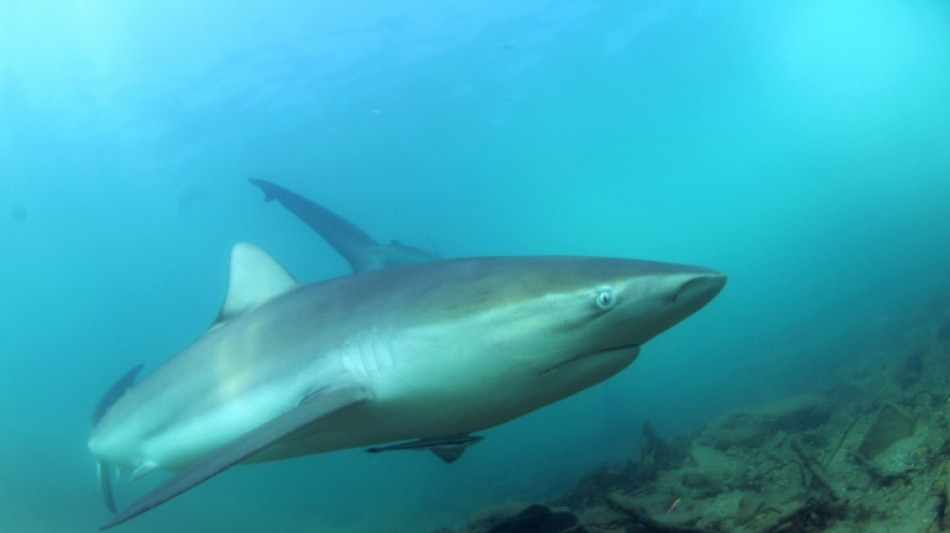
Endangered sharks, rays caught in protected Med areas: study / Photo: © Out of The Blu/AFP/File

Endangered sharks, rays caught in protected Med areas: study

Endangered sharks, rays and skates in the Mediterranean are more frequently caught in protected than in unprotected areas, according to research published Tuesday highlighting the need for better conservation for critically threatened species.

Text size:

The three types of elasmobranch are among the species most threatened by overfishing.

While often landed as by-catch -- or caught in nets of boats seeking to land other species -- demand for their fins and meat has driven an estimated 71-percent decline in ocean sharks and rays since 1970.

Although they are among the oldest marine species on Earth, their slow growth rate and late maturity mean one third of elasmobranchs are categorised by the International Union for the Conservation of Nature (IUCN) as at risk of extinction.

While dozens of nations have banned large-scale fishing of endangered shark, ray and skate species, true global catch figures are likely to be hugely underestimated as 90 percent of the world's fishing fleet is made up of small-scale boats.

Researchers in Italy wanted to get a better idea of how species fare in the Mediterranean's partially protected areas, which allow some fishing with restrictions.

They used photo-sampling and image analysis to compile a database covering more than 1,200 small-scale fishing operations across 11 locations in France, Italy, Spain, Croatia, Slovenia and Greece.

- Protected areas -

The team then used statistical models to demonstrate that catches of threatened species were higher in partially protected areas than in areas with no protection at all.

"People assume that it is large-scale trawlers that are impacting biodiversity, which is true and there's a lot of evidence for this," said co-author Antonio Di Franco, from the Sicily Marine Centre.

"There is less research on small-scale fishing's impact and our research shows that there is this potential."

The team found that catches they analysed in partially protected areas landed 24 species of shark, skate and ray -- more than a third of which are endangered.

This is likely in part due to the species' preference for coastal waters, where most small-scale fisheries prefer to operate.

"We don't know the activity of small-scale fisheries in general, we don't know how many nets they actually fish or where they fish," said Di Franco.

Overall, in the partially protected areas studied, 517 elasmobranchs were caught compared with 358 in non-protected areas.

In terms of mass, the weight of shark, ray or skate species caught in partially protected areas was roughly double that in non-protected areas.

More than 100 countries have committed to increase the amount of protected oceans worldwide to 30 percent by 2030.

Di Franco said there were a number of steps countries could take to help threatened species, including fitting smaller fishing boats with GPS trackers and ensuring that protected areas were joined up, allowing the species to more easily change living regions.

"Protected areas are a great potential benefit to biodiversity but the point is to look at management," he told AFP.

"But often countries don't have the capacity to properly manage stocks."

A.Nunez--TFWP