The Fort Worth Press - Trump administration re-approves twice-banned pesticide

USD -
AED 3.672504
AFN 65.000368
ALL 81.431326
AMD 361.239406
ANG 1.789785
AOA 918.000367
ARS 1544.046724
AUD 1.452222
AWG 1.8
AZN 1.70397
BAM 1.754002
BBD 2.018116
BDT 124.801578
BGN 1.747831
BHD 0.378548
BIF 2997.982153
BMD 1
BND 1.283978
BOB 12.019192
BRL 5.504904
BSD 1.002018
BTN 94.051388
BWP 13.802968
BYN 3.000673
BYR 19600
BZD 2.015246
CAD 1.41125
CDF 2320.000362
CHF 0.819824
CLF 0.024951
CLP 981.982871
CNY 6.676504
CNH 6.670804
COP 3236.357114
CRC 454.419084
CUC 1
CUP 24.048249
CVE 98.887942
CZK 21.83445
DJF 178.43146
DKK 6.708504
DOP 60.885162
DZD 136.261154
EGP 53.769786
ERN 15
ETB 164.454778
EUR 0.896804
FJD 2.265604
FKP 0.748808
GBP 0.748083
GEL 2.59504
GGP 0.748808
GHS 11.707995
GIP 0.748808
GMD 74.503851
GNF 8874.938344
GTQ 7.657056
GYD 210.062329
HKD 7.84204
HNL 26.930631
HRK 6.76901
HTG 131.321465
HUF 326.000354
IDR 18108.5
ILS 3.18593
IMP 0.748808
INR 93.910504
IQD 1519.035021
IRR 1891353.000352
ISK 122.790386
JEP 0.748808
JMD 159.024259
JOD 0.70904
JPY 158.47504
KES 130.209408
KGS 87.447804
KHR 4082.328147
KMF 442.00035
KPW 899.999961
KRW 1363.803789
KWD 0.31098
KYD 0.83512
KZT 449.127842
LAK 22542.486884
LBP 89728.711717
LKR 333.213757
LRD 170.342137
LSL 16.570826
LTL 2.95274
LVL 0.60489
LYD 6.412269
MAD 9.794718
MDL 17.910408
MGA 4553.159051
MKD 55.203803
MMK 2099.945107
MNT 3601.130253
MOP 8.088606
MRU 40.453791
MUR 47.030378
MVR 15.403739
MWK 1737.500561
MXN 18.62354
MYR 4.061504
MZN 63.903729
NAD 16.570826
NGN 1347.210377
NIO 36.87727
NOK 9.459904
NPR 150.482041
NZD 1.807175
OMR 0.384144
PAB 1.002108
PEN 3.451773
PGK 4.566611
PHP 63.108038
PKR 277.126855
PLN 3.94555
PYG 6263.39626
QAR 3.662795
RON 4.792204
RSD 105.484059
RUB 81.925564
RWF 1478.947132
SAR 3.756342
SBD 8.048583
SCR 13.773553
SDG 601.503676
SEK 9.894504
SGD 1.282704
SHP 0.748923
SLE 22.950371
SLL 20969.504398
SOS 572.620062
SRD 37.583504
STD 20697.981008
STN 21.972109
SVC 8.76732
SYP 13001.999685
SZL 16.565176
THB 33.550369
TJS 9.243442
TMT 3.5
TND 2.998341
TOP 2.40776
TRY 50.141304
TTD 6.795211
TWD 32.775304
TZS 2647.773642
UAH 45.39348
UGX 4098.470921
UYU 40.312094
UZS 11956.414511
VES 896.316404
VND 25582.5
VUV 118.73125
WST 2.787825
XAF 588.264929
XAG 0.019249
XAU 0.00024594347
XCD 2.70255
XCG 1.805838
XDR 0.707052
XOF 588.264929
XPF 106.954845
YER 236.625037
ZAR 16.51943
ZMK 9001.203584
ZMW 20.360522
ZWL 321.999592
SSP 5745.232324
MXV 2.095222
  • RIO

    -0.3300

    97.04

    -0.34%

  • CMSC

    -0.0400

    20.67

    -0.19%

  • RELX

    0.0000

    33.41

    0%

  • RBGPF

    0.0000

    67.95

    0%

  • BCE

    -0.0700

    21.99

    -0.32%

  • BCC

    -0.0300

    75.66

    -0.04%

  • GSK

    0.8600

    51.08

    +1.68%

  • JRI

    -0.0300

    11.52

    -0.26%

  • NGG

    -0.1200

    76.68

    -0.16%

  • CMSD

    0.0900

    20.54

    +0.44%

  • BTI

    -0.0800

    55.75

    -0.14%

  • AZN

    2.0200

    168.1

    +1.2%

  • BP

    -1.4200

    43.16

    -3.29%

  • RYCEF

    0.4600

    19.7

    +2.34%

  • VOD

    0.0700

    17.02

    +0.41%

Trump administration re-approves twice-banned pesticide
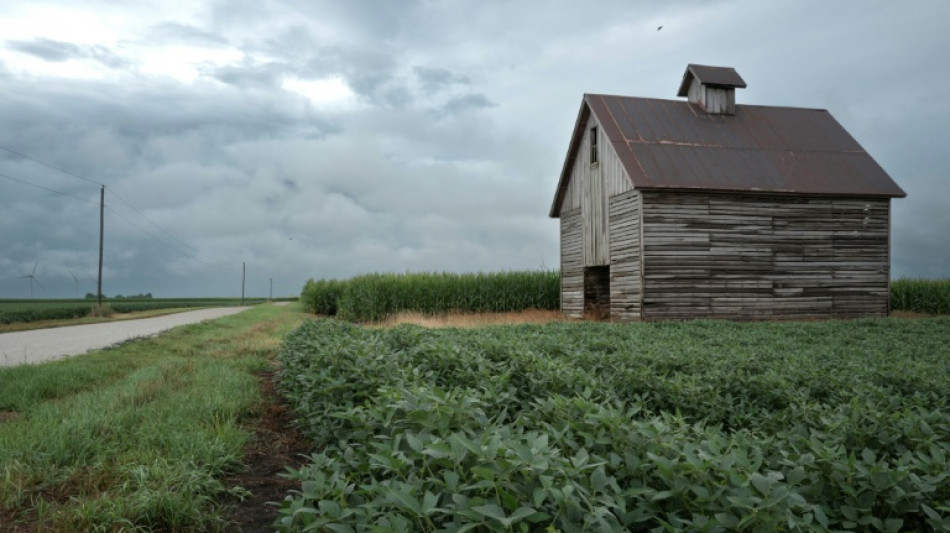
Trump administration re-approves twice-banned pesticide / Photo: © GETTY IMAGES NORTH AMERICA/AFP/File

Trump administration re-approves twice-banned pesticide

US President Donald Trump's administration on Friday re-approved the use of pesticide dicamba for spraying on top of genetically-modified cotton and soybean crops, drawing swift backlash from environment groups and the Make America Healthy Again movement.

Text size:

The move comes despite federal courts in 2020 and 2024 striking down the Environmental Protection Agency's previous approvals of the contentious weedkiller.

"This decision responds directly to the strong advocacy of America's cotton and soybean farmers, particularly growers across the Cotton Belt, who have been clear and consistent about the critical challenges they face without access to this tool for controlling resistant weeds in their growing crop," the EPA said in a statement.

A persistent concern about dicamba is "drift": when the chemical volatilizes in high heat it can spread for miles, poisoning other farms, home gardens as well as trees and plants.

The 2020 court ruling that first overturned dicamba's approval found it caused damage across millions of acres and "has torn apart the social fabric of many farming communities."

The EPA acknowledged this concern as real but said that by imposing certain restrictions, such as reducing the amount used and avoiding application in higher temperatures, it was safe.

Agricultural industry giant Bayer, which acquired dicamba when it bought Monsanto, welcomed the news and said the chemical would be marketed under the name "Stryax."

"With a federal registration in hand, we'll begin the process of seeking state approvals," said Ty Witten, the company's vice president of commercial stewardship, in a statement.

"In the coming weeks, we'll launch applicator training opportunities, and stewardship education to help ensure that growers and applicators have the best experience possible with Stryax herbicide."

Environmental advocates dismissed the safeguards as cosmetic -- pointing out for example the new approval allowed year-round use, including in the hottest summer months.

"They're clearly looking out for the interests of polluting companies much more than the interests of the public, and this is because this office is being run by former industry lobbyists," Nathan Donley, environmental health science director for the Center for Biological Diversity, told AFP.

Kyle Kunkler, a former lobbyist for the American Soybean Association, is now the deputy assistant administrator for pesticides in the EPA's Office of Chemical Safety and Pollution Prevention.

The decision also rattled MAHA activists -- supporters of Health Secretary Robert F. Kennedy Jr.

Kelly Ryerson, who last year started a petition calling for EPA administrator Lee Zeldin to resign over pesticide approvals, told AFP she was "very disappointed."

"This is clearly the work of the chemical lobbyists who now are staffed throughout the EPA and are not aligned with the MAHA movement or with President Trump's mandate," she said.

T.M.Dan--TFWP