The Fort Worth Press - UK scientist James Lovelock, prophet of climate doom, dies aged 103

USD -
AED 3.672498
AFN 66.000037
ALL 81.915831
AMD 380.151858
ANG 1.79008
AOA 917.000343
ARS 1451.993897
AUD 1.426605
AWG 1.8
AZN 1.696692
BAM 1.655536
BBD 2.022821
BDT 122.831966
BGN 1.67937
BHD 0.377009
BIF 2987.661537
BMD 1
BND 1.276711
BOB 6.964795
BRL 5.261804
BSD 1.004342
BTN 91.842522
BWP 13.228461
BYN 2.875814
BYR 19600
BZD 2.019858
CAD 1.36614
CDF 2154.999851
CHF 0.778198
CLF 0.021907
CLP 865.000194
CNY 6.946499
CNH 6.93573
COP 3629
CRC 498.70812
CUC 1
CUP 26.5
CVE 93.33655
CZK 20.57685
DJF 178.843207
DKK 6.323803
DOP 63.484264
DZD 129.884
EGP 47.110302
ERN 15
ETB 156.676691
EUR 0.84679
FJD 2.200301
FKP 0.729754
GBP 0.73029
GEL 2.695
GGP 0.729754
GHS 11.012638
GIP 0.729754
GMD 73.497835
GNF 8819.592694
GTQ 7.706307
GYD 210.120453
HKD 7.81365
HNL 26.532255
HRK 6.378898
HTG 131.728867
HUF 322.652002
IDR 16773
ILS 3.09245
IMP 0.729754
INR 90.42375
IQD 1315.670299
IRR 42125.000158
ISK 122.959549
JEP 0.729754
JMD 157.811362
JOD 0.709035
JPY 155.446502
KES 129.549946
KGS 87.450357
KHR 4046.744687
KMF 417.999856
KPW 900
KRW 1449.169755
KWD 0.30725
KYD 0.836906
KZT 507.178168
LAK 21598.652412
LBP 89531.701448
LKR 311.010475
LRD 186.300651
LSL 16.079552
LTL 2.95274
LVL 0.60489
LYD 6.345176
MAD 9.158604
MDL 17.00314
MGA 4482.056104
MKD 52.191104
MMK 2099.986463
MNT 3564.625242
MOP 8.079484
MRU 39.911729
MUR 45.889885
MVR 15.45017
MWK 1742.758273
MXN 17.345904
MYR 3.939502
MZN 63.750038
NAD 16.079688
NGN 1400.539715
NIO 36.985739
NOK 9.678155
NPR 147.062561
NZD 1.656635
OMR 0.384501
PAB 1.004342
PEN 3.382683
PGK 4.306869
PHP 58.897503
PKR 281.341223
PLN 3.572885
PYG 6677.840135
QAR 3.671415
RON 4.314696
RSD 99.463976
RUB 76.46361
RWF 1469.427172
SAR 3.750148
SBD 8.058101
SCR 14.856833
SDG 601.515223
SEK 8.93992
SGD 1.270125
SHP 0.750259
SLE 24.474991
SLL 20969.499267
SOS 574.437084
SRD 38.024958
STD 20697.981008
STN 20.754973
SVC 8.788065
SYP 11059.574895
SZL 16.083999
THB 31.487986
TJS 9.380296
TMT 3.51
TND 2.897568
TOP 2.40776
TRY 43.496835
TTD 6.79979
TWD 31.579502
TZS 2579.039813
UAH 43.28509
UGX 3587.360437
UYU 38.963238
UZS 12278.117779
VES 371.640565
VND 26019.5
VUV 119.156711
WST 2.710781
XAF 555.683849
XAG 0.011992
XAU 0.000207
XCD 2.70255
XCG 1.81001
XDR 0.691072
XOF 555.251107
XPF 100.950591
YER 238.374977
ZAR 15.984975
ZMK 9001.201218
ZMW 19.709321
ZWL 321.999592
  • SCS

    0.0200

    16.14

    +0.12%

  • RBGPF

    0.1000

    82.5

    +0.12%

  • BCC

    0.9400

    81.75

    +1.15%

  • CMSC

    -0.0100

    23.75

    -0.04%

  • CMSD

    0.0300

    24.08

    +0.12%

  • NGG

    -0.6600

    84.61

    -0.78%

  • AZN

    1.3100

    188.41

    +0.7%

  • RYCEF

    0.7000

    16.7

    +4.19%

  • BCE

    -0.0300

    25.83

    -0.12%

  • RIO

    1.4900

    92.52

    +1.61%

  • RELX

    -0.2700

    35.53

    -0.76%

  • GSK

    0.8700

    52.47

    +1.66%

  • JRI

    0.0700

    13.15

    +0.53%

  • VOD

    0.2600

    14.91

    +1.74%

  • BTI

    0.3100

    60.99

    +0.51%

  • BP

    -0.1800

    37.7

    -0.48%

UK scientist James Lovelock, prophet of climate doom, dies aged 103
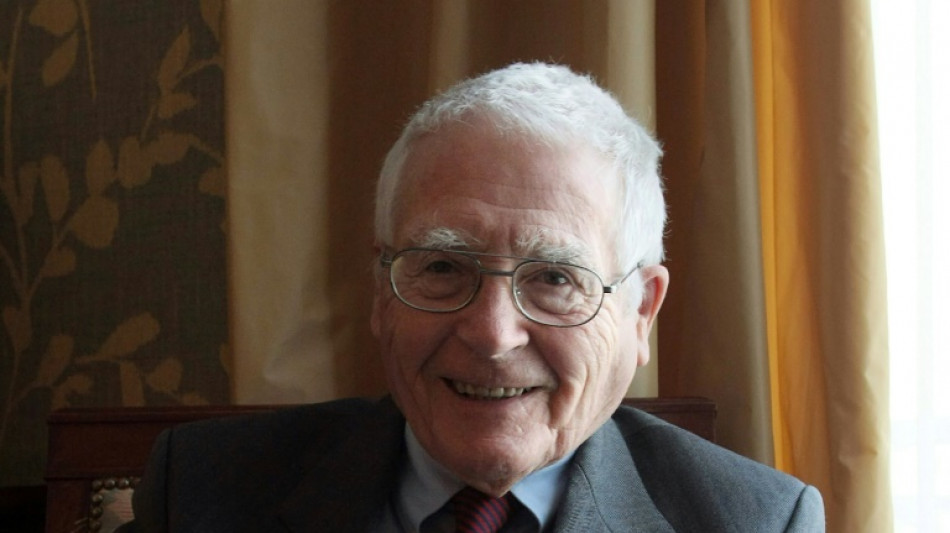
UK scientist James Lovelock, prophet of climate doom, dies aged 103 / Photo: © AFP/File

UK scientist James Lovelock, prophet of climate doom, dies aged 103

Influential British scientist James Lovelock, famed for his Gaia hypothesis and pioneering work on climate change, has died at the age of 103, his family announced Wednesday.

Text size:

The legendary scientist's family said in a statement that Lovelock died Tuesday on his 103rd birthday as the result of complications from a fall.

"To the world he was best known as a scientific pioneer, climate prophet and conceiver of the Gaia theory," it said, noting he was also a "loving husband and wonderful father with a boundless sense of curiosity".

Responding to the news Mary Archer, chair of the Science Museum Group's board of trustees, described him as "arguably the most important independent scientist of the last century".

"Jim Lovelock was decades ahead of his time in thinking about the Earth and climate and his unique approach was an inspiration for many," she added in a statement.

In the 1970s, Lovelock came up with the Gaia hypothesis that Earth is a single, self-regulating super-organism made up of all its life forms, which humans are destroying.

The notion was at first ridiculed by his peers but helped to redefine how science perceives the relationship between our inanimate planet and the life it hosts.

Lovelock became known as a prophet of climate doom.

With his 2006 book "The Revenge of Gaia", he issued a terrifying warning: if humankind failed to radically curtail greenhouse-gas emissions, there would, quite literally, be hell to pay.

"We have left it far, far too late to save the planet as we know it," Lovelock told AFP in 2009.

Pixie-like and unfailingly polite, Lovelock spent much of his career as a self-described "independent scientist", but the price for freedom was a lack of institutional backing.

Lovelock's ideas were often at odds with conventional wisdom, ahead of their time or, in the case of climate change, unbearably grim.

In a 2020 interview with AFP, he warned that the world had lost perspective in responding to the coronavirus, and should focus on a far more formidable foe: global warming.

"Climate change is more dangerous to life on Earth than almost any conceivable disease," he said.

"If we don't do something about it, we will find ourselves removed from the planet."

Born in 1919, Lovelock grew up in south London between the two World Wars, and studied chemistry, medicine and biophysics in the UK and the US.

As his brilliance emerged, he was quickly drafted by Britain's National Institute for Medical Research, where he worked for 20 years.

In the 1950s, he invented the machine used to detect the hole in the ozone layer.

In the early 1960s, NASA lured him to California to investigate possible life on Mars.

With another NASA scientist, he analysed the atmosphere on the planet, looking for a chemical imbalance and gases reacting with each other, which would hint at life.

They found nothing, putting a dampener on hopes of finding life on Mars.

Scientists now think that Earth's nearest neighbour may once have been warm and wet and possibly have supported microbial life.

M.T.Smith--TFWP