The Fort Worth Press - UN report declares global state of 'water bankruptcy'

USD -
AED 3.673042
AFN 63.503991
ALL 82.403989
AMD 368.150403
ANG 1.790403
AOA 918.000367
ARS 1465.449815
AUD 1.42575
AWG 1.8025
AZN 1.70397
BAM 1.705709
BBD 2.013483
BDT 122.708482
BGN 1.69088
BHD 0.37702
BIF 2985
BMD 1
BND 1.290663
BOB 6.90816
BRL 5.152304
BSD 0.999721
BTN 94.239742
BWP 13.585663
BYN 2.777729
BYR 19600
BZD 2.010527
CAD 1.415225
CDF 2280.000362
CHF 0.807055
CLF 0.02293
CLP 902.460396
CNY 6.769604
CNH 6.783725
COP 3452.68
CRC 453.506829
CUC 1
CUP 26.5
CVE 96.403894
CZK 21.091104
DJF 177.720393
DKK 6.516504
DOP 58.403884
DZD 133.34504
EGP 49.986489
ERN 15
ETB 158.37504
EUR 0.871881
FJD 2.235504
FKP 0.755711
GBP 0.755512
GEL 2.650391
GGP 0.755711
GHS 11.22504
GIP 0.755711
GMD 73.503851
GNF 8775.000355
GTQ 7.625892
GYD 209.119888
HKD 7.83685
HNL 26.68504
HRK 6.568099
HTG 130.583803
HUF 306.820388
IDR 17826.3
ILS 2.95976
IMP 0.755711
INR 94.330504
IQD 1310
IRR 1375000.000352
ISK 125.530386
JEP 0.755711
JMD 157.959917
JOD 0.70904
JPY 161.30504
KES 129.403801
KGS 87.450384
KHR 4010.00035
KMF 429.503794
KPW 900.00035
KRW 1527.650383
KWD 0.30793
KYD 0.833035
KZT 487.855928
LAK 22055.000349
LBP 89550.000349
LKR 333.641485
LRD 182.150382
LSL 16.405039
LTL 2.95274
LVL 0.60489
LYD 6.375039
MAD 9.225039
MDL 17.654036
MGA 4200.000347
MKD 53.732839
MMK 2099.479867
MNT 3580.422334
MOP 8.070939
MRU 40.060379
MUR 47.850378
MVR 15.450378
MWK 1737.000345
MXN 17.326503
MYR 4.137904
MZN 63.910377
NAD 16.403727
NGN 1360.440377
NIO 36.610377
NOK 9.680201
NPR 150.787532
NZD 1.741735
OMR 0.384983
PAB 0.999725
PEN 3.384039
PGK 4.38775
PHP 60.716504
PKR 278.325038
PLN 3.71375
PYG 6138.96617
QAR 3.640504
RON 4.568104
RSD 102.170373
RUB 73.103247
RWF 1464
SAR 3.74824
SBD 8.061424
SCR 13.683262
SDG 600.503676
SEK 9.57882
SGD 1.292404
SHP 0.746601
SLE 24.750371
SLL 20969.503664
SOS 571.503662
SRD 37.402504
STD 20697.981008
STN 21.4
SVC 8.747449
SYP 110.532098
SZL 16.403649
THB 32.890369
TJS 9.272075
TMT 3.5
TND 2.91175
TOP 2.40776
TRY 46.438199
TTD 6.779085
TWD 31.715038
TZS 2630.985038
UAH 44.909735
UGX 3638.520172
UYU 39.96965
UZS 12005.000334
VES 606.63266
VND 26310
VUV 118.132932
WST 2.751795
XAF 572.078806
XAG 0.015419
XAU 0.00024
XCD 2.70255
XCG 1.801643
XDR 0.703697
XOF 565.000332
XPF 104.250363
YER 238.603589
ZAR 16.458038
ZMK 9001.170907
ZMW 17.919703
ZWL 321.999592
  • VOD

    -0.2300

    14.3

    -1.61%

  • NGG

    -1.2400

    79.44

    -1.56%

  • RBGPF

    -0.5300

    60.61

    -0.87%

  • CMSC

    0.0500

    22.37

    +0.22%

  • RYCEF

    -0.0300

    18.4

    -0.16%

  • GSK

    -1.4800

    50.67

    -2.92%

  • AZN

    -2.9600

    174.93

    -1.69%

  • BP

    -1.0400

    39.1

    -2.66%

  • CMSD

    0.0000

    22.29

    0%

  • RELX

    -0.8300

    31.18

    -2.66%

  • RIO

    -2.5900

    100.08

    -2.59%

  • BCC

    3.8500

    74.66

    +5.16%

  • JRI

    0.0500

    12.67

    +0.39%

  • BTI

    -0.5800

    58.91

    -0.98%

  • BCE

    0.0000

    23.28

    0%

UN report declares global state of 'water bankruptcy'
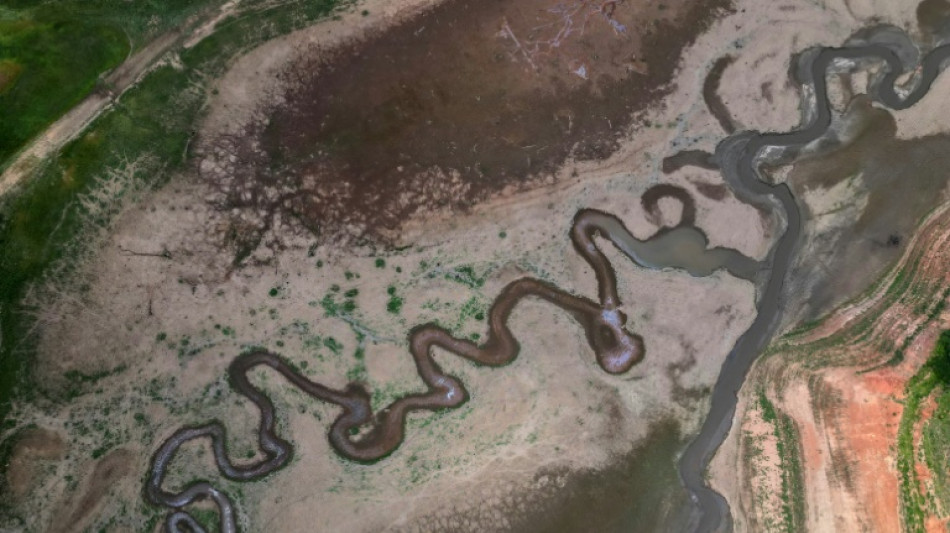
UN report declares global state of 'water bankruptcy' / Photo: © AFP

UN report declares global state of 'water bankruptcy'

The world is entering an era of "global water bankruptcy" with rivers, lakes and aquifers depleting faster than nature can replenish them, a United Nations research institute said on Tuesday.

Text size:

It argues that decades of overuse, pollution, environmental destruction and climate pressure had pushed many water systems so beyond the point of recovery that a new classification was required.

"Water stress and water crisis are no longer sufficient descriptions of the world's new water realities," read a new report by the UN University Institute for Water, Environment and Health (UNU-INWEH).

These terms were "framed as alerts about a future that could still be avoided" when the world had already moved into a "new phase", it said.

The report proposes the alternative term "water bankruptcy" -- a state in which long-term water use exceeds resupply and damages nature so severely that previous levels cannot realistically be restored.

This was reflected in the shrinking of the world's large lakes, the report said, and the growing number of major rivers failing to reach the sea for parts of the year.

The world has lost enormous proportions of wetlands, with roughly 410 million hectares -- nearly the size of the European Union -- disappearing over the past five decades.

Groundwater depletion is another sign of this bankruptcy.

Around 70 percent of major aquifers used for drinking water and irrigation show long-term declines with rising "day zero" crises -- when demand exceeds supply -- the "urban face" of this new reality.

Climate change was compounding the problem, spurring the loss of more than 30 percent of the world's glacier mass since 1970 and the seasonal meltwater relied upon by hundreds of millions of people.

- 'Be honest' -

The consequences were visible on every inhabited continent, but not every country individually was water bankrupt, UNU-INWEH director and report author Kaveh Madani told AFP.

Madani said the phenomenon was a "warning" that a policy rethink was essential.

Instead of approaching water scarcity as something temporary, governments must "be honest" and "file for bankruptcy today rather than delaying this decision", he said.

"Let's adopt this framework. Let's understand this. Let us recognise this bitter reality today before we cause more irreversible damages," Madani added.

The report draws on existing data and statistics and does not provide an exhaustive record of all water problems, but attempts instead to redefine the situation.

It is based on a peer-reviewed report, soon to be published in the journal Water Resources Management, that will formally propose a definition of "water bankruptcy".

The report "captures a hard truth: the world's water crisis has crossed a point of no return", Tim Wainwright, chief executive of the WaterAid charity, wrote in a statement.

Some scientists not involved in the report welcomed the spotlight on water but warned that the global picture varied considerably and a blanket declaration might overlook progress being made at a local level.

T.Gilbert--TFWP