The Fort Worth Press - Hydrogen plays part in global warming: study

USD -
AED 3.673041
AFN 65.496617
ALL 82.334064
AMD 381.570089
ANG 1.790403
AOA 917.000219
ARS 1450.7439
AUD 1.512951
AWG 1.8025
AZN 1.704017
BAM 1.669284
BBD 2.012811
BDT 122.121182
BGN 1.664302
BHD 0.377
BIF 2966
BMD 1
BND 1.291462
BOB 6.90544
BRL 5.519296
BSD 0.999326
BTN 90.380561
BWP 13.198884
BYN 2.950951
BYR 19600
BZD 2.009977
CAD 1.378125
CDF 2264.999879
CHF 0.794702
CLF 0.023399
CLP 917.950046
CNY 7.04325
CNH 7.037885
COP 3869.9
CRC 497.913271
CUC 1
CUP 26.5
CVE 94.10406
CZK 20.754036
DJF 177.71979
DKK 6.35769
DOP 62.749925
DZD 129.457983
EGP 47.594703
ERN 15
ETB 155.136401
EUR 0.850971
FJD 2.286954
FKP 0.744905
GBP 0.746685
GEL 2.694973
GGP 0.744905
GHS 11.525015
GIP 0.744905
GMD 73.501252
GNF 8687.498158
GTQ 7.654
GYD 209.082607
HKD 7.78055
HNL 26.19726
HRK 6.413297
HTG 130.89919
HUF 331.129502
IDR 16695.7
ILS 3.229895
IMP 0.744905
INR 90.36135
IQD 1310
IRR 42109.999937
ISK 125.929959
JEP 0.744905
JMD 159.912601
JOD 0.709028
JPY 155.522994
KES 128.899662
KGS 87.45026
KHR 4004.99967
KMF 419.000134
KPW 900.011412
KRW 1475.759915
KWD 0.30676
KYD 0.832814
KZT 514.018213
LAK 21654.999723
LBP 89550.00046
LKR 309.508264
LRD 177.375012
LSL 16.730161
LTL 2.95274
LVL 0.60489
LYD 5.420113
MAD 9.15375
MDL 16.863676
MGA 4515.000173
MKD 52.372929
MMK 2100.219412
MNT 3548.424678
MOP 8.007408
MRU 39.770298
MUR 46.04973
MVR 15.449739
MWK 1736.999714
MXN 18.02135
MYR 4.0885
MZN 63.89971
NAD 16.730047
NGN 1453.319753
NIO 36.710463
NOK 10.2021
NPR 144.605366
NZD 1.729995
OMR 0.384504
PAB 0.999356
PEN 3.364499
PGK 4.24725
PHP 58.558051
PKR 280.299526
PLN 3.58757
PYG 6712.554996
QAR 3.641014
RON 4.333302
RSD 99.895001
RUB 80.499309
RWF 1450
SAR 3.750872
SBD 8.163401
SCR 14.745025
SDG 601.502279
SEK 9.294105
SGD 1.29071
SHP 0.750259
SLE 24.100487
SLL 20969.503664
SOS 571.499858
SRD 38.678031
STD 20697.981008
STN 21.175
SVC 8.744522
SYP 11057.156336
SZL 16.730067
THB 31.430061
TJS 9.223981
TMT 3.5
TND 2.90375
TOP 2.40776
TRY 42.723103
TTD 6.779097
TWD 31.479502
TZS 2468.950995
UAH 42.417363
UGX 3562.360512
UYU 38.934881
UZS 12120.000117
VES 276.2312
VND 26335
VUV 121.327724
WST 2.791029
XAF 559.838353
XAG 0.014967
XAU 0.00023
XCD 2.70255
XCG 1.801112
XDR 0.694475
XOF 557.503625
XPF 101.875002
YER 238.350522
ZAR 16.75205
ZMK 9001.210262
ZMW 22.909741
ZWL 321.999592
  • SCS

    0.0200

    16.14

    +0.12%

  • RBGPF

    0.4100

    82.01

    +0.5%

  • CMSD

    -0.1700

    23.21

    -0.73%

  • NGG

    1.2650

    77.035

    +1.64%

  • BP

    0.5630

    34.323

    +1.64%

  • GSK

    0.2900

    49.07

    +0.59%

  • CMSC

    -0.0800

    23.26

    -0.34%

  • RIO

    1.5150

    77.505

    +1.95%

  • BTI

    -0.0350

    57.255

    -0.06%

  • BCE

    -0.0950

    23.235

    -0.41%

  • RYCEF

    -0.0300

    14.77

    -0.2%

  • RELX

    -0.0850

    40.735

    -0.21%

  • AZN

    -0.4300

    90.92

    -0.47%

  • JRI

    -0.0700

    13.44

    -0.52%

  • BCC

    -0.3850

    75.455

    -0.51%

  • VOD

    0.0850

    12.785

    +0.66%

Hydrogen plays part in global warming: study
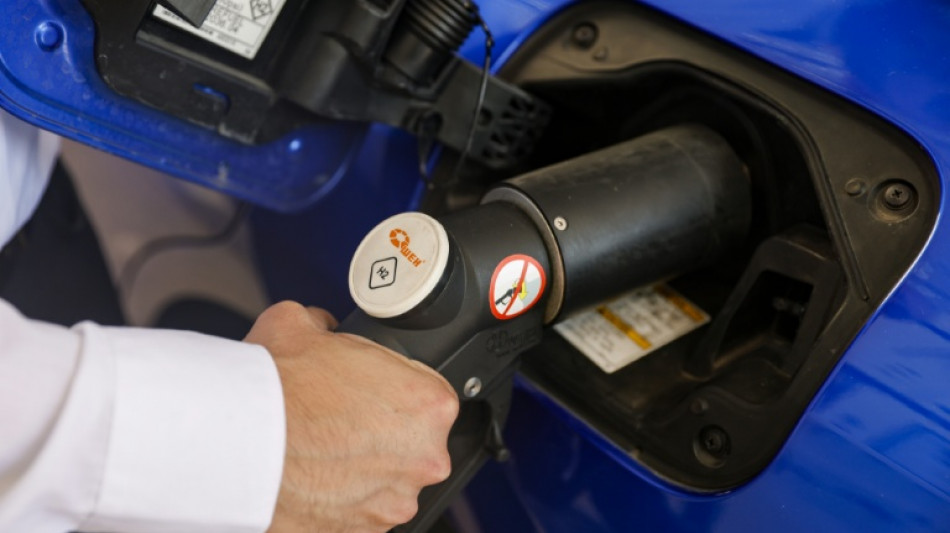
Hydrogen plays part in global warming: study / Photo: © AFP/File

Hydrogen plays part in global warming: study

Hydrogen has long been touted as a possible solution to the climate crisis, but it could also be a small part of the problem, a study warned on Wednesday.

Text size:

Advocates of hydrogen hope it can be produced and used on a large scale in transport and heavy industries in the future, providing a clean alternative to fossil fuels as it only emits water vapours.

But the research published in the journal Nature found that hydrogen has played a part in rising temperatures by helping methane, a potent greenhouse gas, stay longer in the atmosphere.

Emissions of hydrogen rose between 1990 and 2020, contributing a fraction of a degree -- or 0.02C -- to the nearly 1.5C increase in average temperatures since the pre-industrial period, the research found.

"We need a deeper understanding of the global hydrogen cycle and its links to global warming to support a climate-safe and sustainable hydrogen economy," said Stanford University scientist Rob Jackson, the paper's senior author.

The study, by an international consortium of scientists known as the Global Carbon Project, found that the increase in hydrogen emissions is mostly due to human activity.

Its rise is linked to the increase in methane emitted by fossil fuels, livestock and landfills, the researchers said.

The two molecules are intertwined: methane produces hydrogen when it breaks down in the atmosphere.

While hydrogen itself is not a pollutant, it indirectly contributes to warming by absorbing natural detergents that destroy methane, a potent greenhouse gas that has a shorter lifespan than carbon dioxide.

"More hydrogen means fewer detergents in the atmosphere, causing methane to persist longer and, therefore, warm the climate longer," said the study's lead author, Zutao Ouyang, an assistant professor of ecosystem modelling at Auburn University in Alabama.

Its interactions with natural detergents also affect cloud formation and produce greenhouse gases such as ozone and stratospheric water vapour.

Other sources of hydrogen in the atmosphere since 1990 include leaks from industrial hydrogen production.

Hydrogen can be manufactured by passing an electric current through water to split it between hydrogen and oxygen, a process called electrolysis.

Today, however, most hydrogen is produced from natural gas or coal in energy-intensive processes that emit large amounts of carbon dioxide.

The goal is to produce "green" hydrogen at scale using renewable energy instead, but the process is expensive and the sector has faced considerable hurdles.

S.Weaver--TFWP