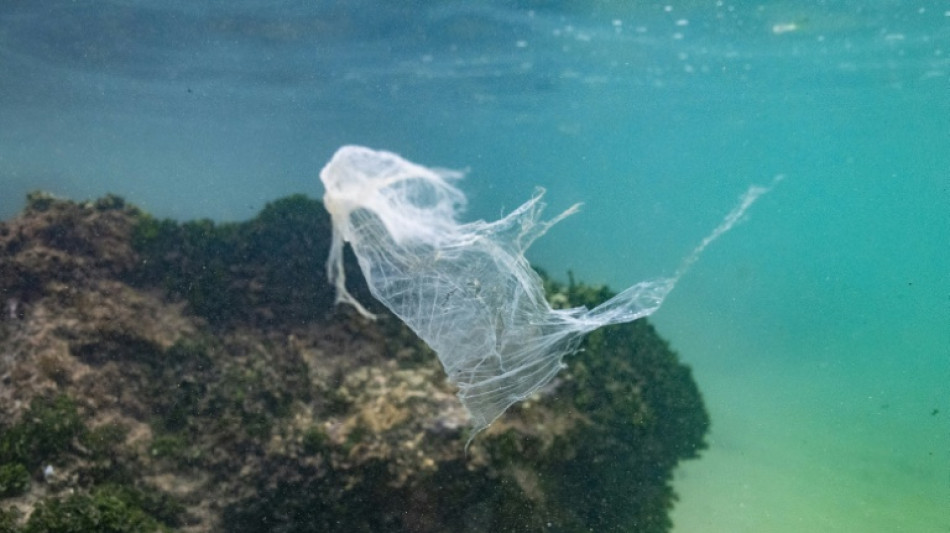
New research measures how much plastic is lethal for marine life / Photo: © AFP/File

Marine animals inevitably eat what we toss in the ocean, including pervasive plastics -- but how much is too much?
The bar is low, according to a new study out Monday: less than three sugar cubes worth could kill birds like Atlantic puffins, for example.
That threshold "is much smaller than we expected," said Erin Murphy, ocean plastics researcher at the Ocean Conservancy, the nonprofit behind the study.
The paper published by The Proceedings of the National Academy of Sciences saw researchers analyze necropsies from more than 10,000 animals in a bid to model how different types of plastic can affect marine life, and at what point the dose turns lethal.
"The science is clear," Murphy told AFP. "We do need to reduce the amount of plastics we produce. We need to improve collection and recycling, and we need to clean up what's already out there."
Scientists pulled the necropsy results from dozens of studies and other databases across the globe, using data in which cause of death and plastic consumption information was known. The animals generally were stranded on beaches or otherwise incidentally caught.
Researchers modeled the relationship between plastics ingested and likelihood of death, according to total pieces consumed as well as the volume eaten relative to the size of the animal's digestive tract.
They also examined how different types of plastic affect different types of animals. Seabirds, for instance, were particularly impacted by rubber and hard plastics.
Just six pieces, each smaller than a pea, were 90 percent likely to cause death in those birds, according to the study.
Sea turtles faced considerable risk from soft plastics like bags.
Those items were also especially deadly for marine mammals, as was fishing gear.
"One whale actually contained, like, a three-gallon bucket," Murphy said.
Half of the individual animals were from species listed as threatened, vulnerable or endangered.
- 'Existential threat' of plastic -
Study authors hope their work can contribute to improving or creating monitoring programs to curtail plastic pollution.
The research "helps us understand materials that might be particularly dangerous that we may want to address through policy," Murphy said, pointing to balloons or plastic bags.
The study centered on deaths that occurred swiftly after injury to the GI tract, which is just one piece of a broader problem.
It's one piece of a broader problem: the research did not include chronic effects of plastic chemicals or risks of getting tangled, which are also serious hazards.
"Plastic pollution poses an existential threat to ocean wildlife, and this is an underestimate of that overall threat," Murphy said.
Kara Lavender-Law, an oceanography professor at the Sea Education Association, called the study "remarkable" and "a really systematic, careful look at the data that exists" to better understand and predict risk.
In 2019, six million tonnes of plastic entered rivers, lakes and oceans, according to the OECD.
In recent years much attention has turned to the ubiquity of microplastics, which have been found in the deepest ocean trench and scattered throughout the human body.
This study is a reminder that the issue of plastics seeping into the environment remains multi-pronged, Lavender-Law told AFP.
The shift of concern to micro- and nanoplastics, and from wildlife to humans, is reasonable, she said, "but it doesn't mean that the risks of the larger debris to larger animals isn't still a real problem."
M.Cunningham--TFWP