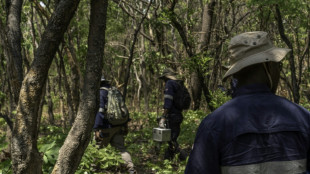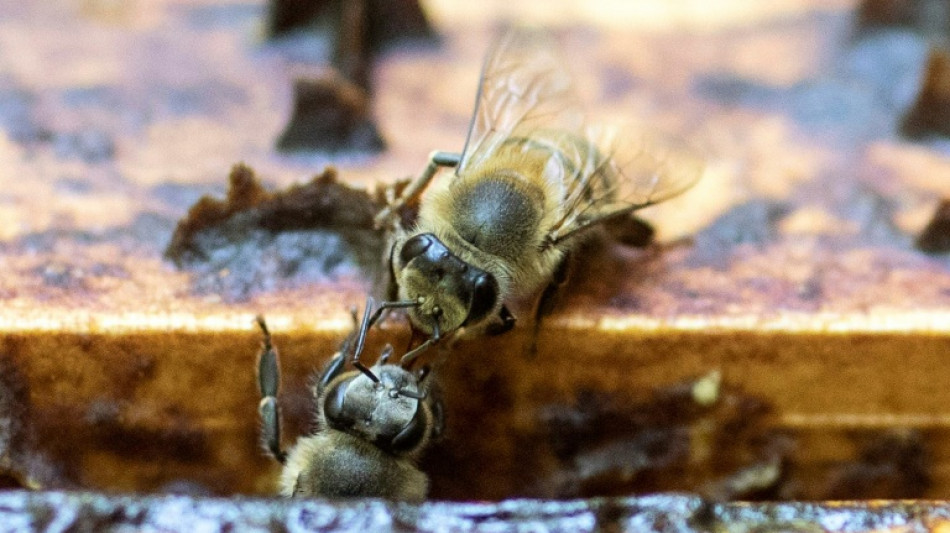
Rwanda bees being wiped out by pesticides / Photo: © AFP

The use of pesticides in East Africa, some sold by European firms despite being banned in the EU, is killing off bees in large numbers and threatening whole eco-systems, scientists say.
Joseph Ruzigana, of Muhanga district in southern Rwanda, woke up one morning to find all the bees in his 20 newly constructed beehives had died.
"Fellow beekeepers have also lost plenty of bees to these dangerous pesticides. It looks like we won't get any honey this season," he told AFP.
Ruzigana said many beekeepers, who number more than 100,000 in Rwanda according to officials, were giving up.
"The few bees left are very weak and unproductive... I used to get up to 25 kilogrammes (55 pounds) of honey from one beehive in a month-long season, my family was well taken care of, but all that has collapsed," he said.
Changing climate conditions are part of the problem: longer rains this season were not favourable to beekeeping.
But the main issue is pesticides, say locals and experts.
Bees pollinate crops including coffee, tea, avocados, mangoes, beans and tomatoes -- making them key to an agricultural sector that accounts for 30 percent of GDP and 70 percent of employment in Rwanda.
It is the same across the region. Uganda, Ethiopia, Tanzania and Kenya have all reported increasing bee mortality rates due to pesticides, according to the International Centre of Insect Physiology and Ecology in Nairobi.
- Hazardous pesticides -
Rwanda is a poor and landlocked country striving to feed its people through improved maize and rice cultivation, and pesticides help control pests like armyworms.
But many pesticides affect bees' navigation and reproduction, and have been linked to colony collapse disorder, when worker bees abandon a hive.
Rwanda grows large amounts of pyrethrum, a flower that could be used to make a natural pesticide, but exports all its pyrethrum liquid.
Instead, Rwandan farmers use imported synthetic pesticides. A 2022 study by Turkey's Ondokuz Mayis University found that 72 percent used Rocket, containing profenofos, which is highly toxic to bees.
Jeanne Nyirandahimana, part of a women's beekeeping cooperative, said average earnings have fallen from around 250,000 Rwandan francs ($178) per season to around 30,000 ($21).
"It is pesticides like Rocket killing our bees, every day we find many bees dead on roofs and some die in beehives," she said.
An earlier study by the University of Rwanda found that 22 percent of farmers around Lake Kivu used malathion, also deadly to bees.
Despite being banned for use in the EU, malathion is still exported by Denmark, France and Germany -- 12.5 tonnes in 2023, according to the European Chemicals Agency.
- 'Critical importance' -
Jean Claude Izamuhaye, head of crop production at the Rwanda Agricultural Board, said the body was working on the problem.
"They are our natural pollinators, and it is of critical importance that bees are saved," he said, adding that the board was looking into increasing the use of less harmful "bio-pesticides".
The continued sale of toxic pesticides by EU companies can also mean they end up in the food that is sold back to Europe.
A study released this month by Foodwatch, an advocacy group, found that more than half the food imported into the EU from Rwanda contained traces of "highly hazardous" pesticides that are banned in Europe.
EU countries sold 81,615 tonnes of 41 banned pesticides to other countries for agricultural use in 2022, according to the Pesticide Action Network.
T.Dixon--TFWP