New Zealand farmers battle pine forests to 'save our sheep' / Photo: © AFP

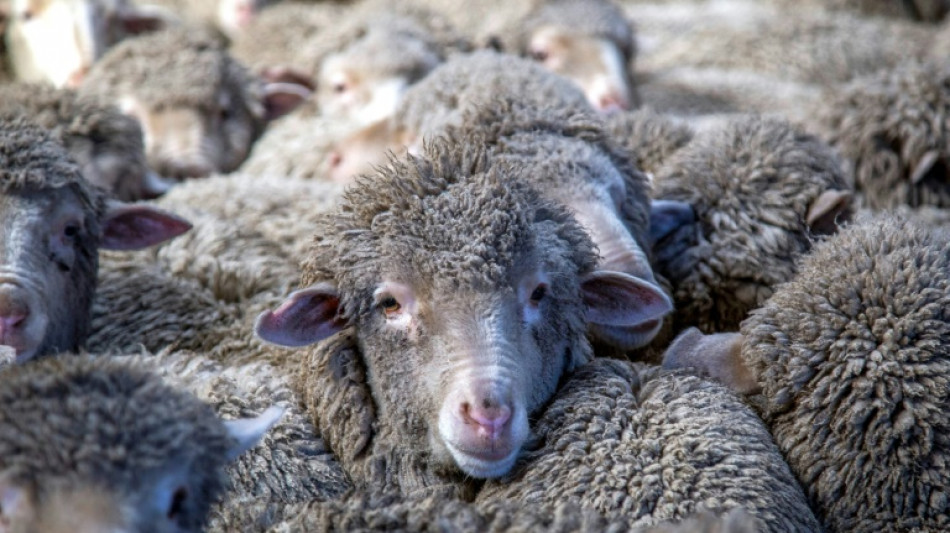
New Zealand sheep farmers are fighting to stop the loss of pasture to fast-spreading pine plantations, which earn government subsidies to soak up carbon emissions.
Concern over the scale of the farm-to-forest switch led the government to impose a moratorium in December on any new conversions not already in the pipeline.
But farmers say forestry companies are flouting the clampdown.
Last month, farmers launched a "Save our Sheep" campaign to reverse the loss of productive farmland.
Sheep numbers have plummeted to around 23 million, down from a peak of around 70 million in the 1980s, according to official figures.
Falling wool prices and rising milk and beef costs initially drove the decline, but the emissions trading since 2008 has added to the strain.
The government is now investigating potential breaches of its moratorium by forestry companies, which have been buying up farmland as recently as June.
Federated Farmers -- a lobby group for rural communities -- submitted to the government "a list of properties we believe have been sold for carbon forestry" since the halt, a spokesman said.
The federation is concerned about the sale of more than 15,200 hectares (37,600 acres) of farmland, he told AFP.
Dean Rabbidge, who runs a farm outside the Southland town of Wyndham, said some of the newly purchased farms had already been planted with pine trees.
- 'Criminal' -
"They're just ploughing on ahead, effectively giving the middle finger to the government announcement," Rabbidge told AFP.
The moratorium had created a "gold rush", he said.
"It's criminal what's happening."
Agriculture and Forestry Minister Todd McClay said the government would change the law by October because it had become more profitable to plant pine forests than to farm sheep.
"The law will include clarity on what qualifies as legitimate evidence of a pre-December investment and enable any specific cases to be properly assessed," McClay said.
"Anyone who has bought land since December 4, 2024, irrespective of whether they also had trees or not, will not be able to register this land into the emissions trading scheme."
Rural New Zealand once abounded with rolling pastures, rickety wire fences hemming in millions of sheep chewing on the green grass.
But Rabbidge said those days were gone.
"You won't see anything now," he said. "You're just driving through long pine tree tunnels -- shaded, wet, and damp."
New Zealand is one of the rare countries to allow 100 percent of carbon emissions to be offset by forestry.
"We're not anti planting trees," sheep farmer Ben Fraser told AFP.
"There are areas of land that should be retired, that aren't necessarily productive."
But the trading scheme had driven an excessive loss of sheep pastures to forestry, he said.
"That's the issue here."
- 'So short-sighted' -
Fraser, who farms near the North Island town of Ohakune, said he had seen an exodus of people from the district in recent years.
"Since 2018, there've been 17 farms converted to forestry," he said.
"That's about 18,000 hectares gone. So you're looking at about 180,000 sheep gone out of the district, plus lambs."
The loss of sheep impacted the region.
"If the farms thrive, then the towns thrive because people come in and spend their money," he said.
"You've got farm suppliers, your fertiliser guys, your supermarkets, your butchers, all of that stuff struggling.
"The local schools now have less kids in them. The people who stayed are now isolated, surrounded by pine trees."
Rabbidge said the same was happening in Southland.
"This whole thing is just so short-sighted," Rabbidge said.
"Businesses here are forecasting anywhere between a 10 and 15 percent revenue reduction for the next financial year, and that's all on the back of properties that have sold or have been planted out in pine trees," he said.
- 'Lamb on a plate' -
"Think of all the shearers, the contractors, the transporters, the farm supply stores, the workers, the community centres, the schools, rugby clubs. Everything is affected by this."
Government figures from 2023 show agriculture accounted for more than half of New Zealand's total greenhouse gas emissions.
But farmers argue they have been working hard to reduce emissions, down more than 30 percent since the 1990s.
"I could put a leg of lamb on a plate in London with a lower emissions profile, transport included, than a British farmer," Rabbidge said.
"We just use our natural resources. We're not housing animals indoors and carting feed in and manure out.
"Everything's done outside and done at low cost, low and moderate intensity."
G.Dominguez--TFWP