Urban temps turning cities into 'ovens,' UN Chief Heat Officer warns / Photo: © UN-Habitat/AFP

Whether in Miami, Athens, or Santiago, dedicated ambassadors are stepping up to tackle extreme urban heat around the world.
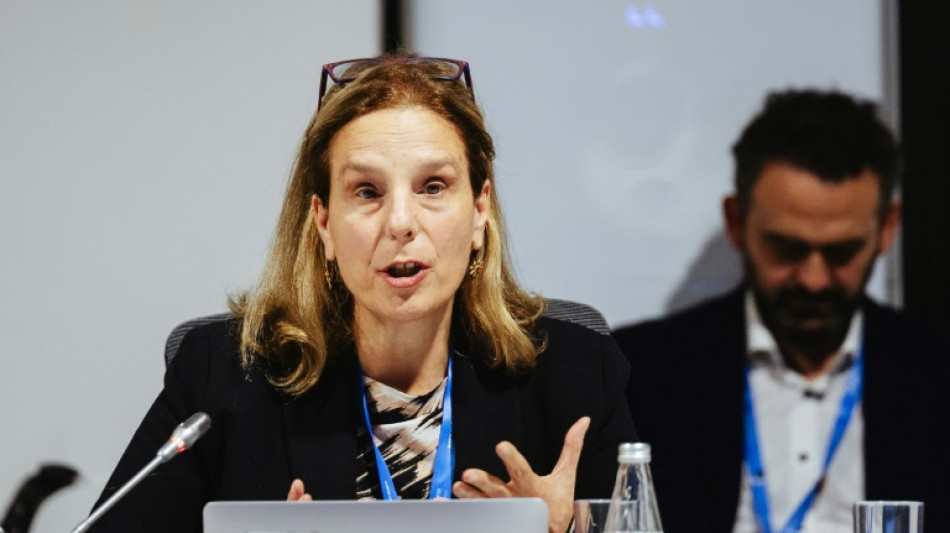
Eleni Myrivili, one of the field's pioneers who currently serves as the Global Chief Heat Officer for UN-Habitat, spoke to AFP about the urgent need to redesign cities to keep asphalt-riddled areas from turning into impossible-to-escape "ovens" for the most vulnerable populations.
Why are cities at the center of your work?
We identified that cities are basically the Ground Zero of heat, where we have the most dire impacts.
Cities today are heat traps and they are built for other types of temperatures, for a different climate. So we need to understand and totally change our perspective as to how we retrofit and develop new areas.
We do it in ways that take into account the fact that we will be dealing with a totally different climate in the next decades.
Can you give us examples of solutions your team worked on?
In Athens, we worked on the categorization of extreme heat, so that there are specific thresholds that trigger different types of policies and actions during heatwaves to make sure that we protect the most vulnerable populations.
We created heat campaigns, so people understand how dangerous heat can be for their health and what they should be doing during heatwaves.
Creating shading structures specifically for people waiting for trains or waiting for buses, so that these have special cooling aspects, like misters or like white or green roofs on them so they do not absorb heat while people are standing right under them. Of course, almost all of us have created plans for nature-based solutions and for bringing more nature into the cities.
How has climate change impacted your region?
On average in the Mediterranean part of Europe, we have about 29 days of strong heat stress (relative to the average for the 1991–2020 reference period), but we jumped from the 29 (average) to 66 (days) in the summer of 2024.
That's what we mean when we say that the average global temperatures have surpassed 1.5 degrees Celsius from the pre-industrial era, it means that on the ground we see these extraordinary heat seasons.
How can cities prepare against these new norms?
We need to be prioritizing shade, wind and water, and, of course, nature.
This also means that we have to bring within our development and city planning projects other types of expertise. We have to bring in landscape architects. We have to bring in ecologists, foresters, people who understand thermodynamics.
On a very large scale, but also on a very local scale, we have to consider water as the most crucial element that will break us or make us as we deal with rising heat.
In contrast, can you give us an example of what maladaptation can look like in urban spaces?
Air conditioning is a great example of maladaptation because it creates more problems than it solves.
Air conditioning is extremely important to the most vulnerable populations, we have to make sure they have access to air conditioning. But we have to understand that air conditioning has to be used carefully, and not as a panacea that is just going to help us deal with extreme heat.
We can't air condition ourselves out of this mess that we've created, because air conditioners are an extremely selfish way of dealing with extreme heat. You cool your own little space, while at the same time, you're blowing more hot air into the public spaces.
H.M.Hernandez--TFWP