The Fort Worth Press - Arctic sea ice hits lowest peak in satellite record, says US agency

USD -
AED 3.673042
AFN 65.503991
ALL 82.870557
AMD 381.503986
ANG 1.790055
AOA 917.000367
ARS 1434.006204
AUD 1.505729
AWG 1.8
AZN 1.70397
BAM 1.678705
BBD 2.013364
BDT 122.282772
BGN 1.680385
BHD 0.37694
BIF 2967
BMD 1
BND 1.294944
BOB 6.907739
BRL 5.418041
BSD 0.999601
BTN 89.876145
BWP 13.280747
BYN 2.873917
BYR 19600
BZD 2.010437
CAD 1.383405
CDF 2232.000362
CHF 0.804604
CLF 0.023471
CLP 920.770396
CNY 7.070104
CNH 7.06959
COP 3817.5
CRC 488.298936
CUC 1
CUP 26.5
CVE 95.103894
CZK 20.77405
DJF 177.720393
DKK 6.412285
DOP 64.250393
DZD 129.962727
EGP 47.569904
ERN 15
ETB 155.051714
EUR 0.858404
FJD 2.25845
FKP 0.748861
GBP 0.74968
GEL 2.703861
GGP 0.748861
GHS 11.45039
GIP 0.748861
GMD 73.000355
GNF 8687.503848
GTQ 7.657084
GYD 209.137648
HKD 7.78484
HNL 26.328145
HRK 6.471904
HTG 130.859652
HUF 328.06704
IDR 16691.4
ILS 3.23571
IMP 0.748861
INR 89.97675
IQD 1309.540669
IRR 42112.503816
ISK 127.920386
JEP 0.748861
JMD 159.999657
JOD 0.70904
JPY 155.243504
KES 129.303801
KGS 87.450384
KHR 4005.00035
KMF 422.00035
KPW 899.993191
KRW 1472.865039
KWD 0.30668
KYD 0.833083
KZT 505.531856
LAK 21676.809119
LBP 89516.767233
LKR 308.334728
LRD 175.938682
LSL 16.941802
LTL 2.95274
LVL 0.60489
LYD 5.434032
MAD 9.231238
MDL 17.00842
MGA 4458.959547
MKD 52.906919
MMK 2099.939583
MNT 3546.502114
MOP 8.016033
MRU 39.863012
MUR 46.070378
MVR 15.410378
MWK 1733.372244
MXN 18.178775
MYR 4.111039
MZN 63.903729
NAD 16.941802
NGN 1450.110377
NIO 36.787647
NOK 10.102304
NPR 143.802277
NZD 1.730805
OMR 0.384505
PAB 0.999682
PEN 3.360156
PGK 4.24115
PHP 58.978038
PKR 280.247111
PLN 3.633604
PYG 6875.152888
QAR 3.643659
RON 4.372204
RSD 100.804038
RUB 76.499736
RWF 1454.419048
SAR 3.753201
SBD 8.223823
SCR 13.497312
SDG 601.503676
SEK 9.403825
SGD 1.295485
SHP 0.750259
SLE 23.000338
SLL 20969.498139
SOS 570.266164
SRD 38.629038
STD 20697.981008
STN 21.02887
SVC 8.745763
SYP 11058.244165
SZL 16.928669
THB 31.871038
TJS 9.171638
TMT 3.5
TND 2.932369
TOP 2.40776
TRY 42.504604
TTD 6.776446
TWD 31.274038
TZS 2435.000335
UAH 41.959408
UGX 3536.283383
UYU 39.096531
UZS 11958.989413
VES 248.585904
VND 26360
VUV 122.070109
WST 2.790151
XAF 563.019389
XAG 0.017039
XAU 0.000237
XCD 2.70255
XCG 1.801608
XDR 0.70002
XOF 562.932418
XPF 102.347136
YER 238.403589
ZAR 16.92915
ZMK 9001.203584
ZMW 23.111058
ZWL 321.999592
  • RBGPF

    0.0000

    78.35

    0%

  • RYCEF

    -0.1400

    14.51

    -0.96%

  • CMSC

    -0.0200

    23.46

    -0.09%

  • SCS

    -0.0550

    16.175

    -0.34%

  • RIO

    -0.7200

    73.01

    -0.99%

  • VOD

    -0.1480

    12.485

    -1.19%

  • GSK

    -0.2650

    48.305

    -0.55%

  • RELX

    -0.1850

    40.355

    -0.46%

  • NGG

    -0.4100

    75.5

    -0.54%

  • BTI

    -0.8900

    57.15

    -1.56%

  • CMSD

    -0.0700

    23.25

    -0.3%

  • AZN

    0.3400

    90.37

    +0.38%

  • BCC

    -0.4400

    73.82

    -0.6%

  • JRI

    0.0250

    13.775

    +0.18%

  • BCE

    0.3850

    23.605

    +1.63%

  • BP

    -1.1400

    36.09

    -3.16%

Arctic sea ice hits lowest peak in satellite record, says US agency
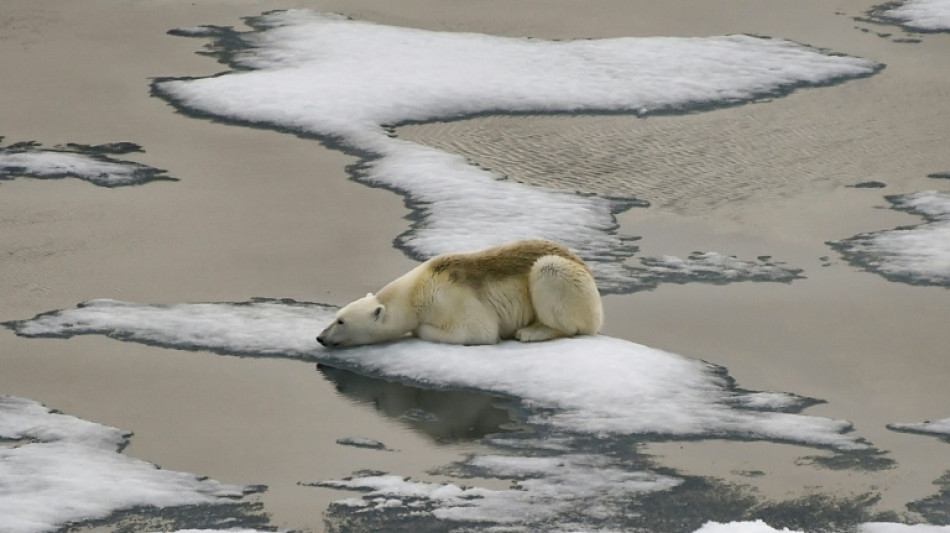
Arctic sea ice hits lowest peak in satellite record, says US agency / Photo: © AFP/File

Arctic sea ice hits lowest peak in satellite record, says US agency

This year's Arctic sea ice peak is the lowest in the 47-year satellite record, the US National Snow and Ice Data Center (NSIDC) said Thursday, as the planet continues to swelter under the mounting effects of human-driven climate change.

Text size:

The start of this year saw the warmest January on record followed by the third-warmest February, with the polar regions heating several times faster than the global average.

The 2025 maximum sea ice extent was likely reached on March 22, measuring 14.33 million square kilometers (5.53 million square miles) -- below the previous low of 14.41 million square kilometers set in 2017.

"This new record low is yet another indicator of how Arctic sea ice has fundamentally changed from earlier decades," said NSIDC senior research scientist Walt Meier in a statement.

"But even more importantly than the record low is that this year adds yet another data point to the continuing long-term loss of Arctic sea ice in all seasons."

The record-low Arctic maximum extent follows a near-record-low minimum extent of sea ice in the Antarctic, where it is now summer.

The 2025 Antarctic sea ice minimum, achieved on March 1, was 1.98 million square kilometers, tying for the second-lowest annual minimum in the satellite record, alongside 2022 and 2024.

Combined Arctic and Antarctic sea ice cover -- frozen ocean water that floats on the surface -- plunged to a record low in February, according to both the US National Oceanic and Atmospheric Administration (NOAA) and Europe's Copernicus Climate Change Service.

- A vicious cycle -

While floating sea ice does not directly raise sea levels, its disappearance sets off a cascade of climate consequences, altering weather patterns, disrupting ocean currents, and threatening ecosystems and human communities.

When reflective ice gives way to the dark ocean, the sun's energy, instead of bouncing back into space, is absorbed by the water, warming it and fueling further ice melt and global warming.

Shrinking Arctic ice is also reshaping geopolitics, opening new shipping lanes and drawing geopolitical interest. Since taking office this year, US President Donald Trump has said his country must control Greenland, a Danish autonomous territory rich in mineral resources.

The loss of polar ice spells disaster for numerous species, robbing polar bears, seals, and penguins of crucial habitat used for shelter, hunting, and breeding.

Last year was the hottest on record, and the latest NOAA prediction issued on March 13 predicts that La Nina weather conditions, which have a cooling effect on global average temperatures, were likely to give way to neutral conditions over the next month that would persist over the Northern Hemisphere summer.

Since mid-2023, only July 2024 fell below 1.5 degrees Celsius of warming, raising concerns that the Paris Agreement's goal of limiting long-term warming to 1.5C may be out of reach.

S.Jordan--TFWP