Rising seas test defenses of South American ports / Photo: © AFP

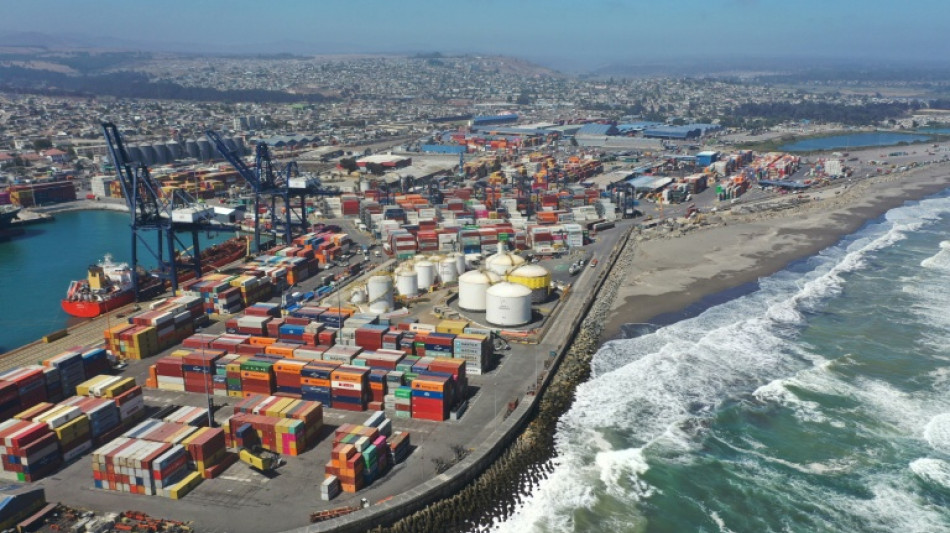
When waves come crashing over the sea wall in Chile's biggest port of San Antonio, dockers run for cover.
The state-run port, which handles 1.7 million containers annually, is frequently lashed by swells several meters high as rising ocean levels linked to climate change cause more frequent storm surges.
Some of the waves dwarf the wall that protects the port from where Chile ships wine and fruit to the world, ripping away 20-ton blocks of concrete defenses.
Since 2020, approximately 270 vessels each year have been either unable to dock at the port or set sail from San Antonio because of the raging seas.
San Antonio's location, in a wide bay with no natural defenses, leaves it particularly vulnerable to storm surges, said Andres Orrego, director of Chile's Portal Portuario shipping news site.
But all along South America's Pacific coast, shipping is being buffeted by rising sea levels.
With the southern hemisphere's approaching winter, when the biggest swells occur, the race is on to keep the tide at bay.
The new Chinese-built megaport at Chancay in Peru, which was inaugurated by President Xi Jinping in November, comes with a massive breakwater almost three kilometers (two miles) long.
On a recent day of calm seas at San Antonio, cranes were busy moving blocks to reinforce the sea wall and top it with curved concave blocks that break the waves' momentum as part of an $11-million climate mitigation upgrade.
Half of the wall has already been reinforced, helping reduce the number of days the port is out of action, from 47 in 2023 to 30 last year.
Over 1,300 kilometers to the north, the port of Antofagasta, which handles most of Chile's copper exports -- Chile is the world's biggest producer of the metal -- also plans to boost its storm defenses to reduce downtime.
- Major investment required -
The biggest port in the South Pacific, Callao port in Peru, is protected by a breakwater nearly 13 meters (43 feet) high.
The two nearby islands of San Lorenzo and El Fronton also act as natural coastal barriers.
And yet the port was forced to close for 10 days at the end of 2024, during storms that brought waves of up to four meters and raised concerns for worker safety.
Storm surges have also caused a slowdown in activity at Manta in Ecuador, a major tuna export hub which was forced to close for several days last year, according to the port's management.
The water swept away two barriers installed on stilts, leading the port operator to declare that "coastal protection works... and adaptation strategies... are now required."
Chilean climatologist Raul Cordero blames the "more intense and frequent storm surges" along the Pacific coast on the increase in ocean temperatures and levels.
"A lot of money will have to be invested in protection against (extreme) waves," he warned.
The port operators that spoke to AFP declined to give estimates for the revenue lost to rising seas.
But shipping companies have to pay between $80,000 and $150,000 for each extra day they remain moored in San Antonio, the port's deputy operations manager told AFP.
Jose Aldunate, who is in charge of boosting San Antonio's storm defenses, said he expects the port's new defenses to be breached by some extreme swells.
But he expressed confidence that, once the upgrade is finished in 2026, the flooding would be "within acceptable levels, so that the port can continue operating without problems."
T.Dixon--TFWP