The Fort Worth Press - Many animal 'geomorphs' under threat, study warns

USD -
AED 3.672498
AFN 64.99985
ALL 81.642835
AMD 377.219685
ANG 1.79008
AOA 916.999843
ARS 1444.993903
AUD 1.42456
AWG 1.8025
AZN 1.739919
BAM 1.653821
BBD 2.007458
BDT 121.808396
BGN 1.67937
BHD 0.376972
BIF 2953.360646
BMD 1
BND 1.26696
BOB 6.887396
BRL 5.239199
BSD 0.996711
BTN 90.052427
BWP 13.76724
BYN 2.855766
BYR 19600
BZD 2.004583
CAD 1.364735
CDF 2199.999662
CHF 0.775705
CLF 0.021794
CLP 860.539698
CNY 6.938198
CNH 6.93276
COP 3646.93
CRC 495.031923
CUC 1
CUP 26.5
CVE 93.239472
CZK 20.586902
DJF 177.491777
DKK 6.316395
DOP 62.762674
DZD 129.844036
EGP 46.980399
ERN 15
ETB 154.611983
EUR 0.84571
FJD 2.1993
FKP 0.732491
GBP 0.72983
GEL 2.695038
GGP 0.732491
GHS 10.919207
GIP 0.732491
GMD 73.000372
GNF 8744.661959
GTQ 7.645019
GYD 208.524474
HKD 7.814655
HNL 26.334616
HRK 6.373299
HTG 130.737911
HUF 322.122501
IDR 16769.95
ILS 3.082015
IMP 0.732491
INR 90.40995
IQD 1305.693436
IRR 42125.000158
ISK 122.629894
JEP 0.732491
JMD 156.204812
JOD 0.709
JPY 156.258503
KES 128.529975
KGS 87.449958
KHR 4021.613211
KMF 417.999855
KPW 899.987247
KRW 1452.425026
KWD 0.307159
KYD 0.830631
KZT 499.708267
LAK 21439.292404
LBP 89256.37795
LKR 308.507985
LRD 185.387344
LSL 15.964383
LTL 2.95274
LVL 0.60489
LYD 6.301423
MAD 9.14286
MDL 16.878982
MGA 4417.422775
MKD 52.122662
MMK 2100.119929
MNT 3568.429082
MOP 8.020954
MRU 39.790284
MUR 45.890364
MVR 15.450285
MWK 1728.325117
MXN 17.229695
MYR 3.926496
MZN 63.749894
NAD 15.964451
NGN 1388.150183
NIO 36.682353
NOK 9.630169
NPR 144.090313
NZD 1.657485
OMR 0.384517
PAB 0.996706
PEN 3.355418
PGK 4.270433
PHP 58.972499
PKR 278.75798
PLN 3.57305
PYG 6612.604537
QAR 3.624302
RON 4.309303
RSD 99.328011
RUB 76.999691
RWF 1454.737643
SAR 3.750016
SBD 8.058101
SCR 13.853199
SDG 601.501385
SEK 8.897095
SGD 1.27083
SHP 0.750259
SLE 24.475023
SLL 20969.499267
SOS 568.686313
SRD 38.1145
STD 20697.981008
STN 20.71794
SVC 8.721498
SYP 11059.574895
SZL 15.970032
THB 31.581504
TJS 9.314268
TMT 3.51
TND 2.882209
TOP 2.40776
TRY 43.500704
TTD 6.751283
TWD 31.581995
TZS 2584.039701
UAH 43.134476
UGX 3553.202914
UYU 38.389826
UZS 12201.979545
VES 371.640565
VND 25978.5
VUV 119.537583
WST 2.726316
XAF 554.697053
XAG 0.011471
XAU 0.000198
XCD 2.70255
XCG 1.796311
XDR 0.689842
XOF 554.678291
XPF 100.846021
YER 238.37502
ZAR 15.96065
ZMK 9001.200846
ZMW 19.560456
ZWL 321.999592
  • SCS

    0.0200

    16.14

    +0.12%

  • BCE

    0.2700

    26.1

    +1.03%

  • CMSC

    -0.0900

    23.66

    -0.38%

  • AZN

    -4.0900

    184.32

    -2.22%

  • BCC

    3.1800

    84.93

    +3.74%

  • RIO

    3.8500

    96.37

    +4%

  • BTI

    0.8800

    61.87

    +1.42%

  • NGG

    1.6200

    86.23

    +1.88%

  • GSK

    0.8700

    53.34

    +1.63%

  • CMSD

    -0.1400

    23.94

    -0.58%

  • RBGPF

    -2.1000

    82.1

    -2.56%

  • BP

    1.1200

    38.82

    +2.89%

  • JRI

    -0.0300

    13.12

    -0.23%

  • RYCEF

    0.2600

    16.93

    +1.54%

  • VOD

    0.3400

    15.25

    +2.23%

  • RELX

    -5.0200

    30.51

    -16.45%

Many animal 'geomorphs' under threat, study warns
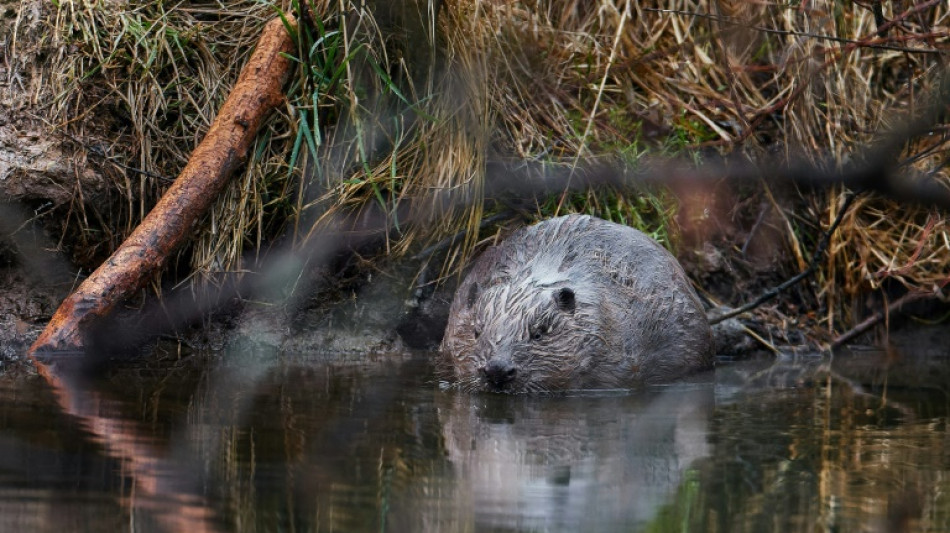
Many animal 'geomorphs' under threat, study warns / Photo: © AOPK CR/AFP/File

Many animal 'geomorphs' under threat, study warns

More than a quarter of our planet's natural "geomorphs" -- animals such as beavers and hippos that, collectively, can reshape entire landscapes -- are threatened or have shrinking populations, a new study says.

Text size:

The research, by Queen Mary University of London, found the scale of the impact these animals had on habitats -- by building dams, trampling new river courses, excavating earth and other activities -- rivals that caused by major floods.

Yet "more than a quarter (28 percent) of zoogeomorphic species are vulnerable to future population decline or regional or global extinction," the study's authors warned.

Their research, published mid-February, identified more than 600 species of land and freshwater animals that worked to redesign their ecosystems.

While beavers, of dam-building fame, and hippopotamuses and elephants, which in herds can flatten stretches of earth, are the best-known, there are many others -- often overlooked -- that could also be dubbed animal architects.

Among them are Brazilian termites, which have built high mounds connected by tunnels that cover an area larger than Iceland.

Others identified by the researchers included Australian marsupials, South American shrimp, Asian ants, as well as salmon, moles, earthworms and freshwater insects.

"What we tend to do is overlook the smaller animals that are less visible to us. Perhaps they're living underground or they're living underwater, but those animals can be really kind of important as well," one of the authors, Gemma Harvey, told AFP.

- 'Big cumulative effect' -

Harvey, a professor in biogeomorphology and landscape rewilding, said: "People can underestimate the effects of small animals, because individually their effects are small, but collectively they tend to be more abundant in the landscape so they can have a big cumulative effect."

She added that "it's the collective importance of the animals that is being discovered right now".

She noted the study did not look at marine ecosystems, and that "there will be many more animals that have not yet been studied or perhaps not even been discovered yet".

Of the more than 600 species identified in the research, 57 were classed as endangered, vulnerable or near-threatened on the International Union for the Conservation of Nature's Red List of Threatened Species.

Many others were at risk of declining populations.

"As we lose species from our landscapes, we lose those unique processes" of reshaping the habitats, Harvey said.

And the power these landscaping animals possess is staggering.

Harvey said her team's study estimated that the species they had identified together exerted 76,000 gigajoules of energy each year -- equivalent to that of "hundreds of thousands of extreme floods".

She said much was still unknown about the animals' geomorphing processes and she planned to further her research, notably by factoring in the effects of climate change.

"We're also interested in thinking kind of back in time in the past, about what we've already lost, you know, from our landscapes as species have become extinct or reduced a lot in terms of their population," she said.

J.P.Cortez--TFWP