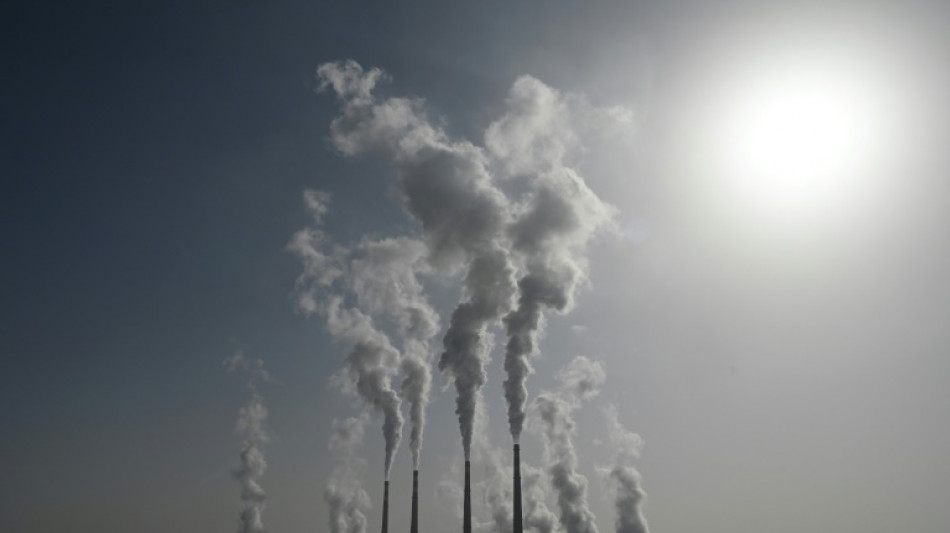
UN warns nations at climate science meeting 'time is not on our side' / Photo: © AFP/File

Tense negotiations on the timing and content of the UN's next blockbuster assessment of global warming science opened in China on Monday, with US scientists reportedly absent.
The meeting in Hangzhou comes on the heels of the hottest year on record and rising alarm over the pace of warming.
But it will be dominated by a battle over whether the next UN assessment will arrive in time for a crunch update on countries' progress in responding to climate change -- with some leading emitters arguing against trying to meet that deadline.
Donald Trump's withdrawal of the United States from the Paris Agreement on climate change will also cast a shadow, with media reports suggesting Washington will not send a delegation to the five-day meeting.
The talks are supposed to agree whether the next landmark report from the Intergovernmental Panel on Climate Change (IPCC), set up in 1988 to inform policymakers, will arrive in time to inform a 2028 UN "stocktake" of responses to rising temperatures.
Many wealthy countries and developing nations most exposed to climate impacts support an accelerated timetable for the three-part assessment covering physical science, climate impacts, and solutions for reducing greenhouse gas levels.
But they face objections from some oil producers and major polluters with rising emissions, such as India and China.
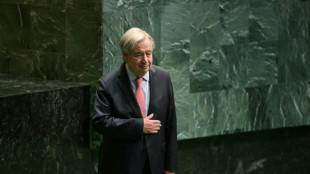
Opening the meeting, which will largely take place behind closed doors, top UN officials sought to inject urgency into proceedings.
The Paris Agreement's goal of keeping temperature rises no more than 1.5 Celsius above pre-industrial levels "is still mathematically possible but of course we are pushing against that very limit," warned UN Environment Programme chief Inger Andersen.
"Time is not on our side," she warned, urging "ambitious" outcomes from the talks.
The High Ambition Coalition of European and climate-vulnerable countries says the 2028 stocktake should be informed by the IPCC's next report.
"We owe it to everyone suffering the impacts of the climate crisis now, and to future generations, to make decisions about our planet's future on the basis of the best evidence and knowledge available to us," it said on Saturday.
The UN's first stocktake, published in 2023, was a damning indictment of the lack of progress on tackling warming.
In response, countries at the COP28 climate summit in Dubai issued a groundbreaking call for the world to move away from fossil fuels, albeit cushioned by concessions to oil and gas interests.
But while the IPCC has proposed delivering its next assessment in time for the 2028 stocktake, countries including China, Saudi Arabia, Russia and India have pushed back.
They argue, among other things, that the timeline would be too rushed, according to reports from previous meetings by the International Institute for Sustainable Development.
- 'Bitter' -
Observers fear the meeting will be the last chance to agree that the reports are delivered before the stocktake.
"I think why it's been so bitter is where we are at this moment in time -- the geopolitical pressure and the financial pain of impacts, and the transition away from fossil fuels," said one person close to the talks, who was not authorised to speak on the record.
They noted that new findings in fast-developing areas of research with global implications would be particularly important for policymakers as they draw up new climate plans.
The IPCC has warned the world is on course to cross the Paris deal's long-term warming threshold of 1.5C above pre-industrial levels in the early 2030s.
Recent studies have also suggested that milestone could be crossed before the end of this decade.
As the talks opened, there was no official confirmation -- or denial -- of reports that US delegates were kept away from the meeting by the White House.
The State Department declined to comment, while the IPCC said a list of delegates would be published after the talks.
But leading IPCC scientist Robert Vautard noted in a public LinkedIn post that "one of the technical support units will be missing, as well as one of the co-chairs".
Greenpeace USA's deputy climate programme director John Noel said the "work of the IPCC needs to be done with or without the US".
T.Harrison--TFWP