The Fort Worth Press - Philippine Eagle hatchling dies in conservation setback

USD -
AED 3.673042
AFN 65.503991
ALL 82.770403
AMD 381.503986
ANG 1.790055
AOA 917.000367
ARS 1431.358504
AUD 1.505118
AWG 1.8
AZN 1.70397
BAM 1.678705
BBD 2.013364
BDT 122.282772
BGN 1.67999
BHD 0.376283
BIF 2967
BMD 1
BND 1.294944
BOB 6.907739
BRL 5.439604
BSD 0.999601
BTN 89.876145
BWP 13.280747
BYN 2.873917
BYR 19600
BZD 2.010437
CAD 1.38275
CDF 2232.000362
CHF 0.804198
CLF 0.0235
CLP 921.880396
CNY 7.070104
CNH 7.069041
COP 3833.1
CRC 488.298936
CUC 1
CUP 26.5
CVE 95.103894
CZK 20.783504
DJF 177.720393
DKK 6.414904
DOP 64.250393
DZD 129.723093
EGP 47.482076
ERN 15
ETB 155.150392
EUR 0.858704
FJD 2.26045
FKP 0.748861
GBP 0.749625
GEL 2.69504
GGP 0.748861
GHS 11.45039
GIP 0.748861
GMD 73.000355
GNF 8687.503848
GTQ 7.657084
GYD 209.137648
HKD 7.78495
HNL 26.280388
HRK 6.469704
HTG 130.859652
HUF 328.020388
IDR 16689.55
ILS 3.23571
IMP 0.748861
INR 89.958504
IQD 1310
IRR 42112.503816
ISK 127.980386
JEP 0.748861
JMD 159.999657
JOD 0.70904
JPY 155.370385
KES 129.303801
KGS 87.450384
KHR 4005.00035
KMF 422.00035
KPW 899.993191
KRW 1473.803789
KWD 0.30697
KYD 0.833083
KZT 505.531856
LAK 21690.000349
LBP 89550.000349
LKR 308.334728
LRD 176.903772
LSL 16.950381
LTL 2.95274
LVL 0.60489
LYD 5.450381
MAD 9.236504
MDL 17.00842
MGA 4487.000347
MKD 52.906919
MMK 2099.939583
MNT 3546.502114
MOP 8.016033
MRU 39.860379
MUR 46.103741
MVR 15.403739
MWK 1737.000345
MXN 18.174204
MYR 4.111039
MZN 63.910377
NAD 16.950377
NGN 1450.080377
NIO 36.775039
NOK 10.105104
NPR 143.802277
NZD 1.730703
OMR 0.383822
PAB 0.999682
PEN 3.517504
PGK 4.187504
PHP 58.965038
PKR 280.375038
PLN 3.63215
PYG 6875.152888
QAR 3.64105
RON 4.372604
RSD 100.993038
RUB 76.367149
RWF 1451
SAR 3.753173
SBD 8.230592
SCR 13.523679
SDG 601.503676
SEK 9.40005
SGD 1.295404
SHP 0.750259
SLE 23.703667
SLL 20969.498139
SOS 571.503662
SRD 38.629038
STD 20697.981008
STN 21.4
SVC 8.745763
SYP 11058.244165
SZL 16.950369
THB 31.875038
TJS 9.171638
TMT 3.51
TND 2.95125
TOP 2.40776
TRY 42.526038
TTD 6.776446
TWD 31.289038
TZS 2435.000335
UAH 41.959408
UGX 3536.283383
UYU 39.096531
UZS 12005.000334
VES 254.551935
VND 26360
VUV 122.070109
WST 2.790151
XAF 563.019389
XAG 0.017168
XAU 0.000238
XCD 2.70255
XCG 1.801608
XDR 0.70002
XOF 562.503593
XPF 102.875037
YER 238.550363
ZAR 16.926304
ZMK 9001.203584
ZMW 23.111058
ZWL 321.999592
  • RBGPF

    0.0000

    78.35

    0%

  • NGG

    -0.5000

    75.41

    -0.66%

  • GSK

    -0.1600

    48.41

    -0.33%

  • CMSC

    -0.0500

    23.43

    -0.21%

  • CMSD

    -0.0700

    23.25

    -0.3%

  • RELX

    -0.2200

    40.32

    -0.55%

  • BTI

    -1.0300

    57.01

    -1.81%

  • SCS

    -0.0900

    16.14

    -0.56%

  • AZN

    0.1500

    90.18

    +0.17%

  • RYCEF

    -0.1600

    14.49

    -1.1%

  • JRI

    0.0400

    13.79

    +0.29%

  • RIO

    -0.6700

    73.06

    -0.92%

  • VOD

    -0.1630

    12.47

    -1.31%

  • BP

    -1.4000

    35.83

    -3.91%

  • BCC

    -1.2100

    73.05

    -1.66%

  • BCE

    0.3300

    23.55

    +1.4%

Philippine Eagle hatchling dies in conservation setback
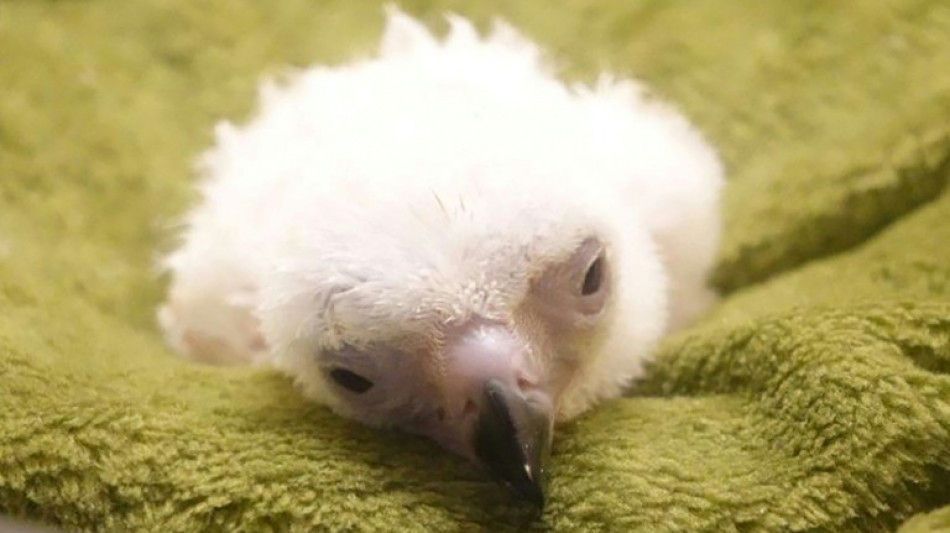
Philippine Eagle hatchling dies in conservation setback / Photo: © PHILIPPINE EAGLE FOUNDATION (PEF)/AFP/File

Philippine Eagle hatchling dies in conservation setback

A Philippine Eagle chick hatched via artificial insemination has died, an avian conservation foundation has announced, in a fresh setback for one of the world's largest and most critically endangered raptors.

Text size:

Habitat loss and ruthless hunting have caused a rapid decline in the number of Philippine Eagles, the national bird of the archipelago country.

The hatching of "Chick Number 30" last month briefly stirred hope that science and conservation could save the forest-dwelling raptor species, but expectations were soon cruelly dashed.

"This heartbreaking loss is a solemn reminder of how delicate chick-rearing can be and how critically endangered species are particularly vulnerable," the Philippine Eagle Foundation said in an undated statement on its website.

A product of artificiraptorsal insemination, the 17-day-old male chick, which died on Friday, had been the first successful hatchling in the new facility.

Complications from a condition known as "yolk sac retention" were the possible cause of death, the statement said.

The condition, common in poultry farms, indicates the entry of bacteria through incubating eggshells, or chick exposure to bacteria after hatching.

Philippine Eagles, known for their sumptuous head plumage and a 2-metre (seven-foot) wingspan, are difficult to mate, with some even killing unwanted suitors.

There are only 392 pairs of the eagles remaining in the wild, with just 30 born in captivity, the foundation estimates.

The organisation's ultimate goal is to release the eagles back into the wild, but it has not once succeeded in its 37 years of operation.

Many Philippine Eagles have died after being shot or electrocuted while perched on power lines.

Each pair needs at least 4,000 hectares (about 10,000 acres) of forest, a rapidly-disappearing ecosystem in the Philippines, to hunt flying lemurs, palm civets, flying squirrels and monkeys.

While underweight, the latest chick had initially displayed normal behaviour and feeding patterns until November 26, when it began to exhibit laboured breathing and sneezing, the foundation said.

"Of all the chicks that they've successfully hatched and raised, this is the first time that the (foundation) breeding team had a case of yolk sac retention, which is usually linked to infection or other causes," Bayani Vandenbroeck, who conducted the necropsy, was quoted as saying.

"Strict hygiene and management protocols were followed, so we did not expect this at all, but we will probe where else we can improve," he added.

W.Lane--TFWP