Failure haunts UN environment conferences / Photo: © AFP/File

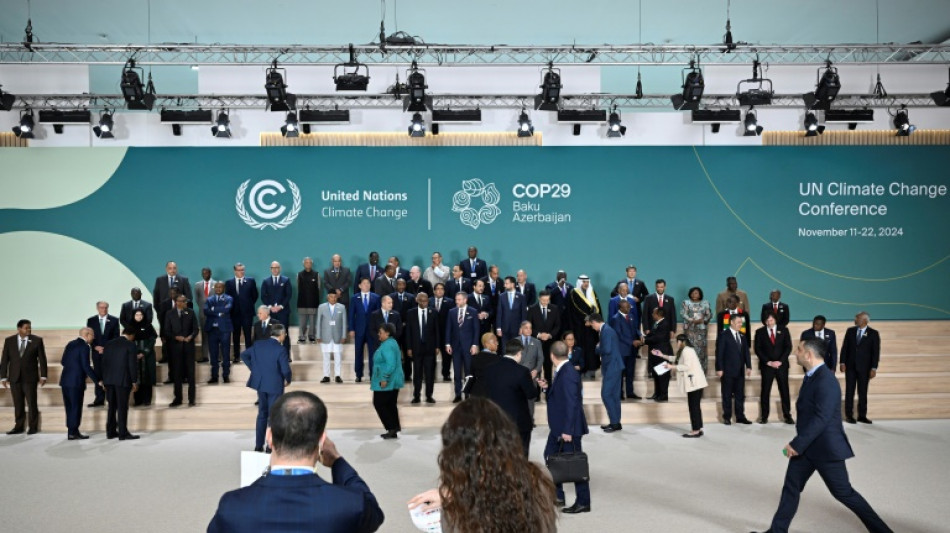
Negotiators were struggling to reach a deal Saturday at UN climate talks in Baku. If they fail, it would not be the first time.
Since the first UN climate conference in 1995, several of the annual sessions have descended into acrimony or even failed completely because of a lack of consensus.
COP6 in The Hague in 2000 marked the only time the talks were suspended. They resumed half a year later in so-called COP6-2 in Bonn, the headquarters of the UN Framework Convention on Climate Change.
COP6 took place in the midst of disputes over the razor-thin US election, with negotiators uncertain if the next president of the largest economy would be George W. Bush, a climate sceptic, or Al Gore, who later shared the Nobel Peace Prize for his climate activism.
"There was that uncertainty. They couldn't agree. And ministers started leaving and they had to suspend the COP," said Alden Meyer, a veteran watcher of climate diplomacy now at the E3G think tank.
The immediate dispute was on the use of credits from land use, such as forests that counteract greenhouse gases, in the emission cuts required under the landmark Kyoto Protocol.
Paradoxically, the victory of Bush -- who quickly withdrew the US from Kyoto and declared it dead -- spurred action in Bonn, with the European Union and others eager to show that climate action would move forward.
- The ghost of Copenhagen -
Perhaps no climate conference came with as much anticipation -- and resulted in such disappointment -- as COP15 in Copenhagen in 2019.
The election of Barack Obama, who vowed to turn the page on Bush's climate policies, raised hopes sharply and the Copenhagen summit took on epic proportions as leaders from around the world flocked to the wintry Danish capital.
But negotiators who usually do the heavy lifting had expected the leaders to make decisions, resulting in inertia and later in bitterness with smaller countries resenting not having a seat at the table.
Copenhagen turned into a rare modern example of world leaders personally hashing out an agreement, but Obama faced strong pushback from China.
Obama needed a then fast-growing China to be part of an agreement to satisfy domestic opponents who refused otherwise to act on climate, but China rejected binding targets.
The Copenhagen accord in the end offered little on emissions cuts beyond acknowledging the realities of climate change, although wealthy countries also promised to deliver up to $100 billion per year by 2020 to help the poorest nations cope with rising temperatures and disasters.
But bleary-eyed delegates failed to make it a UN agreement due to loud opposition on the floor from a small number of countries -- notably Venezuela, whose envoy slashed her own hand in what she intended as a bloody metaphor for the developing world.
COP -- which stands for Conference of the Parties -- needs "consensus" for decisions, but what that means is a matter of interpretation.
The conference instead simply agreed to "note" the Copenhagen accord among world leaders.
Paul Watkinson, a former French negotiator, said Copenhagen was also marred by logistical problems that sapped momentum.
"In Copenhagen, there was no longer anything to eat or drink on Saturday," he said, referring to the day after the talks' official end, even though COPs rarely finish on time.
The French delegation, he said, had prepared its own coffee machine.
More recently, on November 2, another COP process on biodiversity ended without a decision on committing money to stop the destruction of nature.
The biodiversity COP16 in Cali, Colombia had stretched into an extra night and the Colombian presidency was unable to establish a quorum, with so many delegates either asleep or having boarded return flights.
Colombia has called for a resumption of talks in the first trimester of 2025.
W.Lane--TFWP