The Fort Worth Press - Common water disinfectant creates potentially toxic byproduct: study

USD -
AED 3.672496
AFN 66.163223
ALL 82.178011
AMD 380.793362
ANG 1.790403
AOA 916.999963
ARS 1450.731498
AUD 1.513157
AWG 1.8025
AZN 1.699323
BAM 1.66612
BBD 2.009004
BDT 121.89647
BGN 1.668398
BHD 0.377025
BIF 2948.778015
BMD 1
BND 1.289026
BOB 6.892615
BRL 5.517898
BSD 0.997432
BTN 90.213099
BWP 13.173867
BYN 2.945358
BYR 19600
BZD 2.006108
CAD 1.378575
CDF 2265.000409
CHF 0.795003
CLF 0.023408
CLP 918.2798
CNY 7.04325
CNH 7.034398
COP 3865.5
CRC 496.969542
CUC 1
CUP 26.5
CVE 93.933289
CZK 20.824599
DJF 177.619334
DKK 6.374704
DOP 62.781377
DZD 129.775525
EGP 47.582801
ERN 15
ETB 155.065976
EUR 0.85316
FJD 2.28425
FKP 0.746872
GBP 0.747355
GEL 2.69501
GGP 0.746872
GHS 11.4911
GIP 0.746872
GMD 73.50261
GNF 8720.392873
GTQ 7.63972
GYD 208.695208
HKD 7.78155
HNL 26.279698
HRK 6.413504
HTG 130.648857
HUF 331.706965
IDR 16718.75
ILS 3.214715
IMP 0.746872
INR 90.26275
IQD 1306.658943
IRR 42109.999861
ISK 126.279652
JEP 0.746872
JMD 159.602697
JOD 0.708983
JPY 155.7825
KES 128.950061
KGS 87.449784
KHR 3995.195543
KMF 418.999777
KPW 899.993999
KRW 1476.105228
KWD 0.30709
KYD 0.831243
KZT 513.04833
LAK 21605.574533
LBP 89322.26491
LKR 308.916356
LRD 176.553522
LSL 16.705284
LTL 2.95274
LVL 0.60489
LYD 5.408398
MAD 9.140319
MDL 16.831784
MGA 4506.288786
MKD 52.51797
MMK 2100.057046
MNT 3547.602841
MOP 7.992265
MRU 39.658749
MUR 46.040507
MVR 15.450121
MWK 1729.597117
MXN 18.00418
MYR 4.086013
MZN 63.895167
NAD 16.705355
NGN 1454.640309
NIO 36.706235
NOK 10.209009
NPR 144.335596
NZD 1.733835
OMR 0.384499
PAB 0.997474
PEN 3.360253
PGK 4.241363
PHP 58.633504
PKR 279.486334
PLN 3.58771
PYG 6699.803648
QAR 3.636364
RON 4.343702
RSD 100.170284
RUB 80.066467
RWF 1452.319802
SAR 3.750688
SBD 8.130216
SCR 13.597311
SDG 601.500902
SEK 9.300155
SGD 1.29088
SHP 0.750259
SLE 24.100325
SLL 20969.503664
SOS 569.036089
SRD 38.678005
STD 20697.981008
STN 20.870336
SVC 8.728097
SYP 11058.365356
SZL 16.70138
THB 31.447502
TJS 9.206851
TMT 3.5
TND 2.911152
TOP 2.40776
TRY 42.734797
TTD 6.766306
TWD 31.540797
TZS 2478.95102
UAH 42.336966
UGX 3555.775153
UYU 38.863072
UZS 12075.031306
VES 276.231203
VND 26325
VUV 121.372904
WST 2.784715
XAF 558.777254
XAG 0.015099
XAU 0.000231
XCD 2.70255
XCG 1.797668
XDR 0.69494
XOF 558.777254
XPF 101.59601
YER 238.349681
ZAR 16.76745
ZMK 9001.20138
ZMW 22.866221
ZWL 321.999592
  • RYCEF

    0.2200

    14.86

    +1.48%

  • GSK

    -0.1050

    48.61

    -0.22%

  • BP

    -0.4900

    33.98

    -1.44%

  • SCS

    0.0200

    16.14

    +0.12%

  • RIO

    0.1090

    77.3

    +0.14%

  • NGG

    -0.3750

    76.785

    -0.49%

  • CMSD

    -0.0850

    23.315

    -0.36%

  • BTI

    0.2200

    57.39

    +0.38%

  • CMSC

    -0.0800

    23.26

    -0.34%

  • VOD

    0.0450

    12.855

    +0.35%

  • BCC

    1.0250

    77.35

    +1.33%

  • BCE

    -0.1300

    23.02

    -0.56%

  • JRI

    -0.1000

    13.37

    -0.75%

  • AZN

    0.6700

    90.53

    +0.74%

  • RBGPF

    -1.7900

    80.22

    -2.23%

  • RELX

    0.1550

    40.71

    +0.38%

Common water disinfectant creates potentially toxic byproduct: study
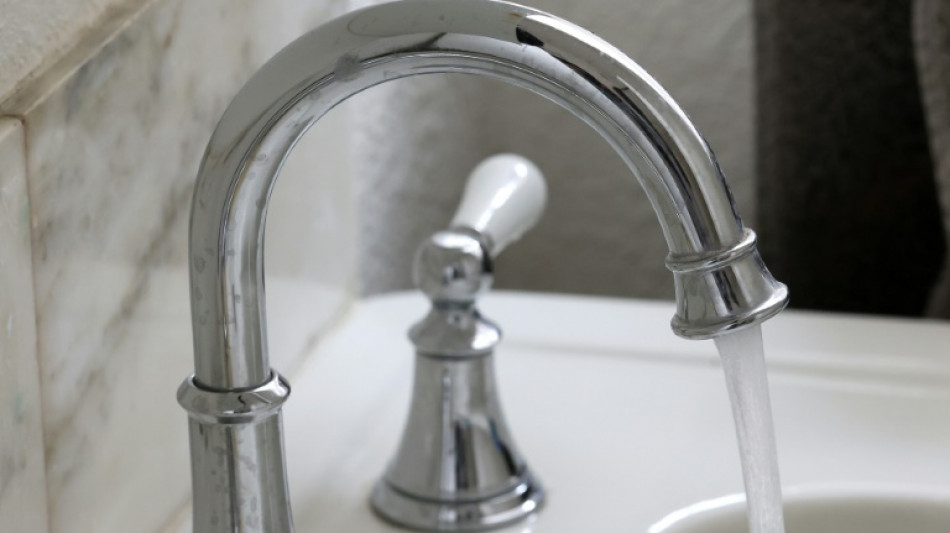
Common water disinfectant creates potentially toxic byproduct: study / Photo: © GETTY IMAGES NORTH AMERICA/AFP/File

Common water disinfectant creates potentially toxic byproduct: study

A group of chemical compounds used to disinfect water for one-third of the US population and millions of others globally produces a potentially toxic byproduct, according to new research published Thursday, sparking calls for an "immediate" investigation into possible health impacts.

Text size:

Inorganic chloramines have been used for decades to remove pathogens from public water supplies.

Though chlorine remains the most widely used disinfectant in the US and globally, chloramines have increasingly replaced it in many systems to reduce certain byproducts linked to bladder and colon cancer, low birth weight, and miscarriage.

Today, more than 113 million Americans rely on chloraminated drinking water, with the compound also in use across Canada, Asia, and Europe.

"However, chloramines themselves decompose into products that are poorly characterized," said Julian Fairey, lead author of the study published in the journal Science, during a press briefing.

One such product, identified more than 40 years ago but left chemically unresolved, was simply dubbed the "unidentified product."

Fairey and his team have finally cracked the mystery.

Using a combination of traditional chemistry methods and modern tools like high-resolution mass spectrometry and nuclear magnetic resonance spectroscopy, they identified the compound as "chloronitramide anion."

The compound was detected in all 40 chloraminated drinking water samples tested, with concentrations reaching up to 100 micrograms per liter -- exceeding typical regulatory limits for disinfection byproducts, which range between 60 and 80 micrograms per liter.

Although toxicological studies have yet to be conducted, the researchers sounded a warning.

"The chemical structure looks concerning, as does the concentrations at which this compound is forming, so we certainly think health effects studies are warranted," Fairey said.

Their study calls for the compound to be "an immediate candidate" for quantification in public waters and for closer health and toxicity studies.

Water utilities could consider reverting to chlorine, Fairey suggested, though this would require secondary disinfectants to neutralize the known toxic byproducts chlorine produces.

With further study and regulatory action likely years away, the researchers recommended home filtration systems using activated carbon blocks for people who are concerned.

T.Dixon--TFWP