COP29 fight for climate money 'humiliating': Bangladesh's Yunus / Photo: © AFP

Bangladesh's interim leader on Wednesday slammed the "humiliating" fight for climate finance at the COP29 talks, demanding rich countries and emitters pay for the problems they caused.
Muhammed Yunus, who leads one of the world's most climate-vulnerable nations, said countries who bear little responsibility for global warming were being forced to haggle for help adapting to the consequences.
"I think that's very humiliating for nations, to come and ask for money to fix... (the) problem that others caused for them," he told AFP on the sidelines of UN climate talks in Azerbaijan.
"Why should we be dragged here to negotiate?" he added.
"You know the problem... it's not a fish market."
The comments illustrate the frustration of developing countries seeking substantially more money from rich nations to help them adapt to climate shocks and transition to cleaner energy.
Sharpening their focus, a new report warned that planet-warming carbon emissions from fossil fuels rose to record highs this year and much faster action is needed to meet climate pledges.
That means that to meet the Paris agreement's ambitious goal of limiting warming to 1.5 degrees Celsius, the world now needs to reach net-zero CO2 emissions by the late 2030s -- instead of 2050, the scientists at the Global Carbon project said.
"This is what the presidency has been promoting since the beginning of this year -- the time window is narrowing, shrinking -- and we need to act urgently," Yalchin Rafiyev, Azerbaijan's lead negotiator for COP29, told AFP.
"There are still possibilities for keeping 1.5C within reach", and striking a deal on climate finance "will definitely pave the way for us to realise this opportunity".
- 'Magic money tree' -
Negotiators still have a large mountain to climb on any deal, however, with a fresh draft Wednesday leaving most sticking points completely unresolved.
Most developing countries want an annual commitment of at least $1.3 trillion -- over 10 times what donors including the United States, the European Union and Japan currently pay.
The donor countries want others to join them in paying, particularly China and wealthy Gulf states, and are reluctant to promise large new amounts of public money at a time when they face economic and political pressure at home.
They want instead to promise private sector mobilisation, an option NGOs describe as "wishful thinking".
"They always like to look at the private sector as the magic money tree," said Debbie Hillier, global climate policy lead for Mercy Corps.
For developing countries already buried in debt, the aid must be in grants rather than loans.
Philip Davis, the prime minister of the Bahamas, said small island nations have spent 18 times more on debt repayment than they have received in climate finance.
"The world has found the ability to finance wars, the ability to mobilise against pandemics," Davis said.
"Yet when it comes to addressing the most profound crisis of our time, the very survival of nations, where is that same ability?"
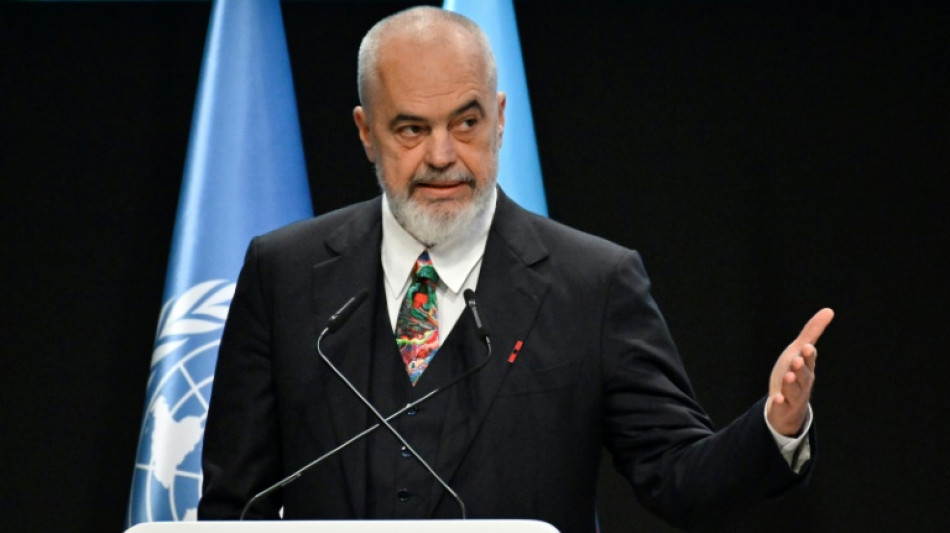
With progress on finance moving no faster than on emissions, Albanian Prime Minister Edi Rama ditched his prepared remarks to complain that "our speeches full of good words about climate change, change nothing".
He skewered the many leaders who skipped the event, saying their absences added "insult to injury".
- Diplomatic tensions -
Hanging over proceedings was a brewing diplomatic spat between host Azerbaijan and France, whose ecology minister said she would not travel to Baku after "unacceptable" remarks by Azerbaijan's president.
The comments were in reference to bloody protests that rocked New Caledonia this year.
Relations between Paris and Baku are very frosty over France's longtime support for Azerbaijan's arch-rival Armenia.
Last year, Azerbaijan defeated the country in a lightning offensive when it retook the breakaway Armenian-populated region of Nagorno-Karabakh -- leading to an exodus of more than 100,000 Armenians.
Wednesday was not entirely without progress, though: next year's COP host Brazil formally submitted its updated climate commitments, pledging to reduce greenhouse gases 59-67 percent from 2005 levels by 2035.
The pledge would be ambitious "as long as the country strives for the highest end," said Karen Silverwood-Cope, climate director at WRI Brasil.
"If Brazil only meets the low end... the country will veer well off track from delivering on its climate goals."
W.Knight--TFWP