UN aims to set standards for scandal-hit carbon markets
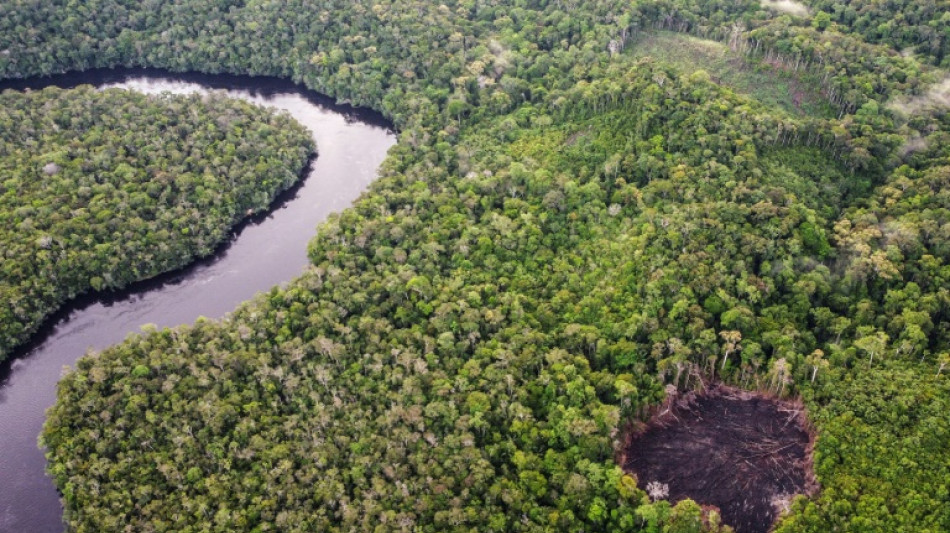
/ Photo: © AFP/File

Governments could finally approve new UN standards for countries and companies wanting to trade carbon credits, a long-awaited decision some hope can bring credibility to a scandal-ridden sector.
Carbon credits are generated by activities that reduce emissions, like tree planting or replacing polluting coal with renewable energy, but buyers have long relied on unregulated markets shaken by high-profile scandals.
At this month's COP29 climate summit in Azerbaijan, the UN hopes to approve rules and a verification system years in the making to provide some certainty for governments and businesses exchanging carbon credits.
In carbon markets, one credit equals a tonne of carbon dioxide prevented from entering, or removed from, the atmosphere.
The UN's proposed standards mostly relate to countries -- mainly wealthy polluters -- seeking to offset their emissions by purchasing credits from nations that have cut greenhouse gases above what they promised.
Climate negotiators have been mulling the idea since the 2015 Paris Agreement.
Observers say the November 11-22 UN talks could see a breakthrough, with a supervisory body expected to put fresh proposals for verifying carbon credits on the table.
"Most countries don't want it to be delayed any further," said Jonathan Crook, an expert with Carbon Market Watch, adding that there was "a lot of pressure" for the UN-backed carbon marketplace to get up and running.
Countries have already started to trade in carbon directly.
Earlier this year Switzerland bought credits from Thailand linked to emissions reduced by converting buses in Bangkok to electric power.
Observers say a regulated carbon market could provide much-needed additional revenue for developing countries to slash their own emissions without taking on more debt.
- Fraud claims -
An earlier UN foray into the regulation of carbon markets, known as Article Six, was rejected in Dubai in 2023 by the European Union and developing nations for being too lax.
This time around the supervisory body, which has spent months canvassing NGOs and specialists, say the rules are much more rigorous, and give local people the right to challenge credit-generating activities on their territory.
The new proposals include guidelines for future certification to ensure that a project either avoids the release of CO2 by human actions, or acts to remove the planet-heating gas from the atmosphere and store it over an extended period of time.
For example, owning an existing forest that naturally stores CO2 would not be credited, but efforts to protect it from a genuine threat of deforestation could be.
The plans set monitoring standards -- to check that trees are actually planted, or that the risks of a forest being ravaged by fire are properly taken into account.
The UN proposal includes plans for a fund, modelled on mutual insurance, which would see a percentage of each project's credits set aside in the event it fails to store carbon as promised.
The proposed rules still need to be approved at COP29.
This year, instead of giving negotiators the option of modifying the proposal texts, the specialist body has already adopted them for delegates to take or leave for another year.
Observers say it is possible that the text laying out standards for the voluntary system could pass more easily than decisions covering country-to-country carbon trading.
It follows collapsing confidence in the unregulated voluntary carbon market, where the credibility of many credits has come under scrutiny after allegations many did not deliver any benefit for the climate.
Some projects have been accused of fraud, while other forest-based initiatives have gone up in wildfire smoke, prompting an exodus of big corporate brands using these credits to claim carbon neutrality.
- 'New benchmark' -
The voluntary market, for its part, is eagerly awaiting a UN decision.
"We do expect that (it) will evolve to become a new benchmark for quality in the whole market," Karolien Casaer-Diez, an expert with South Pole, a consultancy that develops emission-reduction projects to sell credits.
That could boost standards across the board, she said, predicting "close and rapid alignment" with the new UN system from Verra and Gold Standard, the main private certifiers of carbon credits.
Crook said important provisions in the proposals include ensuring credits are not allocated to existing carbon stocks -- an unthreatened patch of forest, for example -- and that projects can show they do actually boost emission reductions.
But he said ambiguity remains in the wording that could leave texts open to interpretation, notably over tricky issues like estimating CO2 pollution over long periods of time.
"We know that the world is not perfect and that accurate risk assessments are complicated, if not impossible for many project types," he said.
The real test, he added, will come in putting the proposals into action.
P.Navarro--TFWP