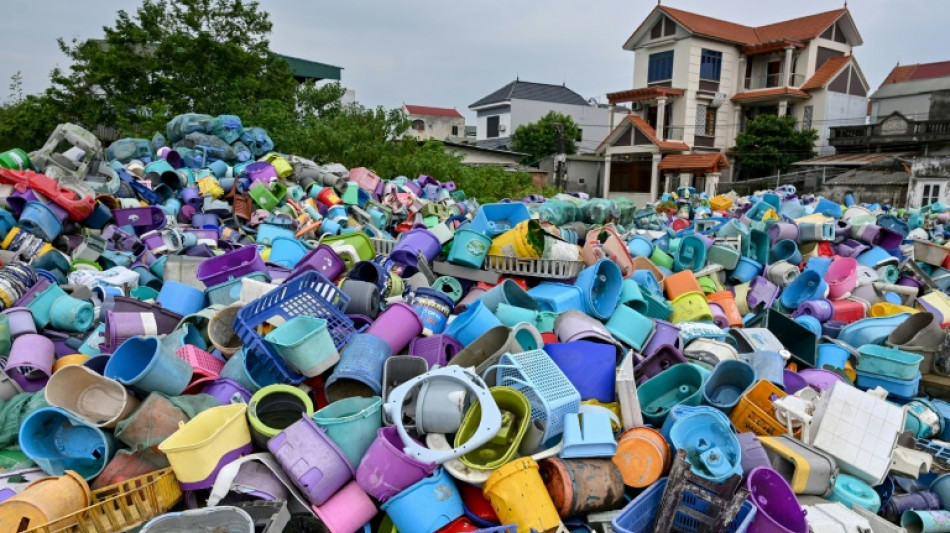
New doubt over production cuts in plastic pollution treaty / Photo: © AFP/File

A global treaty to end plastic pollution may be in jeopardy, negotiators and environmentalists said Thursday, with new signs that countries may not be able to agree on production cuts.
A document circulated by the diplomat chairing the talks, and seen by AFP, includes no language urging production limits -- considered key by many countries to a strong treaty.
The so-called non-paper is intended to help negotiators make progress in crunch negotiations next month in South Korea.
But countries remain far apart on many issues, and the current draft treaty is an unwieldy document that runs over 70 pages and is littered with contradictory positions.
The new document, however, raised alarm bells for some.
"We think that it is important to raise the level (of ambition) of the non-paper," warned French Ecology Minister Agnes Pannier-Runacher.
"Otherwise, we are not in agreement," she told reporters in Colombia on the sidelines of a biodiversity summit.
"Even if we become champions of recycling and waste collection, we will not solve the problem of plastic pollution if we do not reduce the use and production of virgin plastic."
France is among the members of a so-called High Ambition Coalition pushing for a stronger treaty.
A negotiator from another member of the coalition, speaking on condition of anonymity, warned the non-paper's terms were so weak that "we have doubts whether this would be a deal worth making."
"I think this is an example of just extreme disregard for people's human health," he told AFP, accusing countries of blocking measures in a "very well-coordinated strategy to avoid having their economic interests threatened."
The key concern is the paper's section on production where chair Luis Vayas Valdivieso offers no proposed text, effectively conceding that positions on the issue remain too far apart.
Instead, he suggests countries agree to a "process to address the current information gaps regarding existing and needed levels of production."
The language reflects the deep divisions between countries like Rwanda that want stringent, binding language, and mostly oil-producing countries that prefer loose targets to be implemented at the discretion of each country.
That has left environmental groups deeply worried.
"Everyone knows that the only way to end plastic pollution is to stop making so much plastic," Graham Forbes, global plastics project leader for environmental group Greenpeace, told AFP.
"It will be up to political leaders in Busan to stand up to the fossil fuel industry and deliver a treaty that protects human health, biodiversity and the climate."
WWF also warned the text needs a "significant improvement in level of ambition", including binding measures on hazardous chemicals and product design.
Negotiators have to decide whether to accept the non-paper as a basis for talks, though many agree the draft treaty is an unworkable starting point.
Countries will only have a week to bridge major divides on questions like whether to ban so-called "problematic" chemicals and plastic products, and how to finance the treaty's implementation.
That has raised concerns about pressure to ram through a weak treaty, with other observers suggesting negotiations could be extended, or even collapse.
Vayas Valdivieso has remained optimistic, insisting an agreement can be reached in Busan.
C.M.Harper--TFWP