The Fort Worth Press - One in three tree species at risk of extinction: report

USD -
AED 3.673042
AFN 65.503991
ALL 82.770403
AMD 381.503986
ANG 1.790055
AOA 917.000367
ARS 1431.358504
AUD 1.505118
AWG 1.8
AZN 1.70397
BAM 1.678705
BBD 2.013364
BDT 122.282772
BGN 1.67999
BHD 0.376283
BIF 2967
BMD 1
BND 1.294944
BOB 6.907739
BRL 5.439604
BSD 0.999601
BTN 89.876145
BWP 13.280747
BYN 2.873917
BYR 19600
BZD 2.010437
CAD 1.38275
CDF 2232.000362
CHF 0.804198
CLF 0.0235
CLP 921.880396
CNY 7.070104
CNH 7.069041
COP 3833.1
CRC 488.298936
CUC 1
CUP 26.5
CVE 95.103894
CZK 20.783504
DJF 177.720393
DKK 6.414904
DOP 64.250393
DZD 129.723093
EGP 47.482076
ERN 15
ETB 155.150392
EUR 0.858704
FJD 2.26045
FKP 0.748861
GBP 0.749625
GEL 2.69504
GGP 0.748861
GHS 11.45039
GIP 0.748861
GMD 73.000355
GNF 8687.503848
GTQ 7.657084
GYD 209.137648
HKD 7.78495
HNL 26.280388
HRK 6.470704
HTG 130.859652
HUF 328.020388
IDR 16689.55
ILS 3.23571
IMP 0.748861
INR 89.958504
IQD 1310
IRR 42112.503816
ISK 127.980386
JEP 0.748861
JMD 159.999657
JOD 0.70904
JPY 155.370385
KES 129.303801
KGS 87.450384
KHR 4005.00035
KMF 422.00035
KPW 899.993191
KRW 1473.803789
KWD 0.30697
KYD 0.833083
KZT 505.531856
LAK 21690.000349
LBP 89550.000349
LKR 308.334728
LRD 176.903772
LSL 16.950381
LTL 2.95274
LVL 0.60489
LYD 5.450381
MAD 9.236504
MDL 17.00842
MGA 4487.000347
MKD 52.906919
MMK 2099.939583
MNT 3546.502114
MOP 8.016033
MRU 39.860379
MUR 46.103741
MVR 15.403739
MWK 1737.000345
MXN 18.174204
MYR 4.111039
MZN 63.910377
NAD 16.950377
NGN 1450.080377
NIO 36.775039
NOK 10.105104
NPR 143.802277
NZD 1.730703
OMR 0.383822
PAB 0.999682
PEN 3.517504
PGK 4.187504
PHP 58.965038
PKR 280.375038
PLN 3.63215
PYG 6875.152888
QAR 3.64105
RON 4.372604
RSD 100.993038
RUB 76.367149
RWF 1451
SAR 3.753173
SBD 8.230592
SCR 13.523679
SDG 601.503676
SEK 9.40005
SGD 1.295404
SHP 0.750259
SLE 23.703667
SLL 20969.498139
SOS 571.503662
SRD 38.629038
STD 20697.981008
STN 21.4
SVC 8.745763
SYP 11058.244165
SZL 16.950369
THB 31.875038
TJS 9.171638
TMT 3.51
TND 2.95125
TOP 2.40776
TRY 42.526038
TTD 6.776446
TWD 31.289038
TZS 2435.000335
UAH 41.959408
UGX 3536.283383
UYU 39.096531
UZS 12005.000334
VES 254.551935
VND 26360
VUV 122.070109
WST 2.790151
XAF 563.019389
XAG 0.017168
XAU 0.000238
XCD 2.70255
XCG 1.801608
XDR 0.70002
XOF 562.503593
XPF 102.875037
YER 238.550363
ZAR 16.926304
ZMK 9001.203584
ZMW 23.111058
ZWL 321.999592
  • RBGPF

    0.0000

    78.35

    0%

  • AZN

    0.1500

    90.18

    +0.17%

  • RELX

    -0.2200

    40.32

    -0.55%

  • RYCEF

    -0.0500

    14.62

    -0.34%

  • CMSC

    -0.0500

    23.43

    -0.21%

  • SCS

    -0.0900

    16.14

    -0.56%

  • BTI

    -1.0300

    57.01

    -1.81%

  • VOD

    -0.1630

    12.47

    -1.31%

  • NGG

    -0.5000

    75.41

    -0.66%

  • GSK

    -0.1600

    48.41

    -0.33%

  • BCC

    -1.2100

    73.05

    -1.66%

  • CMSD

    -0.0700

    23.25

    -0.3%

  • RIO

    -0.6700

    73.06

    -0.92%

  • JRI

    0.0400

    13.79

    +0.29%

  • BCE

    0.3300

    23.55

    +1.4%

  • BP

    -1.4000

    35.83

    -3.91%

One in three tree species at risk of extinction: report
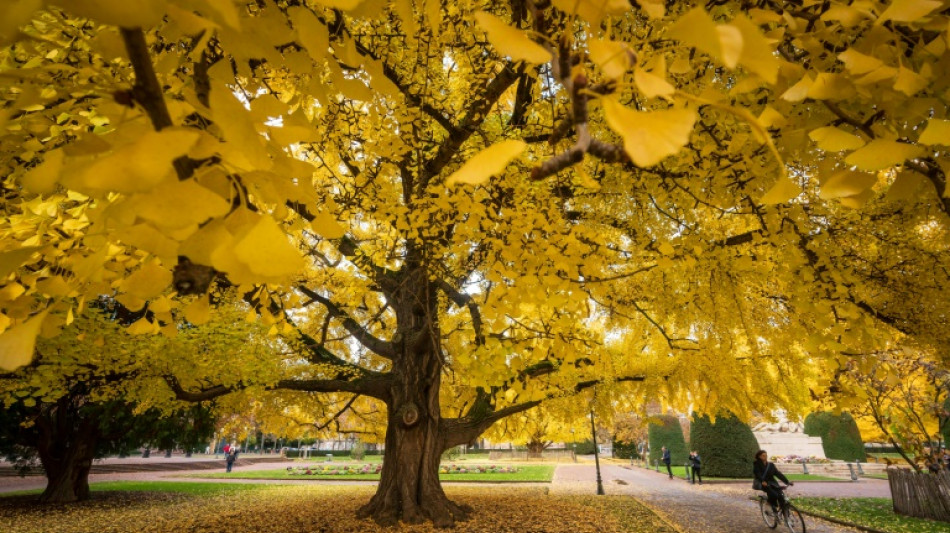
One in three tree species at risk of extinction: report / Photo: © AFP/File

One in three tree species at risk of extinction: report

More than one in three species of trees are at risk of extinction worldwide, threatening life as we know it on Earth, according to a report published Monday.

Text size:

The warning came in the Global Tree Assessment, contained in an update of the International Union for Conservation of Nature (IUCN) Red List of Threatened Species.

Issued to coincide with the UN's COP16 summit on biodiversity, held in the Colombian city of Cali, the report said over 16,000 tree species are at risk of extinction.

More than 47,000 species were assessed for the study, out of an estimated 58,000 species thought to exist in the world.

Trees are felled for logging and to clear land for farming and human expansion. Climate change poses an additional threat through worsening drought and wildfires.

The numbers are not merely symbolic.

People "rely on tree species for food, timber, fuels (and) medicines," expert Emily Beech told AFP.

They also make the oxygen we breathe, and absorb heat-trapping carbon dioxide emissions from the atmosphere.

"Trees are essential to support life on Earth through their vital role in ecosystems, and millions of people depend upon them for their lives and livelihoods," said IUCN director general Grethel Aguilar.

A 2015 study estimated there are about three trillion individual trees in the world.

The study, published in the science journal Nature, estimated that over 15 billion trees are cut down each year, and the global number of trees has fallen by nearly half since the start of human civilization.

Over 5,000 of the species on the IUCN Red List are used for construction timber, and more than 2,000 species for medicines, food and fuels.

Species at risk include the horse chestnut and ginkgo, both used for medical applications, the big leaf mahogany used in furniture making, as well as several ash, magnolia and eucalypt species, said Beech, head of conservation prioritization at Botanic Gardens Conservation International (BGCI), which contributed to the tree assessment.

- Seed banks essential -

According to the IUCN report, the number of trees at risk is "more than double the number of all threatened birds, mammals, reptiles and amphibians combined."

Tree species are at risk of extinction in 192 countries, but the highest proportion is found on islands due to rapid urban development and expanding agriculture, and the introduction of invasive species, pests and diseases from elsewhere.

In South America, which boasts the greatest diversity of trees in the world, 3,356 out of 13,668 assessed species are at risk of extinction.

Many species on the continent, home to the Amazon jungle, have likely not even been discovered yet.

When they are, they are "more likely than not to be threatened with extinction," said the report.

It called for forest protection and restoration through tree planting as well as the conservation of species dying out through seed banks and botanic garden collections.

More than 1,000 experts contributed to the assessment.

M.McCoy--TFWP