RIO
-0.3300

The world's biggest nature protection conference opened in Colombia on Monday with calls for urgent action and financing to reverse humankind's rapacious destruction of biodiversity.
With about a million known species worldwide estimated to be at risk of extinction, Colombian Environment Minister and COP16 president Susana Muhamad warned delegates: "The planet doesn't have time to lose."
"We need further sources of funding," the minister told delegates from nearly 200 countries as she opened the Conference of the Parties (COP16) to the UN Convention on Biological Diversity (CBD).
About 23,000 delegates, including some 100 government ministers and a dozen heads of state were accredited for the largest-ever biodiversity COP, running until November 1 in the city of Cali.
Themed "Peace with Nature," the summit has the urgent task of coming up with monitoring and funding mechanisms to ensure 23 UN targets agreed at COP15 two years ago can be met by 2030 to "halt and reverse" the loss of nature.
The high-stakes conference opened under the protection of more than 10,000 Colombian police and soldiers after the EMC guerrilla group at war with the state told foreign delegations to stay away and warned the conference "will fail."
- 'Words into action' -
The delegates have their work cut out for them, with just five years left to achieve the target of placing 30 percent of land and sea areas under protection by 2030.
A report by Greenpeace Monday found that only 8.4 percent of the global ocean enjoys protection.
"At the current rate, we won't hit 30 percent protection at sea until the next century," said Greenpeace policy advisor Megan Randles.
CBD executive secretary Astrid Schomaker told delegates that 34 of the 196 countries signed up to the UN's biodiversity convention have submitted National Biodiversity Strategy and Action Plans to achieve the UN goals.
Progress was being made, but "not yet at the rate we need," she said.
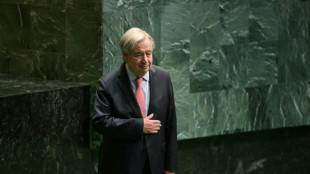
On Sunday, UN chief Antonio Guterres urged countries to "convert words into action" and fatten the Global Biodiversity Framework Fund (GBFF) created last year to meet the UN targets.
So far, countries have made about $250 million in commitments to the fund, according to monitoring agencies.
Under the Kunming-Montreal Global Biodiversity Framework (GBF) agreed in 2022, countries must mobilize at least $200 billion per year by 2030 for biodiversity, including $20 billion per year by 2025 from rich nations to help developing ones.
- Species dwindling -
According to the International Union for Conservation of Nature (IUCN), which keeps a red list of at-risk animals and plants, more than a quarter of assessed species are threatened with extinction.
Monitored wildlife populations have decreased by 73 percent on average between 1970 and 2020, according to green group WWF's Living Planet Report.
"This number is indicating that our systems are in peril, that if we are not addressing the drivers of this biodiversity loss, our ecosystem will go into a tipping point... basically a point of no return," WWF senior director of global policy Lin Li told reporters in Cali.
This holds risks such as increased conflict over dwindling resources, exposure to new diseases, and famine as natural pollinators disappear.
Such a collapse could see the global economy lose trillions of dollars a year, according to Guterres.
A key goal of the COP is to agree on a mechanism for sharing the profits of genetic information taken from plants and animals -- for medicine for example -- with the communities they come from.
Every new drug discovered in a tropical forest is worth tens of millions of dollars to a pharmaceutical company, according to scientific estimates.
Representatives of youth and Indigenous groups also made appeals Monday for government and private sector delegates to put their money where their mouths are.
"To be able to continue talking about conservation... we need a direct funding mechanism for Indigenous peoples," said Oswaldo Muca Castizo of the OPIAC organization of Colombian Amazon peoples.
Host Colombia is one of the most biodiverse countries in the world, and Gustavo Petro, its first leftist president in modern history, has made environmental protection a priority.
But the country has struggled to extricate itself from six decades of armed conflict involving leftist guerrillas such as the EMC, right-wing paramilitaries, drug gangs, and the state.
K.Ibarra--TFWP