The Fort Worth Press - UN's Guterres issues 'global SOS' over fast-rising Pacific ocean

USD -
AED 3.672504
AFN 66.097111
ALL 82.900442
AMD 380.972824
ANG 1.790055
AOA 917.000367
ARS 1434.000367
AUD 1.504891
AWG 1.8
AZN 1.70397
BAM 1.679303
BBD 2.014081
BDT 122.345769
BGN 1.679303
BHD 0.37625
BIF 2954.62156
BMD 1
BND 1.295411
BOB 6.910231
BRL 5.439604
BSD 0.999957
BTN 89.908556
BWP 13.285536
BYN 2.874941
BYR 19600
BZD 2.011162
CAD 1.38265
CDF 2232.000362
CHF 0.803927
CLF 0.0235
CLP 921.880396
CNY 7.070104
CNH 7.069041
COP 3799.167132
CRC 488.472932
CUC 1
CUP 26.5
CVE 94.676512
CZK 20.783504
DJF 178.070665
DKK 6.414904
DOP 64.002061
DZD 129.723093
EGP 47.482076
ERN 15
ETB 155.107629
EUR 0.858704
FJD 2.26045
FKP 0.750488
GBP 0.749372
GEL 2.69504
GGP 0.750488
GHS 11.375091
GIP 0.750488
GMD 73.000355
GNF 8689.3058
GTQ 7.659812
GYD 209.213068
HKD 7.784904
HNL 26.337526
HRK 6.470704
HTG 130.906281
HUF 328.020388
IDR 16689.55
ILS 3.23571
IMP 0.750488
INR 89.945504
IQD 1310.007298
IRR 42112.503816
ISK 127.980386
JEP 0.750488
JMD 160.056669
JOD 0.70904
JPY 155.360385
KES 129.352166
KGS 87.450384
KHR 4003.777959
KMF 422.00035
KPW 900.039614
KRW 1473.810383
KWD 0.30697
KYD 0.833383
KZT 505.714163
LAK 21684.626283
LBP 89549.049071
LKR 308.444597
LRD 176.001374
LSL 16.947838
LTL 2.95274
LVL 0.60489
LYD 5.435968
MAD 9.235994
MDL 17.014554
MGA 4460.567552
MKD 52.925772
MMK 2099.679458
MNT 3548.600426
MOP 8.01889
MRU 39.877216
MUR 46.070378
MVR 15.403739
MWK 1733.997338
MXN 18.174604
MYR 4.111039
MZN 63.910377
NAD 16.947838
NGN 1450.080377
NIO 36.800756
NOK 10.105104
NPR 143.853518
NZD 1.730703
OMR 0.383789
PAB 1.000043
PEN 3.361353
PGK 4.243335
PHP 58.965038
PKR 280.346971
PLN 3.63215
PYG 6877.602713
QAR 3.644958
RON 4.372604
RSD 100.802816
RUB 76.80419
RWF 1454.943545
SAR 3.752973
SBD 8.230592
SCR 13.522517
SDG 601.503676
SEK 9.40005
SGD 1.295504
SHP 0.750259
SLE 23.703667
SLL 20969.498139
SOS 570.471816
SRD 38.629038
STD 20697.981008
STN 21.036363
SVC 8.750268
SYP 11057.447322
SZL 16.934701
THB 31.875038
TJS 9.174945
TMT 3.51
TND 2.933413
TOP 2.40776
TRY 42.526038
TTD 6.778861
TWD 31.289038
TZS 2440.132229
UAH 41.981024
UGX 3537.543468
UYU 39.110462
UZS 11963.250762
VES 254.551935
VND 26360
VUV 122.070562
WST 2.788735
XAF 563.222427
XAG 0.017168
XAU 0.000238
XCD 2.70255
XCG 1.802258
XDR 0.700468
XOF 563.222427
XPF 102.399863
YER 238.550363
ZAR 16.926304
ZMK 9001.203584
ZMW 23.119392
ZWL 321.999592
  • RIO

    -0.6700

    73.06

    -0.92%

  • CMSC

    -0.0500

    23.43

    -0.21%

  • BTI

    -1.0300

    57.01

    -1.81%

  • SCS

    -0.0900

    16.14

    -0.56%

  • CMSD

    -0.0700

    23.25

    -0.3%

  • NGG

    -0.5000

    75.41

    -0.66%

  • GSK

    -0.1600

    48.41

    -0.33%

  • BCE

    0.3300

    23.55

    +1.4%

  • AZN

    0.1500

    90.18

    +0.17%

  • BP

    -1.4000

    35.83

    -3.91%

  • BCC

    -1.2100

    73.05

    -1.66%

  • RYCEF

    -0.0500

    14.62

    -0.34%

  • RBGPF

    0.0000

    78.35

    0%

  • RELX

    -0.2200

    40.32

    -0.55%

  • JRI

    0.0400

    13.79

    +0.29%

  • VOD

    -0.1630

    12.47

    -1.31%

UN's Guterres issues 'global SOS' over fast-rising Pacific ocean
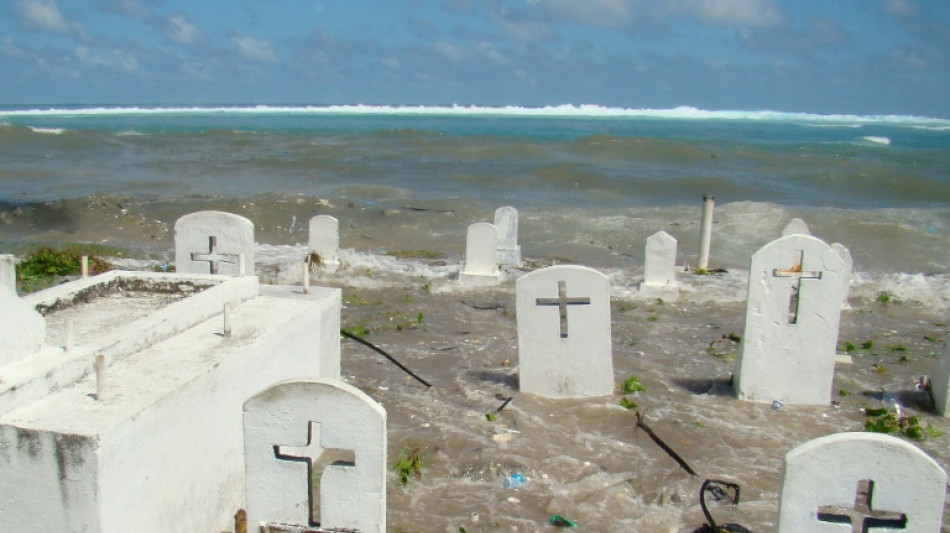
UN's Guterres issues 'global SOS' over fast-rising Pacific ocean / Photo: © AFP/File

UN's Guterres issues 'global SOS' over fast-rising Pacific ocean

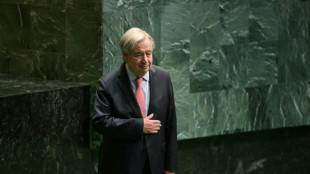
United Nations Secretary-General Antonio Guterres voiced a global climate "SOS" at a Pacific islands summit on Tuesday, unveiling research that shows the region's seas rising much more swiftly than global averages.

Text size:

"I am in Tonga to issue a global SOS -- Save Our Seas -- on rising sea levels. A worldwide catastrophe is putting this Pacific paradise in peril" he said.

Sparsely populated and with few heavy industries, the Pacific islands collectively pump out less than 0.02 percent of global emissions every year.

But this vast arc of volcanic islands and low-lying coral atolls also inhabits a tropical corridor that is rapidly threatened by encroaching oceans.

The World Meterological Organisation has been monitoring tide gauges installed on the Pacific's famed beaches since the early 1990s.

A new report released by the top UN climate monitoring body showed seas had risen by around 15 centimetres in some parts of the Pacific in the last 30 years.

The global average was 9.4 centimetres, according to the report.

"It is increasingly evident that we are fast running out of time to turn the tide," said the forecasting agency's top official Celeste Saulo.

Some sites, particularly in Kiribati and Cook Islands, measured a rise that matched or was just under the global average.

But other sites, such as the capital cities of Samoa and Fiji, were rising almost three times higher.

In low-lying Pacific nation Tuvalu, land is already so scarce that throngs of children use the tarmac at the international airport as their own makeshift playground.

Scientists have warned that, even under some moderate scenarios, Tuvalu could be almost entirely wiped off the map within the next 30 years.

"It's disaster after disaster, and we are losing the capacity to rebuild, to withstand another cyclone or another flood," Tuvalu Climate Minister Maina Talia told AFP on the summit's sidelines.

"For low-lying island states, it's a matter of survival for us."

The plight of Pacific islands has been easily overlooked in the past, given their relative isolation and lack of economic might.

But the region is increasingly seen by scientists as a climate canary in the coal mine, hinting at the troubles possibly facing other parts of the planet.

"This new report confirms what Pacific leaders have been saying for years," Australian climate researcher Wes Morgan told AFP.

"Climate change is their top security threat. Pacific nations are in a fight for survival, and cutting climate pollution is key to their future."

Surrounded by millions of square miles of tropical ocean, the South Pacific is uniquely threatened by sea-level rise.

The vast majority of people live within five kilometres of the coast, according to the United Nations.

Rising seas are swallowing up scarce land and tainting vital food and water sources.

Warmer waters are also fuelling more intense natural disasters, while ocean acidification slowly kills the reefs that nourish key marine food chains.

L.Davila--TFWP