The Fort Worth Press - Climate change fuelled deadly India landslides, say scientists

USD -
AED 3.67295
AFN 66.503991
ALL 80.861178
AMD 366.170403
AOA 918.000367
ARS 1499.010804
AUD 1.415041
AWG 1.80125
AZN 1.70397
BAM 1.696506
BBD 2.013896
BDT 123.776354
BHD 0.377104
BIF 2987.5
BMD 1
BND 1.281271
BOB 11.884005
BRL 5.096204
BSD 0.999879
BTN 95.145572
BWP 13.496235
BYN 2.977343
BYR 19600
BZD 2.010921
CAD 1.393745
CDF 2262.50392
CHF 0.807704
CLF 0.023139
CLP 913.640396
CNY 6.747604
CNH 6.74389
COP 3156.1
CRC 454.53954
CUC 1
CUP 26.5
CVE 95.703894
CZK 20.98695
DJF 177.720393
DKK 6.46574
DOP 58.250393
DZD 132.931755
EGP 49.784104
ERN 15
ETB 161.383609
EUR 0.864804
FJD 2.20855
FKP 0.743241
GBP 0.740965
GEL 2.61504
GGP 0.743241
GHS 11.76039
GIP 0.743241
GMD 73.503851
GNF 8775.000355
GTQ 7.628986
GYD 209.187745
HKD 7.84555
HNL 26.799903
HRK 6.516204
HTG 130.738004
HUF 314.294504
IDR 17803
ILS 2.99985
IMP 0.743241
INR 95.19975
IQD 1309.80882
IRR 1375550.000352
ISK 123.330386
JEP 0.743241
JMD 158.790465
JOD 0.70904
JPY 157.51904
KES 127.670385
KGS 87.450384
KHR 4052.503796
KMF 426.00035
KRW 1409.225039
KWD 0.30859
KYD 0.833247
KZT 468.616634
LAK 22582.503779
LBP 89550.000349
LKR 335.380452
LRD 181.550382
LSL 16.244058
LTL 2.95274
LVL 0.60489
LYD 6.365039
MAD 9.319182
MDL 17.387495
MGA 4266.798513
MKD 53.374161
MMK 2099.552715
MNT 3596.040078
MOP 8.079926
MRU 40.196738
MUR 47.070378
MVR 15.460378
MWK 1733.805211
MXN 17.13181
MYR 4.090804
MZN 63.905039
NAD 16.244058
NGN 1364.460377
NIO 36.795607
NOK 9.49649
NPR 152.232915
NZD 1.696425
OMR 0.384495
PAB 0.999866
PEN 3.386262
PGK 4.418787
PHP 60.788038
PKR 277.591253
PLN 3.718604
PYG 5945.498155
QAR 3.655172
RON 4.540804
RSD 101.466038
RUB 82.272143
RWF 1470.282086
SAR 3.780227
SBD 8.068348
SCR 14.493142
SDG 600.503676
SEK 9.471475
SGD 1.278435
SLE 24.603667
SOS 571.458312
SRD 37.866504
STD 20697.981008
STN 21.251865
SVC 8.749095
SZL 16.240762
THB 32.977504
TJS 9.223917
TMT 3.505
TND 2.937441
TRY 47.699104
TTD 6.777323
TWD 32.267504
TZS 2647.503038
UAH 44.783463
UGX 3724.827703
UYU 40.249652
UZS 11958.657362
VES 754.21125
VND 26204.5
VUV 119.010387
WST 2.728415
XAF 568.992228
XAG 0.015778
XAU 0.00023
XCD 2.70255
XCG 1.802071
XDR 0.708194
XOF 568.000332
XPF 103.750363
YER 236.850363
ZAR 16.153895
ZMK 9001.203584
ZMW 18.872278
ZWL 321.999592
  • RYCEF

    0.0500

    21

    +0.24%

  • CMSC

    -0.0150

    21.705

    -0.07%

  • AZN

    0.2800

    160.29

    +0.17%

  • GSK

    0.7000

    52.87

    +1.32%

  • RBGPF

    0.0000

    69.74

    0%

  • BTI

    0.8150

    59.545

    +1.37%

  • NGG

    0.7000

    81.11

    +0.86%

  • RELX

    0.1935

    35.665

    +0.54%

  • RIO

    1.7850

    101.435

    +1.76%

  • BP

    -0.3800

    41.85

    -0.91%

  • CMSD

    -0.1350

    21.845

    -0.62%

  • JRI

    0.1100

    12.77

    +0.86%

  • BCC

    2.3100

    86.57

    +2.67%

  • VOD

    0.1800

    16.18

    +1.11%

  • BCE

    -0.0600

    22.71

    -0.26%

Climate change fuelled deadly India landslides, say scientists
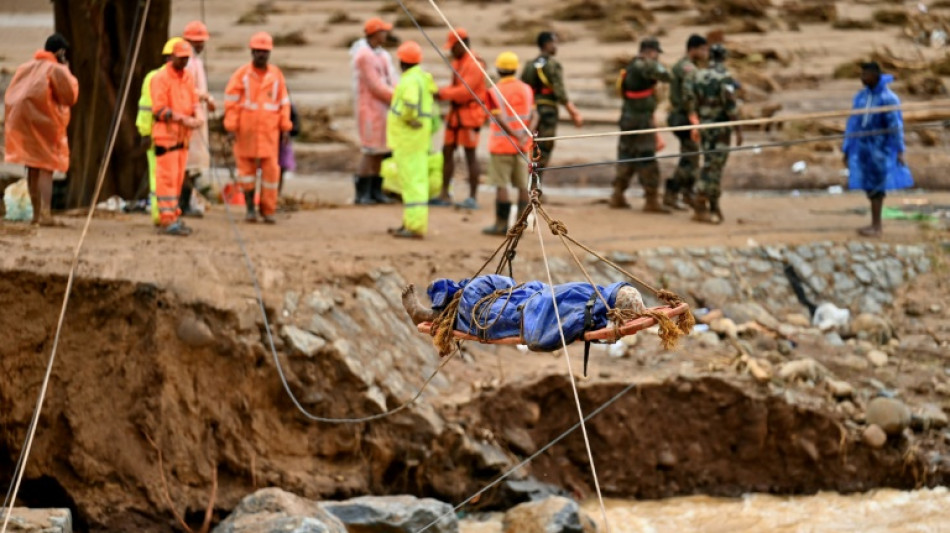
Climate change fuelled deadly India landslides, say scientists / Photo: © AFP

Climate change fuelled deadly India landslides, say scientists

Climate change played a key factor in torrential rains in India that triggered catastrophic landslides killing at least 200 people last month, a group of scientists said Wednesday.

Text size:

Monsoon rains battered the southern coastal state of Kerala and triggered landslides on July 30, burying homes and residents in Wayanad district under tonnes of rock and soil.

World Weather Attribution, a network of scientists who have pioneered peer-reviewed methods for assessing the possible role of climate change in specific extreme events, said the link between the intense rainfall and a warming planet was clear.

"The landslides... were triggered by a burst of rainfall that was made about 10 percent heavier by human-caused climate change," the WWA analysis by 24 scientists said, noting more than 140mm (5.5 inches) of rain fell in a single day.

"Before climate change, similar downpours in Kerala were incredibly rare," it said.

The scientists say higher temperatures due to fossil fuel emissions mean the atmosphere can hold more moisture, resulting in heavier rainfall.

It also said there had been a staggering 62 percent decrease in forest cover in the Wayanad region since 1950, "reducing slope stability" and increasing the landslide risk.

"The Wayanad landslides is another catastrophic example of climate change playing out in real time," said study member Mariam Zachariah, from Imperial College London.

Monsoon rains from June to September offer respite from the summer heat and are crucial for agriculture and replenishing water supplies, but they also bring regular destruction.

WWA said the rain that caused the landslides was the third heaviest one-day event on record in the area -- beaten only by storms in 2019 and in 1924 -- and warned worse will come without rapid change.

"One-day bursts of monsoon rainfall will continue to become even heavier, risking even deadlier landslides, until the world replaces fossil fuels with renewable sources of energy", researchers said.

India is the world's third-biggest emitter of greenhouse gases but has committed to achieve a net zero emissions economy by 2070 -- two decades after most of the industrialised West.

For now, it is overwhelmingly reliant on coal for power generation.

"These direct threats to people in India will continue to escalate as the climate warms and humans continue to regulate natural systems," said WWA scientist Arpita Mondal, from the Indian Institute of Technology.

S.Rocha--TFWP