The Fort Worth Press - Carbon credits 'ineffective', says corporate climate watchdog

USD -
AED 3.67315
AFN 62.498339
ALL 82.898107
AMD 377.439778
ANG 1.790083
AOA 916.999938
ARS 1397.055997
AUD 1.417726
AWG 1.8
AZN 1.698457
BAM 1.689807
BBD 2.011068
BDT 122.513867
BGN 1.709309
BHD 0.378625
BIF 2965
BMD 1
BND 1.277469
BOB 6.900038
BRL 5.255502
BSD 0.998523
BTN 93.323368
BWP 13.643963
BYN 2.973062
BYR 19600
BZD 2.008078
CAD 1.369395
CDF 2272.99994
CHF 0.784245
CLF 0.022954
CLP 906.339956
CNY 6.880503
CNH 6.87856
COP 3706.14
CRC 465.684898
CUC 1
CUP 26.5
CVE 95.269158
CZK 20.996299
DJF 177.802353
DKK 6.425545
DOP 59.252731
DZD 132.327445
EGP 52.237419
ERN 15
ETB 155.895513
EUR 0.860157
FJD 2.210223
FKP 0.749521
GBP 0.742935
GEL 2.714989
GGP 0.749521
GHS 10.923292
GIP 0.749521
GMD 73.525372
GNF 8752.300395
GTQ 7.648111
GYD 208.902867
HKD 7.83395
HNL 26.428837
HRK 6.477598
HTG 130.780562
HUF 332.682501
IDR 16883
ILS 3.10475
IMP 0.749521
INR 92.94805
IQD 1308.09307
IRR 1315625.000244
ISK 123.519899
JEP 0.749521
JMD 157.274927
JOD 0.708983
JPY 158.2475
KES 129.650105
KGS 87.450166
KHR 4000.984911
KMF 426.999683
KPW 900.003974
KRW 1481.410076
KWD 0.30637
KYD 0.832131
KZT 481.288689
LAK 21461.556073
LBP 89421.929609
LKR 313.539993
LRD 182.729319
LSL 16.931079
LTL 2.95274
LVL 0.60489
LYD 6.39183
MAD 9.332792
MDL 17.464295
MGA 4155.669119
MKD 53.007955
MMK 2099.452431
MNT 3566.950214
MOP 8.056472
MRU 39.857965
MUR 46.569692
MVR 15.460011
MWK 1731.054175
MXN 17.702979
MYR 3.939502
MZN 63.897294
NAD 16.931079
NGN 1374.360255
NIO 36.745838
NOK 9.73415
NPR 149.304962
NZD 1.700115
OMR 0.384488
PAB 0.998475
PEN 3.473618
PGK 4.311257
PHP 59.434003
PKR 278.731564
PLN 3.65678
PYG 6524.941572
QAR 3.651311
RON 4.381973
RSD 101.080216
RUB 82.046452
RWF 1459.848969
SAR 3.75399
SBD 8.05166
SCR 15.302125
SDG 600.999984
SEK 9.282325
SGD 1.27328
SHP 0.750259
SLE 24.574991
SLL 20969.510825
SOS 570.653465
SRD 37.336498
STD 20697.981008
STN 21.167495
SVC 8.736371
SYP 110.564047
SZL 16.924493
THB 32.169635
TJS 9.540369
TMT 3.51
TND 2.942605
TOP 2.40776
TRY 44.313001
TTD 6.778753
TWD 31.801098
TZS 2594.99982
UAH 43.841339
UGX 3769.542134
UYU 40.685845
UZS 12173.837913
VES 454.69063
VND 26341
VUV 119.226095
WST 2.727792
XAF 566.728441
XAG 0.014183
XAU 0.000223
XCD 2.70255
XCG 1.799457
XDR 0.706079
XOF 566.733337
XPF 103.038184
YER 238.593911
ZAR 16.686401
ZMK 9001.207104
ZMW 19.346115
ZWL 321.999592
  • RBGPF

    -13.5000

    69

    -19.57%

  • CMSC

    0.2000

    22.85

    +0.88%

  • RYCEF

    1.1500

    16.45

    +6.99%

  • BCE

    -0.0850

    25.705

    -0.33%

  • GSK

    0.0500

    51.89

    +0.1%

  • RIO

    2.4400

    85.59

    +2.85%

  • NGG

    -0.2600

    81.73

    -0.32%

  • RELX

    -0.2400

    33.12

    -0.72%

  • AZN

    0.5050

    184.105

    +0.27%

  • VOD

    0.1050

    14.435

    +0.73%

  • BTI

    0.2000

    57.57

    +0.35%

  • BP

    -1.4950

    43.285

    -3.45%

  • JRI

    -0.0400

    11.73

    -0.34%

  • CMSD

    0.2018

    22.8602

    +0.88%

  • BCC

    3.4900

    71.79

    +4.86%

Carbon credits 'ineffective', says corporate climate watchdog
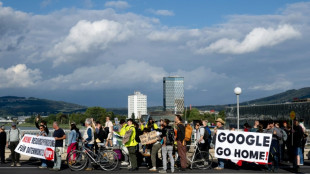
Carbon credits 'ineffective', says corporate climate watchdog / Photo: © AFP

Carbon credits 'ineffective', says corporate climate watchdog

The world's top judge of corporate climate action on Tuesday described carbon credits as "ineffective" at addressing global warming and a risk for companies trying to reach net zero targets.

Text size:

The use of credits by companies to make claims of carbon neutrality has long been challenged and the findings by the influential Science Based Targets Initiative (SBTi) were much anticipated.

SBTi is the gold standard for assessing the net zero plans of big businesses and the tick of approval allows companies to say their climate pledges align with science.

But the nonprofit, which is backed by the UN and WWF, sparked a staff revolt in April when it proposed allowing companies to use more carbon credits to meet their climate goals.

In response to demands that the CEO and board resign, SBTi promised to review third-party literature on carbon credits and present its expert findings in July.

On Tuesday, it said the evidence "suggests that various types of carbon credits are ineffective" and that using such offsets poses "clear risks" for companies.

"This includes potential unintended effects of hindering the net-zero transformation," stated one of the reports published on the SBTi website on Tuesday.

There was no evidence submitted to the review "that identified characteristics or operating conditions associated with effective carbon credits and projects", it added.

"The evaluation of evidence of carbon credit effectiveness reinforces what many academics have been saying for decades: carbon credits of any sort should not be used to compensate for fossil emissions," said Doreen Stabinsky, who sits on SBTI's technical council, an independent advisory body.

Carbon credits are supposed to help tackle global warming by funding activities that reduce or avoid the release of planet-heating emissions, such as protecting tropical forests or peatlands.

Critics say they allow companies that buy them to keep polluting without taking the necessary steps to clean up their act.

SBTi had taken a narrow view on carbon credits, requiring companies take action first to reduce their greenhouse gas output, and only turn to offsets for the remaining, hardest-to-cut emissions.

Then in April, its board flagged relaxing these rules in regards to offsetting Scope 3 emissions, which occur in the value chain, and represent the lion's share of the carbon footprints of most companies.

The proposal was seen as a major shift for a widely respected organisation that has verified the climate pledges of nearly 5,800 companies and financial institutions.

Gilles Dufrasne from Carbon Market Watch, a think tank, said SBTi's reviewed position was a "clear rebuttal" of its earlier move.

"This paper sets the record straight for SBTi, and is proof that SBTi staff are performing high-quality, unbiased work," he said in a statement.

SBTI's chief executive stepped down in July citing personal reasons.

The initiative plans to publish a draft update to its overall net zero corporate standards in late 2024, and said its guidance remained unchanged until then.

P.Navarro--TFWP