The Fort Worth Press - World in grip of new major coral bleaching event, reefs at risk

USD -
AED 3.673023
AFN 65.502391
ALL 81.973818
AMD 378.010112
ANG 1.79008
AOA 916.501917
ARS 1442.268898
AUD 1.441445
AWG 1.8
AZN 1.7106
BAM 1.658807
BBD 2.01469
BDT 122.336816
BGN 1.67937
BHD 0.376976
BIF 2960
BMD 1
BND 1.274003
BOB 6.911584
BRL 5.276899
BSD 1.000305
BTN 90.399817
BWP 13.243033
BYN 2.865297
BYR 19600
BZD 2.011721
CAD 1.36982
CDF 2229.999757
CHF 0.77837
CLF 0.02195
CLP 866.710218
CNY 6.93805
CNH 6.94043
COP 3693.5
CRC 495.911928
CUC 1
CUP 26.5
CVE 93.824958
CZK 20.59675
DJF 177.719853
DKK 6.34065
DOP 63.127629
DZD 130.041372
EGP 46.863504
ERN 15
ETB 155.859732
EUR 0.849115
FJD 2.21295
FKP 0.732184
GBP 0.738785
GEL 2.689746
GGP 0.732184
GHS 10.975005
GIP 0.732184
GMD 73.498872
GNF 8759.999674
GTQ 7.672344
GYD 209.27195
HKD 7.814205
HNL 26.422344
HRK 6.394902
HTG 131.225404
HUF 322.501046
IDR 16867
ILS 3.119945
IMP 0.732184
INR 90.28935
IQD 1310.388112
IRR 42125.000158
ISK 122.949976
JEP 0.732184
JMD 156.449315
JOD 0.709016
JPY 157.060052
KES 129.000021
KGS 87.450407
KHR 4037.199913
KMF 417.000412
KPW 900.030004
KRW 1469.280139
KWD 0.307441
KYD 0.833598
KZT 493.342041
LAK 21499.694667
LBP 89579.400015
LKR 309.548446
LRD 186.059136
LSL 16.159927
LTL 2.95274
LVL 0.60489
LYD 6.336511
MAD 9.181029
MDL 16.999495
MGA 4425.634414
MKD 52.283396
MMK 2099.783213
MNT 3569.156954
MOP 8.049755
MRU 39.901106
MUR 46.039984
MVR 15.460358
MWK 1734.461935
MXN 17.47756
MYR 3.947025
MZN 63.760188
NAD 16.159927
NGN 1366.214885
NIO 36.809608
NOK 9.80194
NPR 144.639707
NZD 1.67885
OMR 0.384503
PAB 1.000314
PEN 3.362397
PGK 4.348453
PHP 58.765967
PKR 280.076588
PLN 3.587985
PYG 6605.373863
QAR 3.645678
RON 4.324401
RSD 99.685025
RUB 76.750049
RWF 1459.984648
SAR 3.750101
SBD 8.064647
SCR 13.516644
SDG 601.491373
SEK 9.06309
SGD 1.27526
SHP 0.750259
SLE 24.549792
SLL 20969.499267
SOS 570.633736
SRD 37.870156
STD 20697.981008
STN 20.779617
SVC 8.752036
SYP 11059.574895
SZL 16.152192
THB 31.801939
TJS 9.362532
TMT 3.505
TND 2.89846
TOP 2.40776
TRY 43.536797
TTD 6.773307
TWD 31.684599
TZS 2584.999806
UAH 43.163845
UGX 3570.701588
UYU 38.599199
UZS 12269.30384
VES 377.98435
VND 25955
VUV 119.687673
WST 2.726344
XAF 556.374339
XAG 0.013556
XAU 0.000208
XCD 2.70255
XCG 1.802745
XDR 0.691101
XOF 556.348385
XPF 101.150088
YER 238.32501
ZAR 16.263035
ZMK 9001.200113
ZMW 18.580528
ZWL 321.999592
  • SCS

    0.0200

    16.14

    +0.12%

  • RBGPF

    0.1000

    82.5

    +0.12%

  • RYCEF

    -0.0600

    16.62

    -0.36%

  • CMSD

    0.0200

    23.89

    +0.08%

  • CMSC

    0.0300

    23.55

    +0.13%

  • RELX

    0.3100

    30.09

    +1.03%

  • VOD

    -1.0900

    14.62

    -7.46%

  • RIO

    -5.3600

    91.12

    -5.88%

  • BCC

    -1.0700

    89.16

    -1.2%

  • GSK

    1.9400

    59.17

    +3.28%

  • BCE

    -0.7700

    25.57

    -3.01%

  • JRI

    -0.1500

    13

    -1.15%

  • NGG

    -0.9000

    86.89

    -1.04%

  • AZN

    -0.2900

    187.16

    -0.15%

  • BTI

    0.3300

    61.96

    +0.53%

  • BP

    -1.0300

    38.17

    -2.7%

World in grip of new major coral bleaching event, reefs at risk
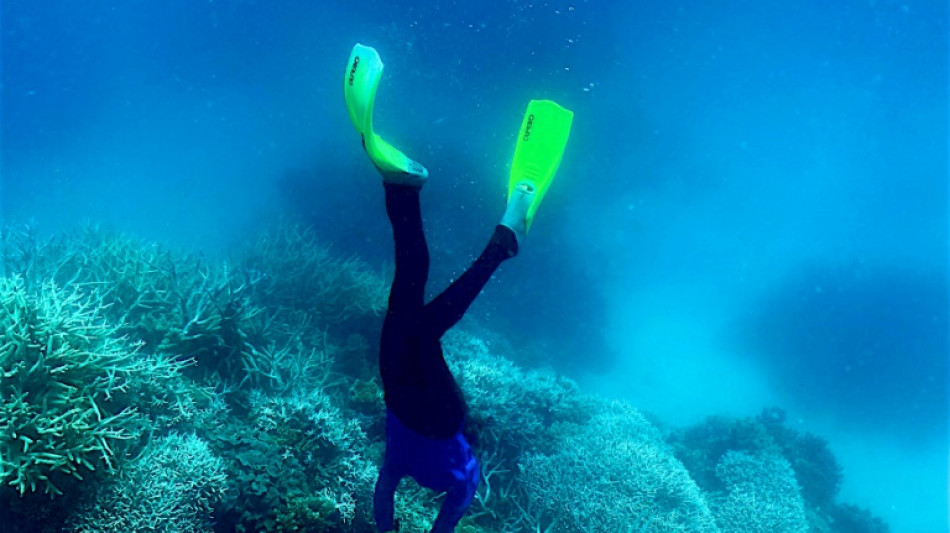
World in grip of new major coral bleaching event, reefs at risk / Photo: © AFP/File

World in grip of new major coral bleaching event, reefs at risk

The world is currently experiencing the second major coral bleaching event in 10 years, with reef systems from Australia to Florida at risk of dying following months of record-breaking ocean heat, a US agency announced Monday.

Text size:

The consequences of coral bleaching are far-reaching, affecting not only the health of oceans but also the livelihoods of people, food security, and local economies.

Severe or prolonged heat stress leads to corals dying off, but there is hope for recovery if temperatures drop and other stressors such as overfishing and pollution are reduced.

"From February 2023 to April 2024, significant coral bleaching has been documented in both the Northern and Southern Hemispheres of each major ocean basin," said Derek Manzello of the US National Oceanic and Atmospheric Administration (NOAA).

NOAA's heat-stress monitoring is based on satellite measurements from 1985 to the present day. The current bleaching event is the fourth on record, with previous events in 1998, 2010 and 2016.

Since early 2023, mass bleaching of coral reefs has been confirmed throughout the tropics, including in Florida in the United States, the Caribbean, Brazil, and the eastern Tropical Pacific.

Australia’s Great Barrier Reef, the largest coral reef system in the world and the only one visible from space, has also been severely impacted, as have wide swathes of the South Pacific, the Red Sea and the Gulf.

"We know the biggest threat to coral reefs worldwide is climate change. The Great Barrier Reef is no exception," Australia's Environment Minister Tanya Plibersek said last month.

- 'More frequent and severe' -

Repeated mass bleaching events have threatened to rob the tourist drawcard of its wonder, turning banks of once-vibrant corals into a sickly shade of white.

Coral, marine invertebrates made up of individual animals called polyps, have a symbiotic relationship with the algae that live inside their tissue and provide their primary source of food.

When the water is too warm, coral expel their algae and turn white, an effect called "bleaching" that leaves them exposed to disease and at risk of dying off.

"As the world's oceans continue to warm, coral bleaching is becoming more frequent and severe," Manzello said.

"When these events are sufficiently severe or prolonged, they can cause coral mortality, which hurts the people who depend on the coral reefs for their livelihoods."

Pepe Clarke of the nonprofit WWF added: "If we need a specific, visual, contemporary case of what's at stake with every fraction of a degree warming, this is it. The scale and severity of the mass coral bleaching is clear evidence of the harm climate change is having right now."

H.M.Hernandez--TFWP