The Fort Worth Press - Birds, beetles, bugs could help replace pesticides: study

USD -
AED 3.673104
AFN 64.000368
ALL 80.950403
AMD 369.010403
ANG 1.789884
AOA 918.000367
ARS 1398.655759
AUD 1.37874
AWG 1.8025
AZN 1.70397
BAM 1.662466
BBD 2.013854
BDT 122.689218
BGN 1.668102
BHD 0.377404
BIF 2975
BMD 1
BND 1.267973
BOB 6.9098
BRL 4.915095
BSD 0.999873
BTN 94.420977
BWP 13.425192
BYN 2.825886
BYR 19600
BZD 2.010964
CAD 1.36705
CDF 2265.000362
CHF 0.776955
CLF 0.022646
CLP 891.290396
CNY 6.80075
CNH 6.796265
COP 3750.48
CRC 459.648974
CUC 1
CUP 26.5
CVE 94.050394
CZK 20.636704
DJF 177.720393
DKK 6.340404
DOP 59.350393
DZD 132.260393
EGP 52.744691
ERN 15
ETB 157.303874
EUR 0.84804
FJD 2.18304
FKP 0.734821
GBP 0.73346
GEL 2.67504
GGP 0.734821
GHS 11.29039
GIP 0.734821
GMD 73.503851
GNF 8780.000355
GTQ 7.634866
GYD 209.223551
HKD 7.83175
HNL 26.620388
HRK 6.393304
HTG 130.919848
HUF 300.190388
IDR 17377.45
ILS 2.901304
IMP 0.734821
INR 94.425504
IQD 1310
IRR 1311500.000352
ISK 122.010386
JEP 0.734821
JMD 157.601928
JOD 0.70904
JPY 156.66204
KES 129.180385
KGS 87.420504
KHR 4010.00035
KMF 418.00035
KPW 899.950939
KRW 1461.920383
KWD 0.30766
KYD 0.833358
KZT 462.122307
LAK 21955.000349
LBP 89550.000349
LKR 321.915771
LRD 183.503772
LSL 16.390381
LTL 2.95274
LVL 0.60489
LYD 6.325039
MAD 9.12038
MDL 17.099822
MGA 4165.000347
MKD 52.252978
MMK 2099.606786
MNT 3578.902576
MOP 8.06268
MRU 39.945039
MUR 46.820378
MVR 15.403739
MWK 1742.000345
MXN 17.177604
MYR 3.921039
MZN 63.910377
NAD 16.390377
NGN 1365.000344
NIO 36.715039
NOK 9.209304
NPR 151.087386
NZD 1.675884
OMR 0.384942
PAB 0.999962
PEN 3.434504
PGK 4.350375
PHP 60.515038
PKR 278.650374
PLN 3.59545
PYG 6107.687731
QAR 3.640374
RON 4.426304
RSD 99.473038
RUB 74.240007
RWF 1460.5
SAR 3.782036
SBD 8.019432
SCR 13.958442
SDG 600.503676
SEK 9.215704
SGD 1.267304
SHP 0.746601
SLE 24.650371
SLL 20969.496166
SOS 571.503662
SRD 37.399038
STD 20697.981008
STN 21.15
SVC 8.749309
SYP 110.543945
SZL 16.370369
THB 32.203038
TJS 9.329718
TMT 3.5
TND 2.866038
TOP 2.40776
TRY 45.349038
TTD 6.776593
TWD 31.316038
TZS 2598.394038
UAH 43.92104
UGX 3746.547108
UYU 39.879308
UZS 12135.000334
VES 499.23597
VND 26308
VUV 118.026144
WST 2.704092
XAF 557.575577
XAG 0.012439
XAU 0.000212
XCD 2.70255
XCG 1.802048
XDR 0.695511
XOF 557.503593
XPF 101.625037
YER 238.625037
ZAR 16.380704
ZMK 9001.203584
ZMW 19.037864
ZWL 321.999592
  • BCC

    -2.0900

    70.67

    -2.96%

  • RELX

    0.0759

    33.58

    +0.23%

  • VOD

    0.5100

    16.2

    +3.15%

  • CMSC

    0.1400

    23.11

    +0.61%

  • BCE

    -0.4300

    24.14

    -1.78%

  • RBGPF

    0.7000

    63.61

    +1.1%

  • RIO

    2.2700

    105.38

    +2.15%

  • GSK

    -0.0900

    50.41

    -0.18%

  • RYCEF

    -0.4100

    16.37

    -2.5%

  • JRI

    0.0000

    13.15

    0%

  • NGG

    0.9800

    86.89

    +1.13%

  • BTI

    0.2000

    58.28

    +0.34%

  • AZN

    0.3300

    182.85

    +0.18%

  • CMSD

    0.1140

    23.534

    +0.48%

  • BP

    -0.4700

    43.34

    -1.08%

Birds, beetles, bugs could help replace pesticides: study
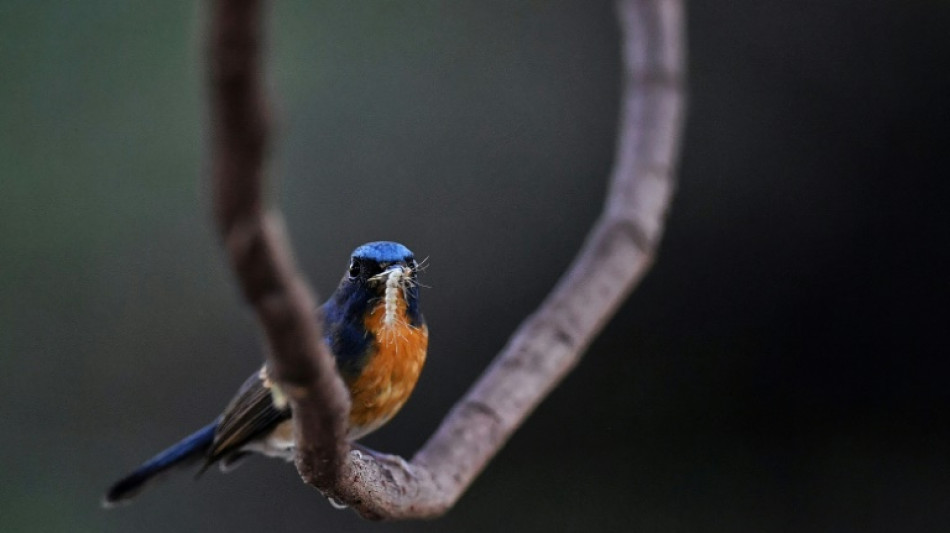
Birds, beetles, bugs could help replace pesticides: study / Photo: © AFP

Birds, beetles, bugs could help replace pesticides: study

Natural predators like birds, beetles and bugs might be an effective alternative to pesticides, keeping crop-devouring pests populations down while boosting crop yields, researchers said Wednesday.

Text size:

Pests are responsible for around 10 percent -- or 21 million tonnes -- of crop losses every year, but controlling them has led to the widespread use of chemical pesticides.

Could birds, spiders and beetles among other invertebrate predators do the job as well?

Researchers in Brazil, the United States and the Czech Republic analysed past research on predator pest control and found that they helped reduce pest populations by more than 70 percent, while increasing crop yields by 25 percent.

"Natural predators are good pest control agents, and their maintenance is fundamental to guaranteeing pest control in a future with imminent climate change," lead author Gabriel Boldorini, a PhD student at the Federal Rural University of Pernambuco in Brazil, told AFP.

Although the researchers did not directly compare the effectiveness of invertebrates versus pesticides, he said, the damage that pesticides cause to ecosystems and biological control was well documented, from biodiversity loss and water and soil pollution to human health risks.

The researchers found that predators were more effective at pest control in regions with greater rain variability -- which is expected to increase because of climate change.

The researchers were also surprised to find that having a single species of natural predator was as effective as having multiple species, Boldorini said.

"Generally speaking, the more species there are, the better ecosystems function. But there are exceptions," he said, adding that a single species could do the job just as well.

Climate change and rising carbon dioxide levels affect both crop yield and pest dynamics by expanding the distribution of pests and increasing their survival rates.

Meanwhile, other studies have shown that invertebrates vital for ecosystem health are suffering a rapid decline globally.

Boldorini said the conservation of invertebrates "guarantees pest control and increased productivity, without damaging ecosystems".

M.T.Smith--TFWP