UN report warns of catastrophic risks to Earth systems / Photo: © AFP

Melting glaciers, unbearable heat and space junk: a month before crunch climate talks in the United Arab Emirates, a UN report published Wednesday warns about irreversible impacts to the planet without drastic changes to connected social and physical systems.
The Interconnected Disaster Risks Report identifies thresholds it calls "risk tipping points," defined as "the moment at which a given socioecological system is no longer able to buffer risks and provide its expected function" -- after which the risk of catastrophe increases significantly.
It focuses on six areas that connect the physical and natural world with human society: accelerating extinctions, groundwater depletion, mountain glacial melt, space debris, unbearable heat and an "uninsurable" future.
"As we indiscriminately extract our water resources, damage nature and biodiversity, and pollute both Earth and space, we are moving dangerously close to the brink of multiple risk tipping points that could destroy the very systems that our life depends on," said Zita Sebesvari, the report's lead author.
For example: underground water reservoirs represent an essential freshwater resource around the world and today mitigate half of the losses of agriculture caused by droughts, which are being exacerbated by climate change.
But aquifers themselves are now depleting faster than they can be naturally replenished: Saudi Arabia has already crossed the groundwater risk tipping point while India isn't far behind.
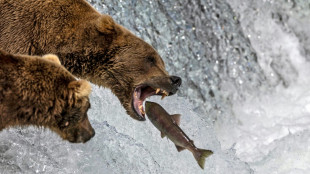
In the case of accelerating extinctions, the report highlights the cascading effects of extinctions throughout food chains.
"The gopher tortoise, which is threatened with extinction, digs burrows that are used by more than 350 other species for breeding, feeding, protection from predators and avoiding extreme temperatures," the report said.
If the gopher tortoise goes extinct, the gopher frog that helps control insect populations will likely follow, triggering effects throughout the entire forest ecosystem of the southeastern United States.
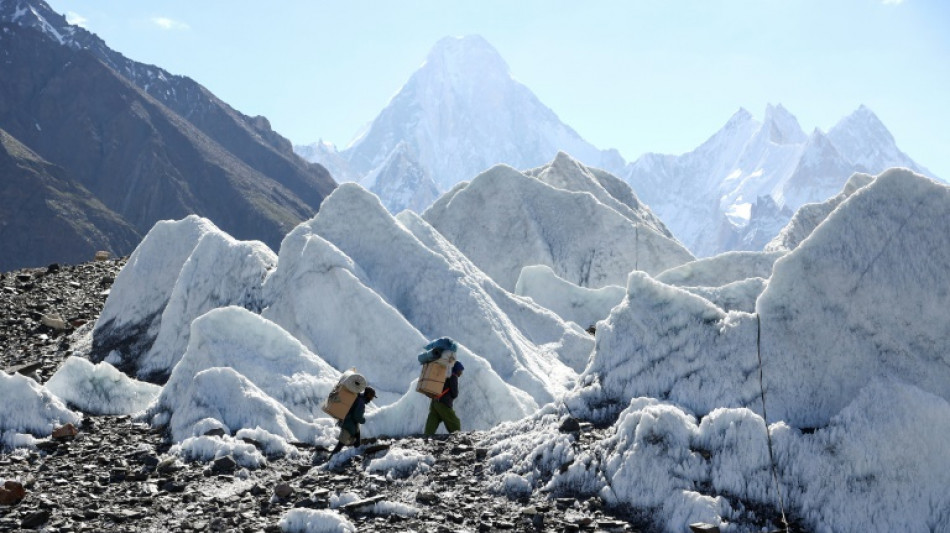
Mountain glaciers that store vast amounts of freshwater meanwhile are melting twice as fast as they did in the past two decades.
"Peak water" -- the point when a glacier produces its maximum amount of water runoff due to melting -- has been reached or is expected to be reached within the next ten years across small glaciers in Central Europe, Western Canada and South America.
"The 90,000+ glaciers of the Himalayas, Karakoram and Hindu Kush mountains are at risk, and so are the nearly 870 million people that rely on them," the report said.
In the case of space junk, the report warns Earth's orbit is in danger of becoming so full of debris that a collision triggers a chain reaction that threatens humanity's ability to operate satellites -- including those that provide vital early warning monitoring against disasters.
The report finds most solutions currently being implemented focus on delaying problems rather than genuinely addressing the root causes.
"We need to understand the difference between adapting to risk tipping points and avoiding them, and between actions that delay looming risks and those that move us towards transformation," it said.
F.Garcia--TFWP