Farmers turn to solar power in Syria's former breadbasket / Photo: © AFP

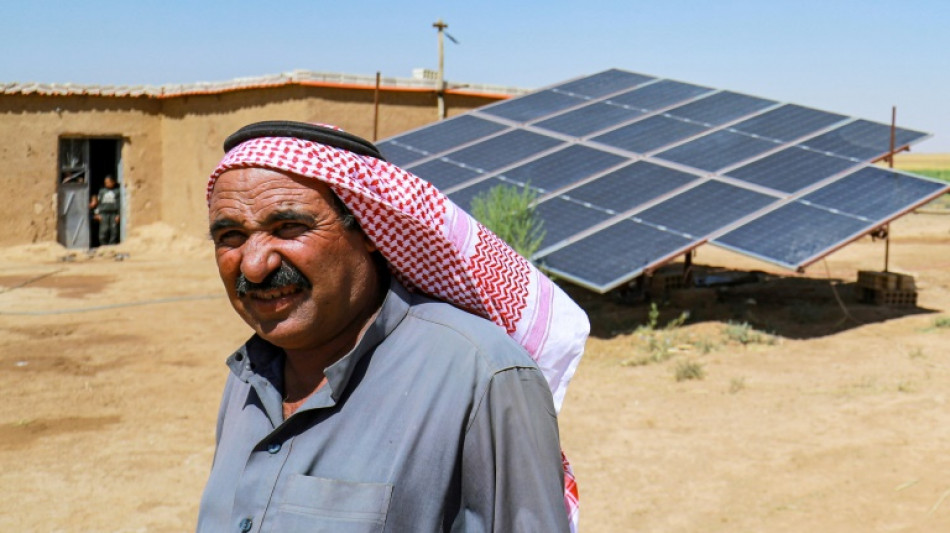
At his farm in Syria's northeast, Abdullah al-Mohammed adjusts a large solar panel, one of hundreds that have cropped up over the years as farmers seek to stave off electricity shortages in the war-ravaged region.
Solar energy has offered a lifeline for the farmers amid drought and power shortages, but some warn the boom also has environmental costs in the once-fertile region.
"We are trying to revive our land," despite dwindling groundwater reserves, said Mohammed, 38, as he oriented the panel towards the sun near his cotton fields.
In his village of Al-Haddadiya in Hasakeh province, farmers are using solar energy to power irrigation systems for all kinds of crops, from vegetables to wheat, barley and cotton.
The father of three said he needs a reliable power supply to pump groundwater around 60 metres deep (nearly 200 feet) now -- compared to just 30 metres a few years back.
Northeast Syria is about 0.8 degrees Celsius (two degrees Fahrenheit) hotter today than it was 100 years ago and likely to experience drought every three years, according to a report last year by iMMAP, a Washington-based, data-focused non-profit.
The area was the country's breadbasket before 2011, when the government repressed peaceful protests, triggering a conflict that has killed more than 500,000 people and displaced millions.
The war has battered the country's infrastructure and industry, and the state barely supplies a few hours of electricity per day.
- 'Saved from extinction' -
Farmers in the now Kurdish-held region used to rely on state electricity and subsidised generator fuel for water pumps and irrigation, but power outages and rising fuel costs have compounded the climate-related challenges.
"Solar energy has saved agriculture and farmers from extinction," Mohammed said, near a patch of waist-high plants and sunflowers swaying gently in the wind.
From the rebel-held northwest to government-controlled areas, solar panels have become common in Syria, providing power for homes, public institutions and even camps for the displaced.
Between 2011 and 2021, Syria's state electricity production "dropped significantly to almost 57 percent" and power generation capacity plunged to 65 percent, according to a 2022 United Nations report.
Across Hasakeh province, solar panels have become indispensable for agriculture.
Around 10 kilometres (six miles) from Al-Haddadiya, farmer Hamid al-Awda began using solar power six years ago.
He has now installed 272 solar panels across his vast farmlands.
"Most people started selling their generators and replacing them with solar energy," said Awda, 60.
"Farmers who cannot afford solar energy and generators have seen their crops wither and dry out," he said, sweat trickling down his face.
- Downsides -
Further north near the city of Qamishli, farmer Mohammed Ali al-Hussein said shortages of generator fuel once kept him from irrigating his crops for days.
"But now, we can water the lands from sunrise to sunset thanks to solar panels," said the 22-year-old, using a massive hose.
However, the iMMAP report also warned of a downside of the area's solar boom.
"Water pumps working on solar power... are also blamed for increased extraction and resulting in declining water table," the report said.
The rising use of groundwater wells also results in increased salinity, it added.
Didar Hasan from Wanlan, a local company involved in solar energy, said demand has boomed in northeast Syria in recent years amid power outages lasting up to 20 hours a day.
Demand will keep rising and "people will continue to rely heavily on solar energy, not because it is renewable... but because they need electricity," he told AFP.
While solar power has kept many farmers from abandoning their land and moving to the city, it comes with a future environmental cost, he warned.
Much of people's solar infrastructure is either "used, worn-out panels, imported from Europe where they are deemed electronic waste" or low-grade solar systems mostly made in China, he said.
Such materials have a lifespan of just a few years, Hasan added.
"After that, we will be left with tens of thousands of unusable solar panels -- essentially waste" -- in an area with no adequate facilities to process it, he said.
C.M.Harper--TFWP