High seas treaty talks fail to reach a deal

The clock ran out Friday at UN talks to forge a legally binding treaty to protect open oceans beyond national jurisdictions, with no schedule set for prolonging the discussions.
This fourth round of negotiations since 2018 -- preceded by a decade of preliminary talks -- was meant to create vast marine reserves to prevent biodiversity loss, oversee industrial-scale fisheries and share out the "genetic resources" of the sea.
"We have not come to the end of our work," said conference president Rena Lee, a diplomate from Singapore, noting that the Covid pandemic had caused major delays.
"I believe that with continued commitment, determination and dedication, we will be able to build bridges and close the remaining gaps," she said at the end of Friday's session.
It now rests with the United Nations General Assembly to give the green light for another round of talks.
"All efforts must be devoted in the coming months to secure this long-awaited treaty in 2022," said Peggy Kalas, president of the High Seas Alliance, a coalition of more than forty major NGOs and the International Union for the Conservation of Nature (IUCN).
A so-called High Ambition Coalition of European Union nations and 13 other countries, including India, Australia, Canada and Britain, have endorsed the same goal.
Some nations and many environmental groups have called for at least 30 percent of the world's oceans to be granted protected status, a target also to be on the table at UN biodiversity talks later this year.
Currently less that one percent of open ocean enjoys that status, according to the High Seas Alliance.
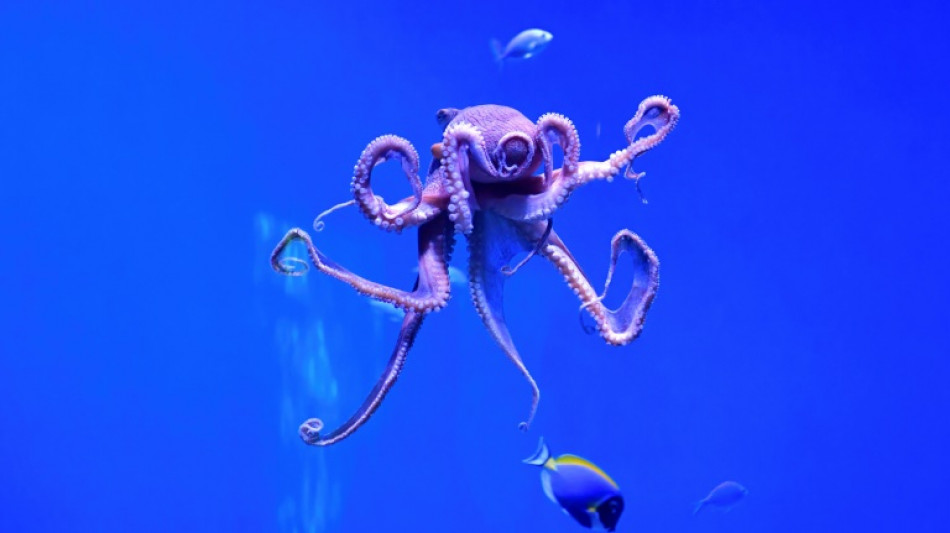
Oceans produce half the oxygen we breathe, regulate the weather and provide humanity's single largest source of protein.
But they are being pushed to the brink by human activities.
- Marine genetic resources -
Carbon dioxide emissions and global warming drive devastating marine heatwaves and acidification.
The UN's climate science advisory body has projected that more than 99 percent of shallow water corals will die if average global temperatures rise more than degrees above preindustrial levels.
"The oceans as a whole are becoming warmer, the salinity levels are increasing. There's less oxygen for marine life," said Liz Karan, an expert with The Pew Charitable Trusts.
Humans have also fished some marine species to the edge of extinction, and used the world's waters as a garbage dump.
Today, a patchwork of agreements and regulatory bodies govern shipping, fishing, and mineral extraction, while the UN Convention on the Law of the Sea, negotiated in the 1970s, lays out rules for how far a nation's zone of influence extends beyond its shores.
But despite two decades of consultations, there is still no treaty protecting international waters beyond national jurisdiction, accounting for about two-thirds of the world's oceans.
Another contentious question is who gets a share of the benefits from the exploitation of what are known as "marine genetic resources".
Poorer countries fear they will be sidelined as wealthier nations scour the seas for the next wonder ingredients for the pharmaceutical, chemical or cosmetic industries, and lock up the spoils in trademarks and patents.
Will McCallum, head of oceans for Greenpeace UK, said wrapping up a deal by the end of this was crucial.
"We're not disappointed to have a 5th session," he told AFP. "But if a deal is not concluded in 2022 the chances of having a solid treaty are practically zero."
"Ministers and heads of state need to step up ahead of the next round of negotiations to ensure we land the strong treaty," he added.
The treaty covers the so-called high seas, which begin beyond national exclusive economic zones that extend 200 nautical miles (370 kilometres) from their shores.
X.Silva--TFWP