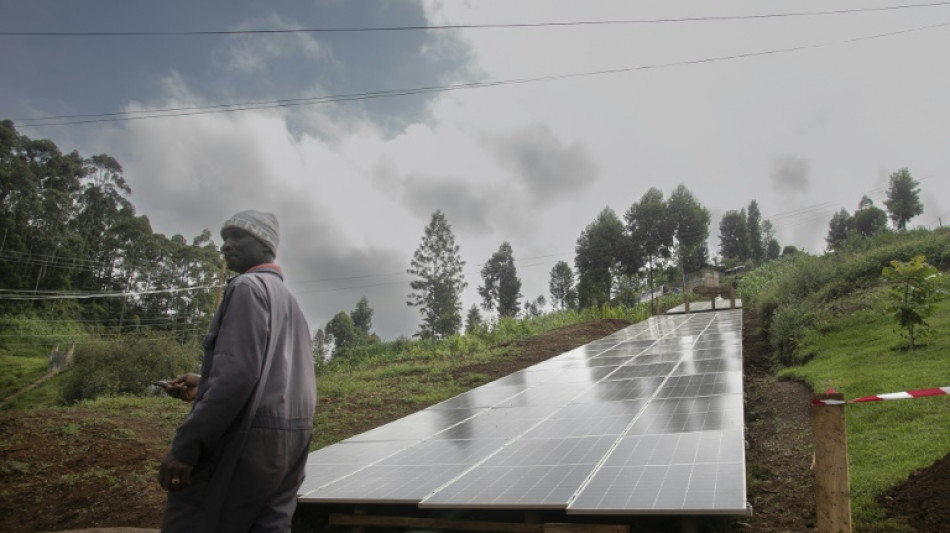
Can Africa grasp its green-powered potential? / Photo: © AFP

No continent has been hit harder by climate change than Africa, and yet none has more potential for a future centred on green energy, a top expert has told AFP in an interview.
The first African Climate Summit, which begins on Monday in Nairobi, is designed to showcase Africa as a potential powerhouse for renewables.
Despite steep challenges, the effort to define a shared African position on climate "gives us a lot of hope that things will change," said Mohamed Adow, director of the think tank Power Shift Africa and a prominent energy expert.
The interview has been edited for length and flow.
Q. How can Africa be a part of the solution to climate change?
We have incredible renewable energy potential. We have arable land that can feed Africa and a youthful population. We have immense critical mineral reserves that are essential for the global transition to clean energy. We have leaders who are now starting to step up. The opportunity is huge.
This is a continent that stands on the cusp of sweeping economic development. Whether this development is going to be powered by renewables, or by dirty fossil fuels will go a long way in determining how the world meets what was agreed (to limit global warming) in Paris in 2015.
Q. What do you think Africa needs to make that a reality?
If we truly want to realise the potential that clean energy resources provide, we have to invest in a pan-African industrial policy. Imagine a world where Africa was adding value to its raw materials and competing with China, or any other big economy, and exporting batteries, rather than exporting cobalt. There is a huge opportunity that we haven't grabbed yet.
If we don't have Africa developing its own strategic climate vision, it will be part of either the Chinese vision, the European vision, or the American vision. These big powers -- and the contests between them -- is where Africa usually gets caught.
If we extract ourselves and start thinking on our own terms, then we'll be at the table, and certainly not on the menu, as I believe we've been so far.
Q. How important is finance in these discussions?
For too long Global North countries have only wanted to focus on reducing emissions, and have given scant regard to dealing with the impact of their harmful fossil fuel burning. Africa, the continent least responsible for climate change, is also the most vulnerable, so mobilising the kind of commitments that will help this continent withstand the impacts of climate change is critical.
We must firstly get the developed world to honour their unfulfilled promises on climate finance of $100 billion a year.
But that sum is very small when you assess it against the real-world needs. The World Bank and the IMF must be reformed to ensure quicker flow of cash towards green, sustainable African-led infrastructural projects.
Addressing the African debt burden is also critical. Some of these countries are unable to tackle the effects of climate change as most of their revenue is going to debt repayment to wealthy countries that are also responsible for the climate crisis.
Q. What do you want to see coming from the African Climate Summit?
What we need to do is help build a vision that enables these countries to leapfrog dirty energy and become green leaders.
There is no reason for Africa to follow in the footsteps of the Western countries that have got us into this mess in the first place.
The only way for Africa to actually attain the kind of prosperity we desire is for us to chart a completely different path than the one that was pursued by the current developed countries. And that is the opportunity that we need to realise.
M.Cunningham--TFWP