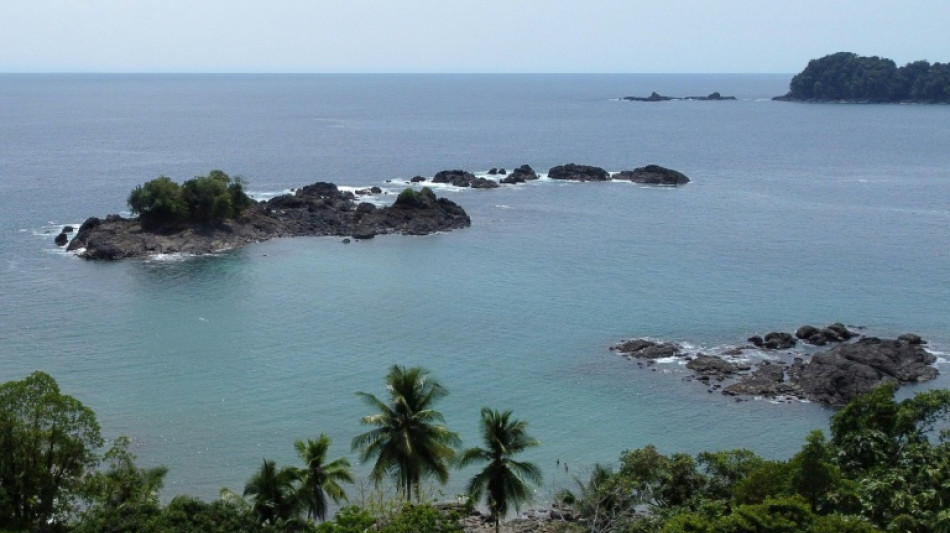
In Colombia, a community wins fight to protect a slice of paradise / Photo: © AFP

In the remote west of Colombia, where virgin rainforest and pristine beaches collide, a group of politicians and businessmen dreamed of building a massive port on the Pacific.
It took almost two decades, but a small community managed to sink the project, betting on a different development model to preserve their slice of paradise.
In June, UNESCO declared the Gulf of Tribuga a biosphere reserve, putting a definitive end to plans to build a deepwater port and some 80 kilometers (50 miles) of highway through the untouched jungle.
The remote region, with no roads linking it to the interior, boasts a bounty of plant species, while its warm Pacific waters are a breeding ground for humpback whales and turtles.
In a region where unemployment stands around 30 percent, and poverty affects some 63 percent of inhabitants, the project promised "a lot of jobs," recalls Marcelina Morena, a 51-year-old Columbian of African descent.
"But on the other hand, it was going to bring us destruction of the mangroves, the land, everything. So we said no to the port."
Wearing rubber boots and gloves, she clambers through thick mangrove branches in search of pianguas, a mollusk considered a delicacy in Ecuador and Mexico.
She says the Gulf of Tribuga "is going to be for the children, so that in the future they have something to live on."
"We will not allow anyone to destroy it, because it is a natural heritage."
- 'Benefits to a few' -
The project was first proposed in 2006 by a group of around 30 local officials and businessmen.
It progressed at a snail's pace until Ivan Duque, elected president in 2018, made it a priority.
But he faced fierce resistance from some 18,000 Afro-Colombians and members of the Embera Indigenous community who rejected an offer of a minimum share in profits.
Environmental groups and studies argued over and over again how the construction of the port would damage the unique area.
At the same time, the company backing the project struggled to get the right approvals to move forward with construction.
The local community also pointed to the case of Buenaventura, Colombia's largest Pacific cargo terminal, only 200 kilometers south, which has been in operation for decades.
Nevertheless, the mainly Black population there still suffers from unemployment, a lack of public services, and lives under the threat of armed groups who traffic drugs around the port.
Local media have also reported that the port is operating at less than half of its capacity.
"Buenaventura (is) like a mirror. The port only brings benefits to a few" while creating other problems, said Arnold Rincon, director of Codechoco, the local environmental body that fought against the project.
In February 2022, under pressure from an aggressive environmental campaign, Duque backtracked and asked UNESCO to designate the zone as a biosphere reserve, without explaining his change of heart.
- Eco-tourism -
Residents want a different path to prosperity.
Locals "speak of ecotourism and artisanal fishing, the sale of carbon credits and different strategies that do not affect the biome," said Rincon.
Small-scale eco-tourism to the hard-to-reach area grew 126 percent between 2019 and 2021, according to official data, and is seen as an engine for further growth.
With little connection to bigger markets, one company is helping carry fresh fish from the region by plane to restaurants in the interior.
Viche, a cane brandy distilled by locals, is being sold in bars in Bogota.
The women who spend their days searching for the piangua mollusks, which sell for seven dollars a pound, hope their product will soon find a similar market.
Mangroves -- which trap enormous amounts of carbon dioxide and greenhouse gases -- are "life", says Arisleda Hurtado, president of the local association of piangueras.
"When you survive off something you have to take care of it, you can't destroy that which sustains you."
H.M.Hernandez--TFWP