The Fort Worth Press - Land and sea efforts to save reefs must work together: study

USD -
AED 3.67315
AFN 62.501894
ALL 82.895377
AMD 377.43981
ANG 1.790083
AOA 917.000249
ARS 1397.043972
AUD 1.426269
AWG 1.8
AZN 1.701164
BAM 1.689807
BBD 2.011068
BDT 122.513867
BGN 1.709309
BHD 0.377544
BIF 2965
BMD 1
BND 1.277469
BOB 6.900038
BRL 5.264202
BSD 0.998523
BTN 93.323368
BWP 13.643963
BYN 2.973062
BYR 19600
BZD 2.008078
CAD 1.373215
CDF 2272.999771
CHF 0.787065
CLF 0.023082
CLP 911.430295
CNY 6.880496
CNH 6.887385
COP 3710.78
CRC 465.684898
CUC 1
CUP 26.5
CVE 95.249798
CZK 21.08545
DJF 177.719921
DKK 6.43939
DOP 59.874978
DZD 132.329874
EGP 52.333484
ERN 15
ETB 157.374943
EUR 0.86197
FJD 2.215403
FKP 0.749521
GBP 0.745075
GEL 2.714994
GGP 0.749521
GHS 10.90504
GIP 0.749521
GMD 73.000295
GNF 8780.000427
GTQ 7.648111
GYD 208.902867
HKD 7.83385
HNL 26.519871
HRK 6.492297
HTG 130.780562
HUF 333.9935
IDR 16887
ILS 3.11565
IMP 0.749521
INR 93.20435
IQD 1310
IRR 1315050.000338
ISK 123.759468
JEP 0.749521
JMD 157.274927
JOD 0.709002
JPY 158.436498
KES 129.499915
KGS 87.449895
KHR 4014.999734
KMF 424.99986
KPW 900.003974
KRW 1486.099262
KWD 0.306469
KYD 0.832131
KZT 481.288689
LAK 21549.999713
LBP 89550.00001
LKR 313.539993
LRD 183.597935
LSL 16.929749
LTL 2.95274
LVL 0.60489
LYD 6.395005
MAD 9.36197
MDL 17.464295
MGA 4164.999833
MKD 53.144761
MMK 2099.452431
MNT 3566.950214
MOP 8.056472
MRU 40.109805
MUR 46.790313
MVR 15.449851
MWK 1737.000048
MXN 17.785601
MYR 3.939498
MZN 63.909518
NAD 16.820349
NGN 1377.369623
NIO 36.720223
NOK 9.74727
NPR 149.304962
NZD 1.705335
OMR 0.384476
PAB 0.998475
PEN 3.472965
PGK 4.305501
PHP 59.433501
PKR 279.249835
PLN 3.669815
PYG 6524.941572
QAR 3.644019
RON 4.391298
RSD 101.219943
RUB 81.918638
RWF 1460
SAR 3.754283
SBD 8.051718
SCR 15.300947
SDG 600.999966
SEK 9.32207
SGD 1.27543
SHP 0.750259
SLE 24.549817
SLL 20969.510825
SOS 571.503487
SRD 37.336497
STD 20697.981008
STN 21.167495
SVC 8.736371
SYP 110.564047
SZL 16.84983
THB 32.320382
TJS 9.540369
TMT 3.5
TND 2.905027
TOP 2.40776
TRY 44.311498
TTD 6.778753
TWD 31.844023
TZS 2595.000352
UAH 43.841339
UGX 3769.542134
UYU 40.685845
UZS 12205.000114
VES 456.504355
VND 26341
VUV 119.226095
WST 2.727792
XAF 566.728441
XAG 0.014406
XAU 0.000226
XCD 2.70255
XCG 1.799457
XDR 0.706079
XOF 568.498074
XPF 103.402677
YER 238.650295
ZAR 16.7911
ZMK 9001.19753
ZMW 19.346115
ZWL 321.999592
  • CMSC

    0.2300

    22.88

    +1.01%

  • BCC

    4.3000

    72.6

    +5.92%

  • GSK

    0.4000

    52.24

    +0.77%

  • RBGPF

    -13.5000

    69

    -19.57%

  • BCE

    0.0550

    25.845

    +0.21%

  • RIO

    3.2300

    86.38

    +3.74%

  • NGG

    0.5350

    82.525

    +0.65%

  • CMSD

    0.1066

    22.765

    +0.47%

  • AZN

    1.5600

    185.16

    +0.84%

  • JRI

    -0.0400

    11.73

    -0.34%

  • RYCEF

    0.9000

    16.2

    +5.56%

  • BTI

    0.6800

    58.05

    +1.17%

  • VOD

    0.2200

    14.55

    +1.51%

  • BP

    -1.2650

    43.515

    -2.91%

  • RELX

    0.4850

    33.845

    +1.43%

Land and sea efforts to save reefs must work together: study
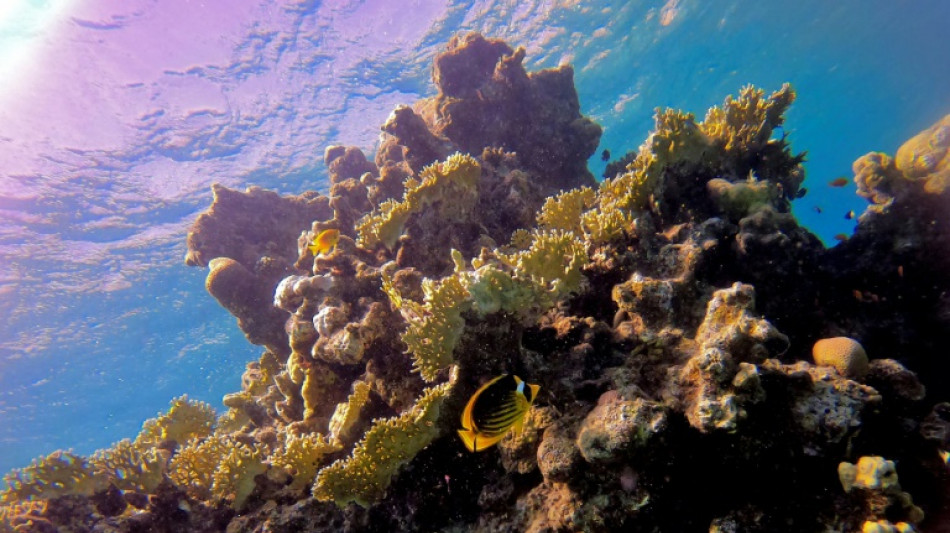
Land and sea efforts to save reefs must work together: study / Photo: © AFP/File

Land and sea efforts to save reefs must work together: study

A new study offers a glimmer of hope in efforts to save the world's coral reefs, which play a vital role in underwater life but have been put under threat by rising ocean temperatures.

Text size:

The study published Wednesday, which is based on 20 years of data from the US island of Hawaii, says that combining local efforts to limit the impact of humans on both the land and sea give coral reefs a greater chance at bouncing back.

"We found that both land-based (for example wastewater pollution) and sea-based human impacts (for example fishing) must be reduced together to ensure coral reef persistence," the study's co-lead author Gareth Williams, a marine ecologist at the UK's Bangor University, told AFP.

Using high-resolution data and thousands of hours of underwater surveys, the researchers looked at connections between human impacts and the recovery of the reef.

They found that not all coral reefs suffer equally during heatwaves.

In 18 percent of the reefs surveyed during an unprecedented marine heatwave in Hawaii in 2015, coral cover remained unchanged -- and in some cases, increased -- despite the heat.

Their ability to recover was dependent on how strained they were by various human pollutants and how many algae-eating fish were around to pave the way for regrowth, the study said.

The more negative impacts that were remedied, the better the reefs recovered, offering a potential path ahead for conservation efforts.

The researchers carried out modelling which indicated that simultaneously reducing these problems on land and sea gave reefs an up to six times higher chance of regrowing after a heatwave than if the efforts were carried out separately.

They called for more cooperation.

"Resource managers have aspired to manage land and sea together, but because governance tends to be centralised, most terrestrial- and ocean-management efforts remain siloed," said the study's co-lead author Jamison Grove of the US National Oceanic and Atmospheric Administration.

But the researchers warned that the frequency and severity of coral bleaching as ocean temperatures rise due to human-caused climate change could "simply overwhelm the positive effects of local management actions".

The study, published in the journal Nature, came just days after it was revealed that the temperature of the world's oceans rose to their hottest level ever recorded on July 30.

Last year most nations committed to protecting 30 percent of the planet's land and ocean by 2030 to safeguard biodiversity.

T.Harrison--TFWP