The Fort Worth Press - Global warming made Horn of Africa drought possible: report

USD -
AED 3.672499
AFN 64.501308
ALL 81.091764
AMD 369.248031
ANG 1.789884
AOA 917.999814
ARS 1395.523747
AUD 1.382485
AWG 1.8
AZN 1.698555
BAM 1.662466
BBD 2.013854
BDT 122.689218
BGN 1.668102
BHD 0.377545
BIF 2976.339735
BMD 1
BND 1.267973
BOB 6.9098
BRL 4.914103
BSD 0.999873
BTN 94.420977
BWP 13.425192
BYN 2.825886
BYR 19600
BZD 2.010964
CAD 1.36575
CDF 2316.000248
CHF 0.778435
CLF 0.022607
CLP 889.770183
CNY 6.80505
CNH 6.80103
COP 3738.9
CRC 459.648974
CUC 1
CUP 26.5
CVE 93.718924
CZK 20.662698
DJF 178.070373
DKK 6.35355
DOP 59.467293
DZD 132.269335
EGP 52.717905
ERN 15
ETB 156.137601
EUR 0.85023
FJD 2.184898
FKP 0.734821
GBP 0.734715
GEL 2.679792
GGP 0.734821
GHS 11.264445
GIP 0.734821
GMD 72.999787
GNF 8773.107815
GTQ 7.634866
GYD 209.223551
HKD 7.82816
HNL 26.583478
HRK 6.404025
HTG 130.919848
HUF 302.820499
IDR 17368.9
ILS 2.90496
IMP 0.734821
INR 94.478103
IQD 1309.963492
IRR 1312900.000029
ISK 122.270146
JEP 0.734821
JMD 157.601928
JOD 0.708974
JPY 156.754504
KES 129.130063
KGS 87.420497
KHR 4012.087263
KMF 419.000313
KPW 899.950939
KRW 1466.68497
KWD 0.30763
KYD 0.833358
KZT 462.122307
LAK 21929.626969
LBP 89547.492658
LKR 321.915771
LRD 183.493491
LSL 16.405102
LTL 2.952741
LVL 0.60489
LYD 6.322723
MAD 9.144703
MDL 17.099822
MGA 4176.618078
MKD 52.401617
MMK 2099.606786
MNT 3578.902576
MOP 8.06268
MRU 39.968719
MUR 46.820195
MVR 15.454972
MWK 1733.612706
MXN 17.23635
MYR 3.920978
MZN 63.900189
NAD 16.405102
NGN 1359.689667
NIO 36.794016
NOK 9.20175
NPR 151.087386
NZD 1.67806
OMR 0.384529
PAB 0.999962
PEN 3.457057
PGK 4.415452
PHP 60.485968
PKR 278.66746
PLN 3.598017
PYG 6107.687731
QAR 3.654753
RON 4.440951
RSD 99.791978
RUB 74.148427
RWF 1465.941884
SAR 3.780624
SBD 8.032258
SCR 14.326153
SDG 600.498337
SEK 9.218875
SGD 1.267885
SHP 0.746601
SLE 24.600677
SLL 20969.496166
SOS 571.467429
SRD 37.43097
STD 20697.981008
STN 20.823594
SVC 8.749309
SYP 110.543945
SZL 16.394307
THB 32.224021
TJS 9.329718
TMT 3.51
TND 2.904513
TOP 2.40776
TRY 45.36475
TTD 6.776593
TWD 31.394497
TZS 2604.644023
UAH 43.92104
UGX 3746.547108
UYU 39.879308
UZS 12128.681314
VES 496.20906
VND 26308
VUV 118.026144
WST 2.704092
XAF 557.575577
XAG 0.012389
XAU 0.000212
XCD 2.70255
XCG 1.802048
XDR 0.695511
XOF 557.525817
XPF 101.364158
YER 238.601522
ZAR 16.42005
ZMK 9001.201083
ZMW 19.037864
ZWL 321.999592
  • RBGPF

    0.0000

    63.18

    0%

  • RYCEF

    -0.0500

    17.45

    -0.29%

  • CMSC

    -0.0400

    22.97

    -0.17%

  • RIO

    -2.4000

    103.11

    -2.33%

  • NGG

    -1.9400

    85.91

    -2.26%

  • VOD

    -0.4400

    15.69

    -2.8%

  • GSK

    -0.0300

    50.5

    -0.06%

  • RELX

    -1.5900

    34.16

    -4.65%

  • BCC

    -1.4800

    72.76

    -2.03%

  • AZN

    -2.4000

    182.52

    -1.31%

  • BCE

    0.3400

    24.57

    +1.38%

  • JRI

    -0.0200

    13.15

    -0.15%

  • CMSD

    0.0000

    23.42

    0%

  • BTI

    -1.4800

    58.08

    -2.55%

  • BP

    -0.8200

    43.81

    -1.87%

Global warming made Horn of Africa drought possible: report
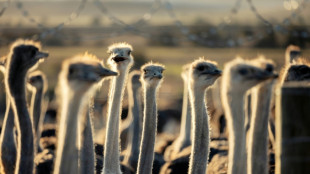
Global warming made Horn of Africa drought possible: report / Photo: © AFP

Global warming made Horn of Africa drought possible: report

A devastating drought that has struck the Horn of Africa could not have occurred without global warming, according to a new report released Thursday from an international team of climate scientists.

Text size:

"Human-caused climate change has made agricultural drought in the Horn of Africa about 100 times more likely," said a summary of the report by the World Weather Attribution (WWA) group.

"The ongoing devastating drought would not have happened at all without the effect of greenhouse gas emissions," it added.

Since late 2020, countries on the Horn of Africa -- Djibouti, Ethiopia, Eritrea, Kenya, Somalia, South Sudan and Sudan -- have been suffering the worst drought in 40 years. The extended drought has led to the deaths of millions of heads of cattle and wiped out crops.

The WWA study concentrated on the three areas worst hit by the drought: southern Ethiopia, Somalia and eastern Kenya.

While climate change had little effect on total annual rainfall in the region, "higher temperatures have significantly increased evaporation from soil and plants, which has made dry soils much more likely", according to the 19 scientists who contributed to the WWA report.

"Without this effect, the region would not have experienced agricultural drought -- when crops and pastures are affected by dry conditions -- over the last two years," the summary added.

"Instead, widespread crop failures and livestock deaths have left more than 20 million people at risk of acute food insecurity."

The WWA said that, for its rapid analysis, "scientists looked at changes in rainfall in 2021 and 2022 in the affected region, covering southern Ethiopia, southern Somalia and eastern Kenya".

"They found that climate change is affecting the rainfall periods in opposite ways. The long rains are becoming drier, with low rainfall now about twice as likely, while the short rains are becoming wetter due to climate change," it added.

"This wettening trend in the short rains has been masked recently by the La Nina weather pattern, which reduces rainfall in the short rains."

Joyce Kimutai, a Kenyan climatologist who contributed to the report, told AFP: "It is time we act and engage differently. Central to this process is to transform and enhance resilience of our systems.

"We need to innovate across and throughout food systems, improve collaboration, involve vulnerable groups, make the best use of data and information, as well as incorporating new technologies and traditional knowledge."

The WWA network, set up by leading climate scientists, has built a reputation in recent years for its capacity to evaluate the extent to which climate change has contributed to extreme weather events.

Its results are published as a matter of urgency, without passing through the long peer-review process required by scientific journals, but employ approved methodological approaches.

T.Mason--TFWP