US Supreme Court to hear high-stakes environmental case

The conservative-dominated US Supreme Court is to hear an environmental regulation case on Monday with potentially far-reaching implications for the Biden administration's fight against climate change.
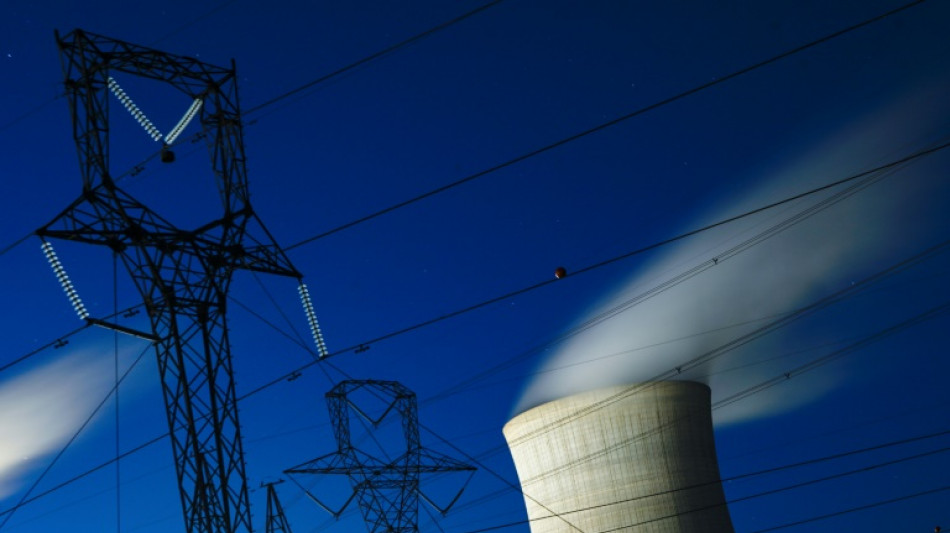
The high-stakes case concerns the authority of the Environmental Protection Agency (EPA) to regulate greenhouse gas emissions from coal-fired power plants, which produce nearly 20 percent of the electricity in the United States.
"This is the first major climate change case to be before the justices in 15 years and the court's membership has dramatically changed since then," said Richard Lazarus, a professor of environmental law at Harvard University.
In 2007, the Supreme Court, by a narrow majority, ruled that the EPA has the power to regulate carbon dioxide emissions from power plants under the Clean Air Act of 1970.
The nation's highest court has been radically transformed in recent years, however.
Former Republican president Donald Trump, a climate change skeptic hostile to government regulation of industry, nominated three justices to the nine-member court, giving conservatives a 6-3 majority.
"Because we have the most conservative Supreme Court that we've had in decades many of the people from the fossil fuel industry are asking the court to do all kinds of outrageous things to limit EPA authority," said Robert Percival, director of the Environmental Law Program at the University of Maryland.
In 2015, Democratic president Barack Obama unveiled his Clean Power Plan, which was intended to combat global warming by reducing carbon dioxide emissions from coal- and gas-burning plants and shifting energy production to clean sources such as solar and wind power.
The Clean Power Plan was blocked in the Supreme Court in 2016 and repealed by Trump, who replaced it with his own industry-friendly Affordable Clean Energy (ACE) rule.
The US Court of Appeals for the District of Columbia threw out Trump's ACE rule on the last day of his presidency, however, setting the stage for the case currently before the Supreme Court: West Virginia vs EPA.
- 'Christmas gift' -
West Virginia and several other coal-producing states asked the Supreme Court to intervene and define the powers of the EPA. By accepting the case, the court sent a signal to detractors of the agency and, more broadly, opponents of strong government regulatory authority.
"This was like a Christmas gift to regulated industries," Percival told AFP.
In its brief to the court, West Virginia accused the EPA of acting like "the country's central energy planning authority."
The EPA is "reshaping the power grids and seizing control over electricity production nationwide" without the express authorization of Congress, the state said.
No matter "how serious the problem," West Virginia said, a federal agency "may not exercise its authority in a manner that is inconsistent with the administrative structure that Congress enacted into law."
Harvard's Lazarus said there is "good reason for concern" that the court will rule against the EPA.
The court could find that Congress is "powerless to delegate an administrative agency the authority to issue regulations that address major public health and welfare issues such as climate change," he said.
"Or, that it can do so only with very precise statutory language enacted by Congress.
"In either event, given how partisan gridlock (is in Congress) such a ruling would seriously threaten the national government's ability to address some of the nation's most pressing problems including, but not limited to climate change."
- 'Free from oversight' -
Several environmental protection groups have submitted their own briefs to the court in support of the EPA.
"In the absence of sustained efforts to reduce greenhouse gas emissions," a group of climate scientists said, "the total increase in temperature could surpass 10 degrees (Fahrenheit) -- leading to physical and ecological impacts that would be irreversible for thousands of years, if ever."
"It is still possible to mitigate the human and economic costs of climate change," they said, "if greenhouse gas emissions from existing power plants and other sources can be reduced.
"But such mitigation will require significant coordination at the federal level."
A group of Democratic lawmakers, including Vermont Senator Bernie Sanders, submitted a brief urging the court to reject a case they said was being brought by those in favor of "an era free from oversight by the government."
"Metrics that boomed in the 20th century, from average lifespan to economic productivity, were made possible by a slew of new regulations aimed at protecting the public welfare," they said.
"As the excesses of powerful industries were reined in, however, these same regulations fostered resentment among those seeking to operate without such restraint.
"These cases are the direct product of that resentment."
M.T.Smith--TFWP