The Fort Worth Press - New US standards to limit 'forever chemicals' in drinking water

USD -
AED 3.672804
AFN 66.000368
ALL 82.403989
AMD 381.470403
ANG 1.790403
AOA 917.000367
ARS 1449.114041
AUD 1.51255
AWG 1.8025
AZN 1.70397
BAM 1.670125
BBD 2.014261
BDT 122.305906
BGN 1.668435
BHD 0.37702
BIF 2960
BMD 1
BND 1.292857
BOB 6.910715
BRL 5.541804
BSD 1.000043
BTN 89.605322
BWP 14.066863
BYN 2.939243
BYR 19600
BZD 2.01128
CAD 1.37996
CDF 2558.50392
CHF 0.79539
CLF 0.023202
CLP 910.203912
CNY 7.04095
CNH 7.034625
COP 3814.88
CRC 499.453496
CUC 1
CUP 26.5
CVE 94.450394
CZK 20.78625
DJF 177.720393
DKK 6.379075
DOP 62.603884
DZD 129.67604
EGP 47.595804
ERN 15
ETB 155.103874
EUR 0.85385
FJD 2.286504
FKP 0.746974
GBP 0.74763
GEL 2.68504
GGP 0.746974
GHS 11.48039
GIP 0.746974
GMD 73.000355
GNF 8686.000355
GTQ 7.663012
GYD 209.225672
HKD 7.78137
HNL 26.410388
HRK 6.432604
HTG 131.121643
HUF 329.91204
IDR 16700
ILS 3.20705
IMP 0.746974
INR 89.572904
IQD 1310
IRR 42100.000352
ISK 125.620386
JEP 0.746974
JMD 160.014687
JOD 0.70904
JPY 157.68204
KES 128.903801
KGS 87.450384
KHR 4011.00035
KMF 420.00035
KPW 899.985447
KRW 1475.995039
KWD 0.30721
KYD 0.83344
KZT 517.522287
LAK 21650.000349
LBP 89550.000349
LKR 309.628719
LRD 177.250382
LSL 16.760381
LTL 2.95274
LVL 0.60489
LYD 5.420381
MAD 9.155039
MDL 16.930526
MGA 4525.000347
MKD 52.553168
MMK 2099.831872
MNT 3551.409668
MOP 8.015336
MRU 39.740379
MUR 46.150378
MVR 15.450378
MWK 1737.000345
MXN 18.029265
MYR 4.077039
MZN 63.903729
NAD 16.760377
NGN 1460.750377
NIO 36.703722
NOK 10.13715
NPR 143.368515
NZD 1.736545
OMR 0.384499
PAB 1.000004
PEN 3.366039
PGK 4.257039
PHP 58.595038
PKR 280.303701
PLN 3.59056
PYG 6709.105581
QAR 3.641038
RON 4.344104
RSD 100.214294
RUB 80.501392
RWF 1456.129115
SAR 3.750876
SBD 8.146749
SCR 15.12369
SDG 601.503676
SEK 9.270704
SGD 1.292904
SHP 0.750259
SLE 24.050371
SLL 20969.503664
SOS 571.503662
SRD 38.441504
STD 20697.981008
STN 21.3
SVC 8.750043
SYP 11057.107339
SZL 16.760369
THB 31.403646
TJS 9.215425
TMT 3.5
TND 2.915038
TOP 2.40776
TRY 42.802204
TTD 6.787751
TWD 31.509504
TZS 2495.000335
UAH 42.285385
UGX 3577.131634
UYU 39.263238
UZS 12020.000334
VES 282.15965
VND 26312.5
VUV 121.400054
WST 2.789362
XAF 560.122791
XAG 0.014883
XAU 0.00023
XCD 2.70255
XCG 1.802353
XDR 0.695787
XOF 559.503593
XPF 102.250363
YER 238.403589
ZAR 16.773704
ZMK 9001.203584
ZMW 22.626123
ZWL 321.999592
  • RBGPF

    0.0000

    80.22

    0%

  • CMSC

    -0.1200

    23.17

    -0.52%

  • RYCEF

    0.2100

    15.61

    +1.35%

  • SCS

    0.0200

    16.14

    +0.12%

  • RIO

    0.6900

    78.32

    +0.88%

  • GSK

    0.3200

    48.61

    +0.66%

  • NGG

    -0.2800

    76.11

    -0.37%

  • BP

    0.6300

    33.94

    +1.86%

  • RELX

    0.0800

    40.73

    +0.2%

  • BTI

    -0.5900

    56.45

    -1.05%

  • CMSD

    -0.0300

    23.25

    -0.13%

  • JRI

    -0.0500

    13.38

    -0.37%

  • VOD

    0.0400

    12.84

    +0.31%

  • BCC

    -2.9300

    74.77

    -3.92%

  • BCE

    -0.0100

    22.84

    -0.04%

  • AZN

    0.7500

    91.36

    +0.82%

New US standards to limit 'forever chemicals' in drinking water
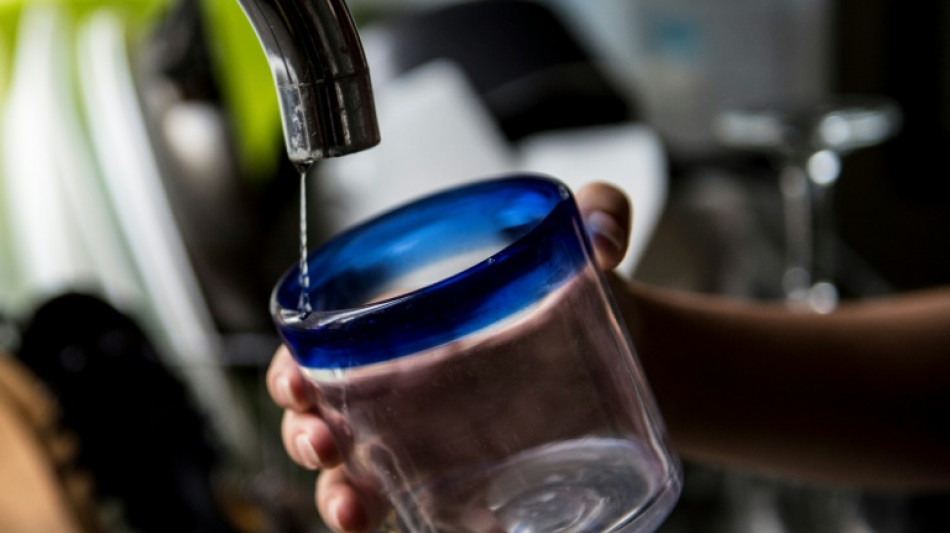
New US standards to limit 'forever chemicals' in drinking water / Photo: © AFP

New US standards to limit 'forever chemicals' in drinking water

The US Environmental Protection Agency (EPA) proposed new standards on Tuesday to limit levels of harmful so-called "forever chemicals" in public drinking water.

Text size:

The move targets polyfluoroalkyl and perfluoroalkyl substances known as PFAS that have been found to cause cancer and other health problems.

Under the proposed new EPA rules, public water utilities will be required to monitor for six PFAS chemicals and reduce PFAS levels in the water supply.

EPA administrator Michael Regan said the new water standards have the potential to prevent thousands of deaths and tens of thousands of PFAS-related illnesses.

PFAS have been used since the 1940s in a wide variety of industry and consumer products such as nonstick pans, carpeting, waterproof clothing, food packaging, cosmetics and cleaning items.

However, "what began as a so-called miracle, groundbreaking technology meant for practicality and convenience quickly devolved into one of the most pressing environmental and public health concerns in the modern world," Regan said.

"These toxic chemicals are so pervasive and so long-lasting in the environment that they've been found in food, soil and water even in the most remote corners of our planet," he said.

"These chemicals can accumulate in the body over time and we know that long-term exposure to certain types of PFAS has been linked to serious illnesses, including cancer, liver damage and high cholesterol," he added.

A number of major US corporations have been phasing out the use of certain PFAS chemicals in recent years and some states have already imposed limits on PFAS in public drinking water.

The EPA proposal, which will be finalized by the end of the year, would set national standards for PFAS in drinking water.

The non-profit Environmental Working Group welcomed the EPA announcement as "historic progress" and the environmental law firm Earthjustice called it a "necessary and long overdue step towards addressing the nation's PFAS crisis."

"More than 200 million Americans could have PFAS in their tap water," said Scott Faber, senior vice president for government affairs at the Environmental Working Group.

"Americans have been drinking contaminated water for decades," Faber said. "This proposal is a critical step toward getting these toxic poisons out of our water."

President Joe Biden's Bipartisan Infrastructure Law passed in 2021 invests $9 billion over five years to help communities reduce PFAS contamination levels in drinking water.

C.Dean--TFWP