The Fort Worth Press - Tree count in Africa drylands could improve conservation: study

USD -
AED 3.67305
AFN 63.502642
ALL 82.257093
AMD 368.06994
ANG 1.790403
AOA 917.999742
ARS 1461.519193
AUD 1.428194
AWG 1.8
AZN 1.695732
BAM 1.707839
BBD 2.014862
BDT 122.896637
BGN 1.69088
BHD 0.37695
BIF 2985
BMD 1
BND 1.293759
BOB 6.91239
BRL 5.157899
BSD 1.000358
BTN 94.655909
BWP 13.576786
BYN 2.799012
BYR 19600
BZD 2.011981
CAD 1.41612
CDF 2265.000306
CHF 0.80895
CLF 0.023033
CLP 906.530329
CNY 6.769596
CNH 6.77754
COP 3446.13
CRC 453.811158
CUC 1
CUP 26.5
CVE 96.285333
CZK 21.169006
DJF 177.720283
DKK 6.53933
DOP 58.479379
DZD 133.523192
EGP 49.7701
ERN 15
ETB 161.283979
EUR 0.87491
FJD 2.24775
FKP 0.755695
GBP 0.755005
GEL 2.650427
GGP 0.755695
GHS 11.229578
GIP 0.755695
GMD 73.495715
GNF 8765.357714
GTQ 7.628428
GYD 209.275317
HKD 7.83985
HNL 26.762371
HRK 6.591987
HTG 130.677006
HUF 308.224498
IDR 17843
ILS 2.97135
IMP 0.755695
INR 94.58075
IQD 1310.524891
IRR 1374999.999926
ISK 125.989821
JEP 0.755695
JMD 158.06984
JOD 0.708999
JPY 161.517022
KES 129.439758
KGS 87.449795
KHR 4016.800706
KMF 429.499605
KPW 900.00035
KRW 1537.02501
KWD 0.30866
KYD 0.833661
KZT 487.587213
LAK 22093.277098
LBP 89584.959701
LKR 334.503445
LRD 182.07459
LSL 16.436923
LTL 2.952741
LVL 0.60489
LYD 6.386739
MAD 9.325876
MDL 17.591841
MGA 4219.387176
MKD 53.934521
MMK 2099.917974
MNT 3579.231668
MOP 8.077961
MRU 40.000349
MUR 47.809814
MVR 15.459635
MWK 1736.000081
MXN 17.35533
MYR 4.149699
MZN 63.899865
NAD 16.436923
NGN 1366.730165
NIO 36.814852
NOK 9.695201
NPR 151.449105
NZD 1.75035
OMR 0.384503
PAB 1.000358
PEN 3.385028
PGK 4.456902
PHP 61.1365
PKR 278.233656
PLN 3.74035
PYG 6098.551332
QAR 3.646906
RON 4.582895
RSD 102.696018
RUB 74.250968
RWF 1465.171718
SAR 3.753791
SBD 8.061424
SCR 13.674406
SDG 600.500641
SEK 9.61687
SGD 1.29338
SHP 0.746601
SLE 24.749989
SLL 20969.503664
SOS 571.695527
SRD 37.430496
STD 20697.981008
STN 21.39383
SVC 8.753133
SYP 110.532098
SZL 16.433081
THB 32.939705
TJS 9.278635
TMT 3.5
TND 2.957937
TOP 2.40776
TRY 46.4577
TTD 6.784027
TWD 31.642501
TZS 2628.232027
UAH 44.991835
UGX 3651.795772
UYU 40.002096
UZS 11989.276889
VES 606.63266
VND 26320
VUV 118.352303
WST 2.751796
XAF 572.793161
XAG 0.015293
XAU 0.000239
XCD 2.70255
XCG 1.802932
XDR 0.71169
XOF 571.999786
XPF 104.139924
YER 238.60233
ZAR 16.394101
ZMK 9001.201015
ZMW 17.731555
ZWL 321.999592
  • RBGPF

    0.3600

    61.5

    +0.59%

  • RYCEF

    0.1900

    18.45

    +1.03%

  • CMSC

    -0.1600

    22.21

    -0.72%

  • JRI

    0.0300

    12.7

    +0.24%

  • BCC

    -1.3800

    73.28

    -1.88%

  • BCE

    -0.4250

    22.855

    -1.86%

  • RELX

    -0.3900

    30.79

    -1.27%

  • RIO

    -0.7600

    99.32

    -0.77%

  • NGG

    1.8000

    81.24

    +2.22%

  • GSK

    0.2750

    50.945

    +0.54%

  • VOD

    -0.1400

    14.16

    -0.99%

  • CMSD

    -0.2700

    22.02

    -1.23%

  • AZN

    1.9950

    176.925

    +1.13%

  • BTI

    0.1320

    59.042

    +0.22%

  • BP

    0.6400

    39.74

    +1.61%

Tree count in Africa drylands could improve conservation: study
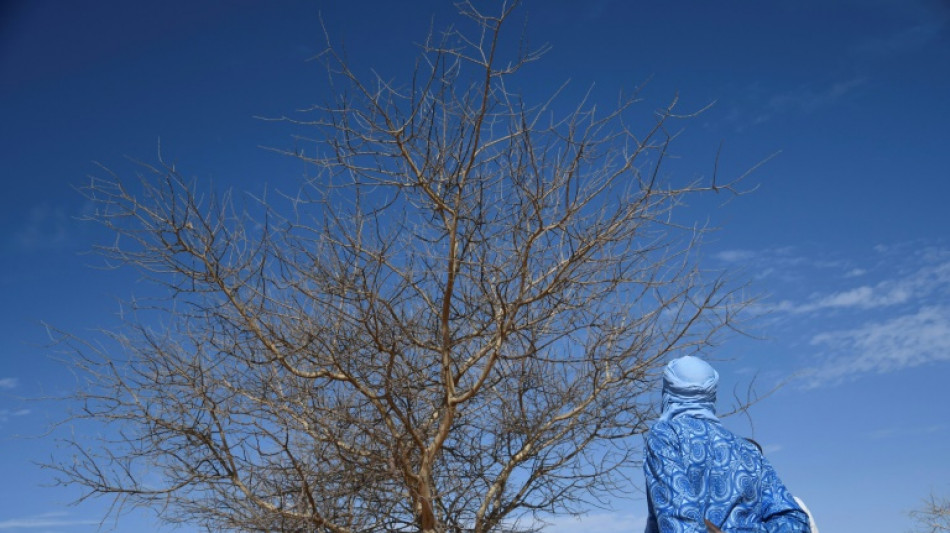
Tree count in Africa drylands could improve conservation: study / Photo: © AFP

Tree count in Africa drylands could improve conservation: study

A first count of trees in Africa's drylands has enabled scientists to calculate how much carbon they store and could help devise better conservation strategies for the region and beyond, a study said Wednesday.

Text size:

The number of trees in the vast region -- the count came to nearly 10 billion -- has not been known up to now, and the new data could prove crucial for slowing or preventing desertification, the authors said.

"(It) tells us about the carbon cycle and how much carbon we have in trees is mitigating climate change and our abuse of fossil fuels," Compton Tucker, co-lead author of the study published in the journal Nature, told AFP.

Dryland trees capture carbon for much longer than grasses and other non-woody species in the region, even if individually they do not store huge amounts.

The data show there are 9.9 billion trees within Africa's drylands: semi-arid Sub-Saharan Africa north of the Equator, which includes the Sahel and covers nearly 10 million square kilometres (four million square miles) of land from the Atlantic Ocean to the Red Sea.

That's the size of continental United States, plus Alaska, said Tucker, a senior Earth scientist at NASA.

By comparison, there are an estimated 400 billion trees in the Amazon.

Without accurate data on the number of trees in the Sahel, previous estimates largely overestimated the region's carbon-storage capacity, the study said.

The data could also help inform policies such as the Great Green Wall Initiative, which aims to restore savanna, grasslands and farmlands across the Sahel.

Policymakers, experts and donors can better track tree coverage -- and deforestation -- in the region, and understand how trees are being used by local communities.

"There is a lot of money in green finance dedicated to avoiding deforestation that has not been used due to a lack of reliable verification systems," said contributing author Philippe Ciais.

"High-resolution spatial data is crucial to improving the quality of carbon credits."

- Interactive map -

The researchers used machine learning to scan more than 300,000 high-resolution satellite images to map the crown area of individual trees in the drylands, defined as an arid region with low rainfall.

The authors hope to improve on the tool in the future by being able to map the trunk of the tree to determine its age and height, allowing for more accurate data on carbon storage capacity.

"When you want to estimate wood mass, it would be much better if -- in addition to the crown cover -- we had the height," co-lead author Pierre Hiernaux told AFP.

"It's almost possible but not yet."

Tucker said the same methodology could be used in other drylands including in Australia, the western United States or Central Asia.

An interactive map showing the location of individual trees and details the amount of carbon they store is available online.

Tucker hopes the data won't be used for harmful intentions.

"Any time you do something like this, you can certainly be used for bad purposes. We hope it's used for good."

The interactive map is available at: https://trees.pgc.umn.edu/app

T.Harrison--TFWP