The Fort Worth Press - Melting glaciers, fast-disappering gauge of climate change

USD -
AED 3.672504
AFN 63.000368
ALL 82.776172
AMD 376.396497
ANG 1.790083
AOA 917.000367
ARS 1391.503978
AUD 1.422273
AWG 1.8025
AZN 1.70397
BAM 1.687271
BBD 2.010611
BDT 122.494932
BGN 1.709309
BHD 0.377087
BIF 2954.923867
BMD 1
BND 1.276711
BOB 6.898158
BRL 5.313404
BSD 0.998318
BTN 93.32787
BWP 13.612561
BYN 3.028771
BYR 19600
BZD 2.007764
CAD 1.37265
CDF 2275.000362
CHF 0.78844
CLF 0.023504
CLP 928.050396
CNY 6.886404
CNH 6.906095
COP 3669.412932
CRC 466.289954
CUC 1
CUP 26.5
CVE 95.125739
CZK 21.149204
DJF 177.768192
DKK 6.457504
DOP 59.25894
DZD 132.24804
EGP 51.758616
ERN 15
ETB 157.330889
EUR 0.862704
FJD 2.21445
FKP 0.75164
GBP 0.749681
GEL 2.71504
GGP 0.75164
GHS 10.882112
GIP 0.75164
GMD 73.503851
GNF 8750.377432
GTQ 7.646983
GYD 208.85994
HKD 7.83525
HNL 26.423673
HRK 6.511304
HTG 130.966657
HUF 339.680388
IDR 16956.2
ILS 3.109125
IMP 0.75164
INR 94.01055
IQD 1307.768624
IRR 1315625.000352
ISK 124.270386
JEP 0.75164
JMD 156.839063
JOD 0.70904
JPY 159.240385
KES 129.327524
KGS 87.447904
KHR 3989.129966
KMF 427.00035
KPW 899.870128
KRW 1505.310383
KWD 0.30657
KYD 0.831903
KZT 479.946513
LAK 21437.260061
LBP 89404.995039
LKR 311.417849
LRD 182.685589
LSL 16.84053
LTL 2.95274
LVL 0.60489
LYD 6.39089
MAD 9.328473
MDL 17.385153
MGA 4162.53289
MKD 53.176897
MMK 2099.940821
MNT 3585.542519
MOP 8.05806
MRU 39.961178
MUR 46.510378
MVR 15.460378
MWK 1731.096062
MXN 17.898204
MYR 3.939039
MZN 63.903729
NAD 16.84053
NGN 1356.250377
NIO 36.733814
NOK 9.569995
NPR 149.324936
NZD 1.712622
OMR 0.384504
PAB 0.998318
PEN 3.451408
PGK 4.309192
PHP 60.150375
PKR 278.721304
PLN 3.69475
PYG 6520.295044
QAR 3.65052
RON 4.401504
RSD 101.324246
RUB 82.822413
RWF 1452.529871
SAR 3.754657
SBD 8.05166
SCR 13.69771
SDG 601.000339
SEK 9.344038
SGD 1.282504
SHP 0.750259
SLE 24.575038
SLL 20969.510825
SOS 570.504249
SRD 37.487504
STD 20697.981008
STN 21.136177
SVC 8.734849
SYP 110.536894
SZL 16.845965
THB 32.908038
TJS 9.588492
TMT 3.51
TND 2.948367
TOP 2.40776
TRY 44.252504
TTD 6.773066
TWD 32.036704
TZS 2595.522581
UAH 43.73308
UGX 3773.454687
UYU 40.227753
UZS 12170.987361
VES 454.69063
VND 26312
VUV 119.352434
WST 2.727514
XAF 565.894837
XAG 0.014693
XAU 0.000222
XCD 2.70255
XCG 1.799163
XDR 0.703792
XOF 565.894837
XPF 102.885735
YER 238.603589
ZAR 17.12748
ZMK 9001.203584
ZMW 19.491869
ZWL 321.999592
  • CMSD

    -0.2420

    22.658

    -1.07%

  • RIO

    -2.5000

    83.15

    -3.01%

  • NGG

    -3.5400

    81.99

    -4.32%

  • CMSC

    -0.2000

    22.65

    -0.88%

  • BCE

    0.0600

    25.79

    +0.23%

  • BCC

    -1.5600

    68.3

    -2.28%

  • GSK

    -0.5300

    51.84

    -1.02%

  • BTI

    -1.3500

    57.37

    -2.35%

  • RBGPF

    -13.5000

    69

    -19.57%

  • AZN

    -5.3300

    183.6

    -2.9%

  • RELX

    -0.4600

    33.36

    -1.38%

  • BP

    -1.0800

    44.78

    -2.41%

  • RYCEF

    -1.2600

    15.34

    -8.21%

  • VOD

    -0.0900

    14.33

    -0.63%

  • JRI

    -0.3900

    11.77

    -3.31%

Melting glaciers, fast-disappering gauge of climate change


Melting glaciers, fast-disappering gauge of climate change

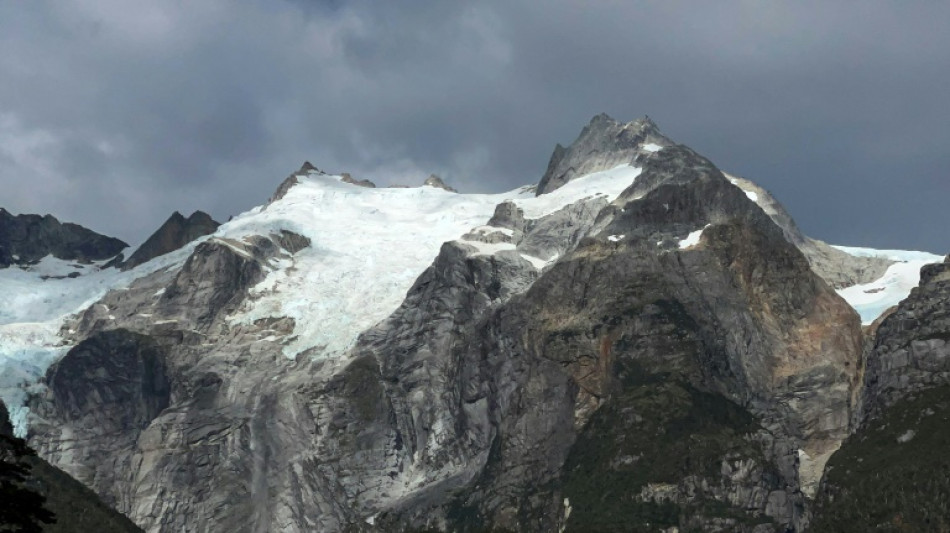
A crack widens in the San Rafael glacier in Chile's extreme south, and a ten-storey iceberg crashes into the lake by the same name -- a dramatic reminder of the impacts of global warming.

Text size:

In the lake San Rafael, about 100 icebergs float today, pieces broken off from the glacier that 150 years ago stretched out over two-thirds of the body of water now free of ice cover.

The San Rafael glacier is one of 39 in the Northern Patagonian Ice Field (3,500 square kilometers or 1,350 square miles), which with the Southern Patagonian Ice Field (11,000 km2) in Chile's Aysen region forms one of the world's biggest ice masses.

According to the European Space Agency satellite images show San Rafael to be one of the world's most actively calving glaciers and the fastest-moving in Patagonia, "flowing" at a speed of about 7.6 kilometers (4.7 miles) per year -- "receding dramatically under the influence of global warming."

Glaciers are bodies of slowly-moving ice on land that can be several hundred or several thousand years old.

Seasonal glacier melt is a natural phenomenon that with global warming has accelerated "significantly," Jorge O'Kuinghttons, a regional head of glaciology at Chile's water directorate, told AFP.

- 'Excellent indicator' -

At the moment, Patagonia's glaciers are retreating faster than anywhere else in the world.

"Glaciers are an excellent indicator of climate change," said Alexis Segovia, another government glaciologist who works in the remote region of southern Chile.

All but two of Chile's 26,000 glaciers are shrinking, he said, due to rising temperatures caused by manmade greenhouse gas emissions.

It is a vicious cycle.

Ice-covered surfaces of Earth reflect excess heat back into space, and if these are reduced through melting, temperatures rise even more.

Melting glaciers also add to sea level rise, which increases coastal erosion and elevated storm surges.

And water dammed by glaciers can be released by a sudden collapse.

"Areas are being flooded these days that were never flooded before," said O'Kuinghttons.

To learn more about what to expect in the future, glaciologists study the evolution of Chile's glaciers, which contain a frozen record of how the climate has changed over time.

According to the WWF, more than a third of the world's remaining glaciers will melt before 2100 even if mankind manages to curb emissions from the burning of fossil fuels.

- The heat is 'strong' -

East of San Rafael, on the lake General Carrera that is shared by Chile and Argentina, small-scale sheep and cattle farmer Santos Catalan has been living on the forefront of the change.

To augment his income, he criss-crosses the lake in a wooden boat with glacier-watching tourists.

Over the last 15 to 20 years, he told AFP, the landscape has become a lot less white as the ice has melted and snow dwindled.

"Things have changed a lot," he said. "The heat is very strong."

J.P.Cortez--TFWP