What campaigners want to see in UN nature deal / Photo: © AFP

As high-stakes UN biodiversity talks in Montreal draw to a close, delegates will be presented Sunday with a draft deal to safeguard the planet's ecosystems and species by 2030.
Will it amount to the "peace pact with nature" that UN chief Antonio Guterres said the world desperately needs? Campaigners say the devil lies in the details. Here's what they're looking out for:
- '30 by 30' -
The cornerstone of the agreement is the so-called 30 by 30 goal -- a pledge to protect 30 percent of the world's land and seas by 2030.
Currently, only about 17 percent of land and seven percent of oceans are protected.
And some experts say 30 percent is a low aim, insisting that protecting 50 percent would be better.
So far, more than 100 countries have publicly pledged support for the 30 by 30 target, and observers say it has received broad support among negotiators.
"For COP15 to be a success, we need to hold the line on our existing level of ambition," Alfred DeGemmis, of the Wildlife Conservation Society, told AFP.
Brian O'Donnell of the Campaign for Nature added it was key that the text applies to oceans, as well as land, which had been in doubt.
- Indigenous rights -
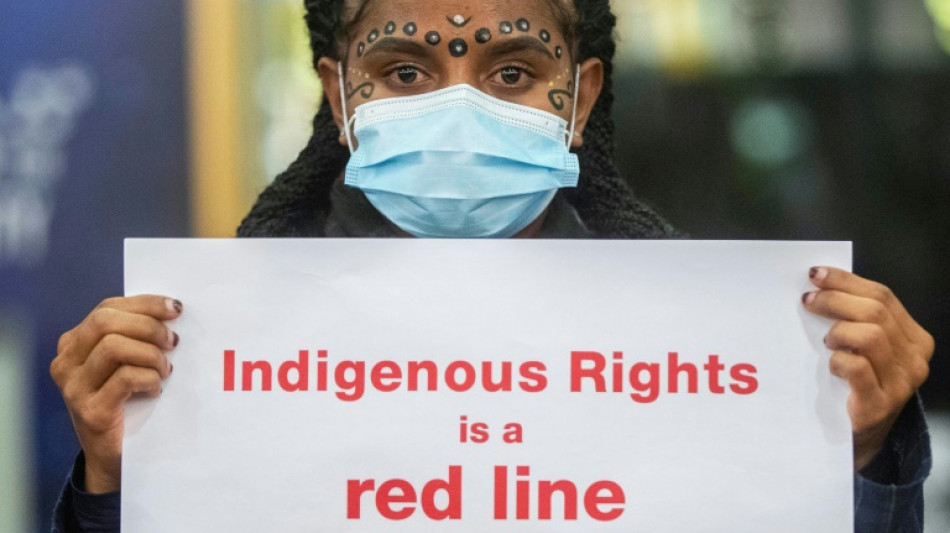
The question of Indigenous rights will be crucial.
About 80 percent of the Earth's remaining biodiverse land is currently managed by Indigenous people, and it's broadly recognized that biodiversity is better respected on Indigenous territory.
Many activists want to make sure their rights are not trampled in the name of conservation -- previous efforts to safeguard land have seen Indigenous communities marginalized or displaced in what has been dubbed "green colonialism."
Advocates say therefore these rights have to be adequately addressed throughout the text, including within the 30 by 30 pledge, so that Indigenous people are not subject to mass evictions.
Failure on this front would be a "complete red line for us," said O'Donnell.
"We are the ones doing the work. We protect biodiversity. You won't replace us. We won't let you," said Valentin Engobo, leader of the Lokolama community in the Congo Basin, which protects the world's largest tropical peatland.
"You can be our partners, if you want. But you cannot push us out."
- Loopholes matter -
As a general principle, it is vital that the targets envisioned in the text aren't significantly weakened through loopholes that will weaken actual implementation, said Georgina Chandler of the Royal Society for the Protection of Birds.
For example, during some plenary sessions, some ministers had suggested stripping out language about numerical targets for ecosystem restoration.
"Keeping those measurable elements...and making sure that they are ambitious, is really, really important," said Chandler.
Other things she'll be watching include whether there will be a commitment to halve pesticide use, and whether businesses will be mandated to assess and report on the biodiversity impacts.
- Finance -
As ever, money remains a difficult question.
Developing countries say developed nations grew rich by exploiting their resources and the South should be paid to preserve its ecosystems.
Several countries have announced new commitments either at the COP or recently, with Europe emerging as a key leader. The European Union has committed seven billion euros ($7.4 billion) for the period until 2027, double its prior pledge.
But Brazil has led a charge by developing countries for far more, proposing flows of $100 billion annually, compared to the roughly $10 billion at present.
Developing countries are also seeking a new funding mechanism, as a signal of the rich world's commitment to this goal.
Whether international aid is delivered via a new fund, an existing mechanism called the Global Environment Facility (GEF), or a halfway solution involving a new "trust fund" within the GEF is still up for debate.
L.Holland--TFWP