The Fort Worth Press - Long Covid symptoms affect one in eight, study suggests

USD -
AED 3.672497
AFN 62.485341
ALL 82.819398
AMD 376.075163
ANG 1.790083
AOA 917.000296
ARS 1397.068099
AUD 1.436224
AWG 1.8
AZN 1.702996
BAM 1.688145
BBD 2.009072
BDT 122.394372
BGN 1.709309
BHD 0.377663
BIF 2958.624827
BMD 1
BND 1.276256
BOB 6.893129
BRL 5.265802
BSD 0.997544
BTN 93.230733
BWP 13.63089
BYN 2.970277
BYR 19600
BZD 2.006223
CAD 1.37491
CDF 2272.999481
CHF 0.787645
CLF 0.023192
CLP 915.819745
CNY 6.880501
CNH 6.897355
COP 3712.41
CRC 465.238726
CUC 1
CUP 26.5
CVE 95.175414
CZK 21.123005
DJF 177.636605
DKK 6.446735
DOP 59.194938
DZD 132.677581
EGP 52.692497
ERN 15
ETB 155.750187
EUR 0.86288
FJD 2.22275
FKP 0.74705
GBP 0.746665
GEL 2.715034
GGP 0.74705
GHS 10.912826
GIP 0.74705
GMD 72.999363
GNF 8743.725967
GTQ 7.640618
GYD 208.6928
HKD 7.824935
HNL 26.402945
HRK 6.502016
HTG 130.655262
HUF 336.481004
IDR 16884
ILS 3.1229
IMP 0.74705
INR 93.752502
IQD 1306.805921
IRR 1315049.999851
ISK 124.080037
JEP 0.74705
JMD 157.11949
JOD 0.708994
JPY 158.755505
KES 129.601734
KGS 87.448502
KHR 3997.255178
KMF 425.000072
KPW 899.971148
KRW 1497.945002
KWD 0.306379
KYD 0.831294
KZT 480.792301
LAK 21441.54953
LBP 89332.395375
LKR 313.246356
LRD 182.547937
LSL 16.914492
LTL 2.95274
LVL 0.60489
LYD 6.385596
MAD 9.32385
MDL 17.446884
MGA 4151.759319
MKD 53.172354
MMK 2099.628947
MNT 3568.971376
MOP 8.048336
MRU 39.820637
MUR 46.504601
MVR 15.450298
MWK 1729.410597
MXN 17.87835
MYR 3.956498
MZN 63.909965
NAD 16.912959
NGN 1374.119643
NIO 36.709839
NOK 9.69115
NPR 149.169001
NZD 1.71616
OMR 0.384505
PAB 0.997544
PEN 3.4702
PGK 4.307127
PHP 59.894025
PKR 278.458498
PLN 3.687995
PYG 6518.521076
QAR 3.647765
RON 4.396402
RSD 101.337985
RUB 80.803103
RWF 1458.380986
SAR 3.753774
SBD 8.051718
SCR 13.882274
SDG 601.000047
SEK 9.32815
SGD 1.279665
SHP 0.750259
SLE 24.550093
SLL 20969.510825
SOS 570.111649
SRD 37.336497
STD 20697.981008
STN 21.147215
SVC 8.728114
SYP 110.977546
SZL 16.908277
THB 32.573499
TJS 9.531352
TMT 3.5
TND 2.939722
TOP 2.40776
TRY 44.346499
TTD 6.771674
TWD 32.002497
TZS 2570.000391
UAH 43.799335
UGX 3765.930542
UYU 40.64581
UZS 12161.753917
VES 456.504355
VND 26357
VUV 119.458227
WST 2.748874
XAF 566.190351
XAG 0.014342
XAU 0.000227
XCD 2.70255
XCG 1.797757
XDR 0.704159
XOF 566.190351
XPF 102.939019
YER 238.650095
ZAR 17.04585
ZMK 9001.202436
ZMW 19.326828
ZWL 321.999592
  • RYCEF

    -0.5000

    15.55

    -3.22%

  • RBGPF

    -13.5000

    69

    -19.57%

  • CMSC

    -0.0200

    22.86

    -0.09%

  • NGG

    0.4500

    82.51

    +0.55%

  • VOD

    0.1300

    14.61

    +0.89%

  • AZN

    0.4300

    184.5

    +0.23%

  • RELX

    -0.8300

    32.98

    -2.52%

  • GSK

    0.4000

    52.39

    +0.76%

  • BCE

    0.1400

    25.9

    +0.54%

  • CMSD

    -0.1600

    22.58

    -0.71%

  • BCC

    1.4500

    73.33

    +1.98%

  • RIO

    0.2150

    86.055

    +0.25%

  • JRI

    0.2700

    11.95

    +2.26%

  • BP

    0.9300

    44.5

    +2.09%

  • BTI

    0.2600

    58.18

    +0.45%

Long Covid symptoms affect one in eight, study suggests
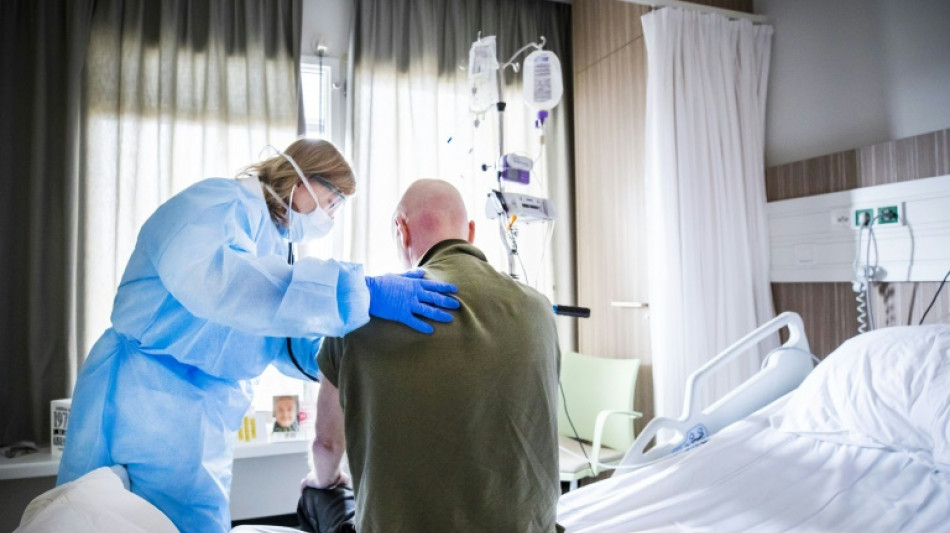
Long Covid symptoms affect one in eight, study suggests / Photo: © ANP/AFP/File

Long Covid symptoms affect one in eight, study suggests

One in eight people who get coronavirus develop at least one symptom of long Covid, one of the most comprehensive studies on the condition to date suggested on Thursday.

Text size:

With more than half a billion coronavirus cases recorded worldwide since the start of the pandemic, there has been rising concern about the lasting symptoms seen in people with long Covid.

However almost none of the existing research has compared long Covid sufferers with people who have never been infected, making it possible that some of the health problems were not caused by the virus.

A new study published in The Lancet journal asked more than 76,400 adults in the Netherlands to fill out an online questionnaire on 23 common long Covid symptoms.

Between March 2020 and August 2021, each participant filled out the questionnaire 24 times.

During that period, more than 4,200 of them -- 5.5 percent -- reported catching Covid.

Of those with Covid, over 21 percent had at least one new or severely increased symptom three to five months after becoming infected.

However nearly nine percent of a control group which did not have Covid reported a similar increase.

This suggested that 12.7 percent of those who had Covid -- around one in eight -- suffered from long-term symptoms, the study said.

The research also recorded symptoms before and after Covid infection, allowing the researchers to further pinpoint exactly what was related to the virus.

It found that common long Covid symptoms include chest pain, breathing difficulties, muscle pain, loss of taste and smell, and general fatigue.

- 'Major advance' -

One of the study's authors, Aranka Ballering of the Dutch University of Groningen, said long Covid was "an urgent problem with a mounting human toll".

"By looking at symptoms in an uninfected control group and in individuals both before and after SARS-CoV-2 infection, we were able to account for symptoms which may have been a result of non-infectious disease health aspects of the pandemic, such as stress caused by restrictions and uncertainty," she said.

The authors of the study said its limitations included that it did not cover later variants, such as Delta or Omicron, and did not collect information about some symptoms such as brain fog, which have since been considered a common sign of long Covid.

Another study author, Judith Rosmalen, said "future research should include mental health symptoms" such as depression and anxiety, as well as aspects like brain fog, insomnia and a feeling of malaise after even minor exertion.

Christopher Brightling and Rachael Evans, experts from Britain's Leicester University who were not involved in the study, said it was "a major advance" on previous long Covid research because it had an uninfected control group.

"Encouragingly, emerging data from other studies" suggests there is a lower rate of long Covid in people who have been vaccinated or infected with the Omicron variant, they said in a linked Lancet comment.

C.Rojas--TFWP