The Fort Worth Press - US overdose deaths shot up for Black, Native people during pandemic

USD -
AED 3.673025
AFN 65.483762
ALL 82.068343
AMD 381.698588
ANG 1.790403
AOA 916.999673
ARS 1438.243983
AUD 1.50659
AWG 1.8025
AZN 1.681394
BAM 1.664171
BBD 2.013461
BDT 122.170791
BGN 1.663705
BHD 0.376986
BIF 2966
BMD 1
BND 1.288843
BOB 6.933052
BRL 5.418097
BSD 0.999711
BTN 90.668289
BWP 13.203148
BYN 2.923573
BYR 19600
BZD 2.010568
CAD 1.377965
CDF 2250.000143
CHF 0.796802
CLF 0.0233
CLP 914.050217
CNY 7.04725
CNH 7.043785
COP 3824.03
CRC 500.068071
CUC 1
CUP 26.5
CVE 94.205954
CZK 20.711202
DJF 177.720303
DKK 6.359165
DOP 63.349937
DZD 129.668021
EGP 47.431203
ERN 15
ETB 155.594517
EUR 0.85129
FJD 2.25435
FKP 0.748248
GBP 0.747725
GEL 2.70406
GGP 0.748248
GHS 11.504975
GIP 0.748248
GMD 73.494201
GNF 8690.000082
GTQ 7.65801
GYD 209.150549
HKD 7.78238
HNL 26.332494
HRK 6.412297
HTG 130.986011
HUF 327.090961
IDR 16665.75
ILS 3.21285
IMP 0.748248
INR 90.72435
IQD 1309.604847
IRR 42109.999939
ISK 126.170416
JEP 0.748248
JMD 159.763112
JOD 0.709016
JPY 155.303501
KES 128.91014
KGS 87.450043
KHR 4003.999747
KMF 420.000088
KPW 899.999687
KRW 1469.420161
KWD 0.30684
KYD 0.833099
KZT 515.622341
LAK 21662.809299
LBP 89523.161227
LKR 309.11133
LRD 176.449066
LSL 16.773085
LTL 2.95274
LVL 0.60489
LYD 5.419319
MAD 9.176168
MDL 16.874708
MGA 4456.111092
MKD 52.392546
MMK 2099.265884
MNT 3545.865278
MOP 8.013921
MRU 39.767196
MUR 45.949585
MVR 15.403875
MWK 1733.51826
MXN 17.991029
MYR 4.092502
MZN 63.858728
NAD 16.773085
NGN 1452.329997
NIO 36.792485
NOK 10.159805
NPR 145.069092
NZD 1.727435
OMR 0.384507
PAB 0.999711
PEN 3.366461
PGK 4.248494
PHP 58.854038
PKR 280.165924
PLN 3.589155
PYG 6714.373234
QAR 3.643511
RON 4.334306
RSD 99.922984
RUB 79.495971
RWF 1455.544872
SAR 3.752207
SBD 8.176752
SCR 14.031668
SDG 601.498901
SEK 9.295155
SGD 1.290015
SHP 0.750259
SLE 24.124964
SLL 20969.503664
SOS 570.351588
SRD 38.610236
STD 20697.981008
STN 20.846806
SVC 8.74715
SYP 11056.681827
SZL 16.776148
THB 31.509642
TJS 9.192328
TMT 3.51
TND 2.923658
TOP 2.40776
TRY 42.701515
TTD 6.784997
TWD 31.332496
TZS 2482.501015
UAH 42.255795
UGX 3560.97478
UYU 39.174977
UZS 12094.5509
VES 267.43975
VND 26320
VUV 121.127634
WST 2.775483
XAF 558.147272
XAG 0.01575
XAU 0.000232
XCD 2.70255
XCG 1.801675
XDR 0.695393
XOF 558.147272
XPF 101.477145
YER 238.495844
ZAR 16.79805
ZMK 9001.198754
ZMW 23.168034
ZWL 321.999592
  • SCS

    0.0200

    16.14

    +0.12%

  • RYCEF

    0.3000

    14.9

    +2.01%

  • RBGPF

    -3.4900

    77.68

    -4.49%

  • CMSC

    -0.0500

    23.25

    -0.22%

  • BCC

    -0.5200

    75.99

    -0.68%

  • GSK

    0.4000

    49.21

    +0.81%

  • RIO

    0.1150

    75.775

    +0.15%

  • NGG

    1.0000

    75.93

    +1.32%

  • BTI

    0.4150

    57.515

    +0.72%

  • CMSD

    0.0950

    23.345

    +0.41%

  • BCE

    0.3094

    23.7033

    +1.31%

  • VOD

    0.1400

    12.73

    +1.1%

  • JRI

    0.0135

    13.58

    +0.1%

  • RELX

    0.7200

    41.1

    +1.75%

  • BP

    -0.0750

    35.185

    -0.21%

  • AZN

    1.5600

    91.39

    +1.71%

US overdose deaths shot up for Black, Native people during pandemic
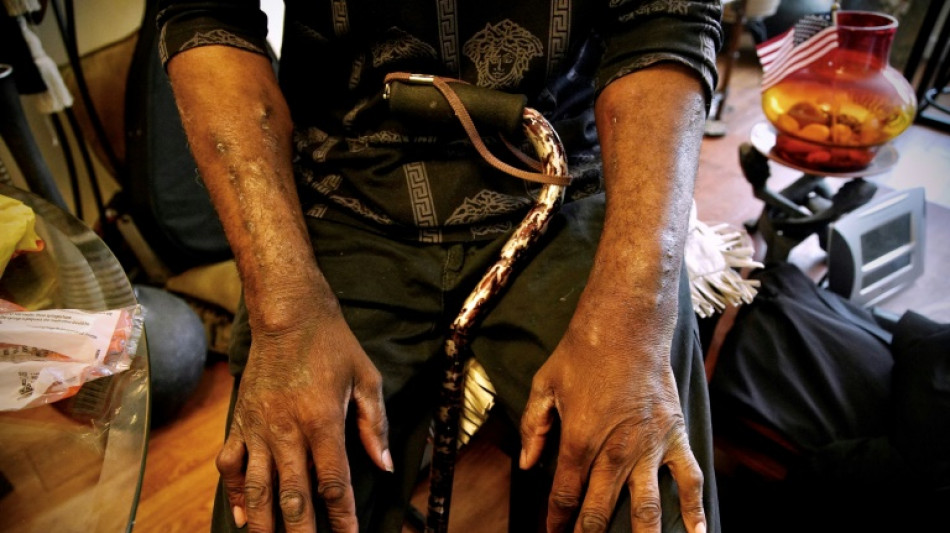
US overdose deaths shot up for Black, Native people during pandemic / Photo: © AFP/File

US overdose deaths shot up for Black, Native people during pandemic

Overdose deaths increased 44 percent for Black people and 39 percent for American Indians in 2020 compared to 2019, as the Covid-19 pandemic disrupted access to care and exacerbated racial inequality, an official report showed Tuesday.

Text size:

"Racism, a root cause of health disparities, continues to be a serious public health threat that directly affects the well-being of millions of Americans," US Centers for Disease Control and Prevention (CDC) acting principal deputy director Debra Houry said in a briefing.

"The disproportionate increase in overdose death rates among Black and American Indian/Alaskan Native people may partly be due to health inequities, like unequal access to substance use treatment and treatment biases."

Recent increases in deaths were largely driven by illegally manufactured fentanyl and fentanyl analogs (IMFs), according to the report from the CDC.

Before the pandemic, the overdose death rate was similar for Black, Native and white people, at 27, 26 and 25 per 100,000 people in 2019.

But that changed dramatically in 2020, when the respective figures were 39, 36 and 31 per 100,000 people.

Though the increase among white people was not as great as for Black people and American Indians, the new rate is still a historic high.

Among key findings, the overdose death rate among Black males 65 years and older was nearly seven times that of their white counterparts.

Black people 15-24 years old experienced the largest rate increase, 86 percent, compared to changes seen in other groups.

"There was a substantially lower percentage of people in racial and ethnic minority groups showing evidence of ever receiving treatment for substance use, compared to white people," CDC health scientist Mbabazi Kariisa said during the briefing.

In fact, most people who died by overdose had no evidence of getting prior substance use treatment before their death.

Areas with a wider income gap between rich and poor had the highest death rates.

Being impoverished "can lead to lack of stable housing, reliable transportation and health insurance, making it even more difficult for people to access treatment, and other support services," said Kariisa.

In terms of recommendations, Houry said it was vital to raise awareness about the lethality of the illicit drug supply, particularly fentanyl -- and encouraging the public to carry the life-saving treatment Naloxone.

Improving access to treatment and offering structural support, such as transport assistance and child care, can improve care access.

"Combining culturally appropriate traditional practices, spirituality and religion with evidence based substance use disorder treatment also helps raise awareness and reduce stigma," she said.

"While we have made so much progress in treating substance use disorders as chronic conditions, rather than moral failings, there is still so much more work to do, including making sure that all people who need these services can get them," Houry concluded.

M.McCoy--TFWP