The Fort Worth Press - Patients regain much weight after stopping new obesity drug: study

USD -
AED 3.672965
AFN 65.999823
ALL 81.973818
AMD 378.00985
ANG 1.79008
AOA 916.511164
ARS 1442.469496
AUD 1.434278
AWG 1.80125
AZN 1.699162
BAM 1.658807
BBD 2.01469
BDT 122.336816
BGN 1.67937
BHD 0.376973
BIF 2964.288592
BMD 1
BND 1.274003
BOB 6.911584
BRL 5.251601
BSD 1.000305
BTN 90.399817
BWP 13.243033
BYN 2.865297
BYR 19600
BZD 2.011721
CAD 1.367115
CDF 2224.999817
CHF 0.776805
CLF 0.021856
CLP 863.009886
CNY 6.94215
CNH 6.934675
COP 3676.17
CRC 495.911928
CUC 1
CUP 26.5
CVE 93.521
CZK 20.552402
DJF 177.719721
DKK 6.326605
DOP 63.127629
DZD 129.973054
EGP 46.981498
ERN 15
ETB 155.859732
EUR 0.84726
FJD 2.207598
FKP 0.732184
GBP 0.737655
GEL 2.689985
GGP 0.732184
GHS 10.98271
GIP 0.732184
GMD 73.502091
GNF 8779.176279
GTQ 7.672344
GYD 209.27195
HKD 7.813565
HNL 26.422344
HRK 6.385297
HTG 131.225404
HUF 321.370501
IDR 16868
ILS 3.119945
IMP 0.732184
INR 90.26125
IQD 1310.388112
IRR 42125.000158
ISK 122.679683
JEP 0.732184
JMD 156.449315
JOD 0.708986
JPY 156.790501
KES 129.04009
KGS 87.450416
KHR 4037.199913
KMF 416.999986
KPW 900.030004
KRW 1464.645025
KWD 0.30738
KYD 0.833598
KZT 493.342041
LAK 21499.694667
LBP 89579.400015
LKR 309.548446
LRD 186.059136
LSL 16.159927
LTL 2.95274
LVL 0.60489
LYD 6.336511
MAD 9.181029
MDL 16.999495
MGA 4425.634414
MKD 52.243296
MMK 2099.783213
MNT 3569.156954
MOP 8.049755
MRU 39.901106
MUR 46.040016
MVR 15.45987
MWK 1734.461935
MXN 17.38677
MYR 3.94699
MZN 63.759665
NAD 16.159927
NGN 1368.070025
NIO 36.809608
NOK 9.75406
NPR 144.639707
NZD 1.670341
OMR 0.384513
PAB 1.000314
PEN 3.362397
PGK 4.348453
PHP 58.765016
PKR 280.076588
PLN 3.57705
PYG 6605.373863
QAR 3.645678
RON 4.314401
RSD 99.47298
RUB 76.750352
RWF 1459.984648
SAR 3.750122
SBD 8.064647
SCR 13.712043
SDG 601.500193
SEK 9.01919
SGD 1.273205
SHP 0.750259
SLE 24.549692
SLL 20969.499267
SOS 570.633736
SRD 37.869854
STD 20697.981008
STN 20.779617
SVC 8.752036
SYP 11059.574895
SZL 16.152192
THB 31.761025
TJS 9.362532
TMT 3.505
TND 2.89846
TOP 2.40776
TRY 43.539165
TTD 6.773307
TWD 31.651501
TZS 2585.000268
UAH 43.163845
UGX 3570.701588
UYU 38.599199
UZS 12269.30384
VES 377.98435
VND 25970
VUV 119.687673
WST 2.726344
XAF 556.374339
XAG 0.01318
XAU 0.000206
XCD 2.70255
XCG 1.802745
XDR 0.691101
XOF 556.348385
XPF 101.150088
YER 238.324994
ZAR 16.1985
ZMK 9001.195771
ZMW 18.580528
ZWL 321.999592
  • RBGPF

    0.1000

    82.5

    +0.12%

  • RYCEF

    -0.0600

    16.62

    -0.36%

  • AZN

    0.2100

    187.66

    +0.11%

  • BTI

    0.4600

    62.09

    +0.74%

  • GSK

    2.1900

    59.42

    +3.69%

  • CMSC

    -0.0100

    23.51

    -0.04%

  • RIO

    -4.5200

    91.96

    -4.92%

  • VOD

    -1.0650

    14.645

    -7.27%

  • NGG

    -0.8150

    86.975

    -0.94%

  • RELX

    0.4100

    30.19

    +1.36%

  • SCS

    0.0200

    16.14

    +0.12%

  • BP

    -0.9850

    38.215

    -2.58%

  • BCC

    -1.5500

    88.68

    -1.75%

  • JRI

    -0.0650

    13.085

    -0.5%

  • CMSD

    -0.0200

    23.85

    -0.08%

  • BCE

    -0.8000

    25.54

    -3.13%

Patients regain much weight after stopping new obesity drug: study
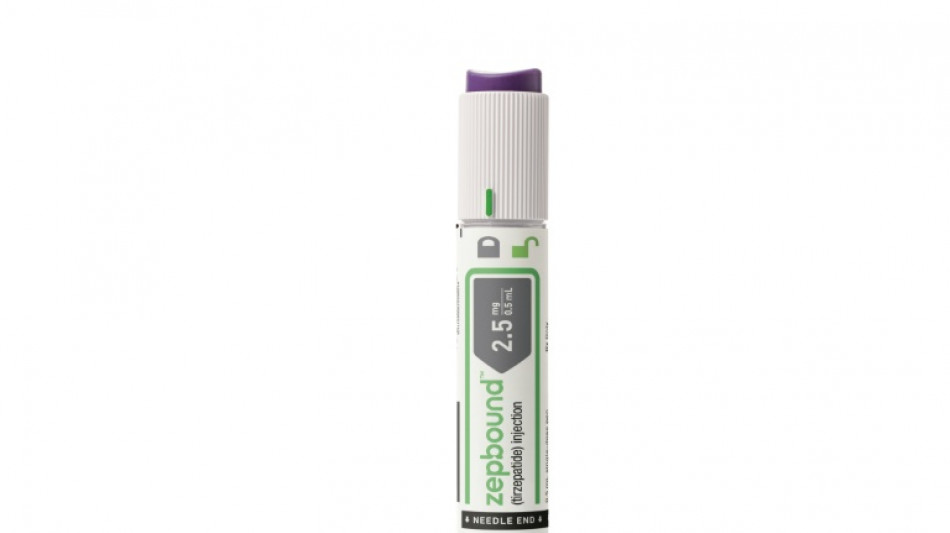
Patients regain much weight after stopping new obesity drug: study / Photo: © Eli Lilly/AFP/File

Patients regain much weight after stopping new obesity drug: study

A new generation of obesity drugs often delivers dramatic weight loss, but many patients wonder what happens when they stop treatment.

Text size:

One study published Monday in the Journal of the American Medical Association provides an answer: much of the weight comes back, signaling patients may be locked into long term dependence on the drugs.

The research was based on weekly injections of tirzepatide, the compound in Eli Lilly's new weight loss drug Zepbound that was approved by the United States last month.

After 36 weeks, 670 adults achieved a notable mean weight loss of 20.9 percent.

The group was then split into two, with half continuing on Zepbound, and the other half given a placebo.

At 88 weeks, those on the placebo regained almost half of the weight they had lost, ending up 9.9 percent lower than their baseline.

Those on Zepbound continued to lose weight, ending 25.3 percent lower than where they had started.

The trial patients were mostly women and had a mean age of 48, with a mean weight at the outset was 107.3 kilograms (236.6 pounds).

All participants were encouraged to consume 500 calories less each day than they burnt and take at least 150 minutes of exercise per week.

Common side effects were gastrointestinal issues including nausea, diarrhea, constipation and vomiting, said the study.

- Growing evidence -

Study authors, led by Louis Aronne at Weill Cornell Medicine, New York, said the results "emphasize the need to continue pharmacotherapy to prevent weight regain and ensure the maintenance of weight reduction."

They added the latest research adds to four previous trials that showed "medications, including potent antiobesity medications such as semaglutide, have demonstrated that weight is substantially regained" after stopping treatment.

Semaglutide is the active ingredient in Novo Nordisk's Ozempic and Wegovy, which, like Zepbound, are examples of so-called "GLP-1 agonists" that work by mimicking the function of a hormone that secretes insulin, slows down the emptying of the stomach, and suppresses appetite.

Zepbound also contains another molecule that acts like the gut hormone GIP.

In response to the study, Lilly's Jeff Emmick said in a statement that "patients, providers and the public do not always understand obesity is a chronic disease that often requires ongoing treatment, which can mean that treatment is stopped once weight goals are met."

GLP-1 agonists have been found to cut the risk of cardiovascular disease associated with obesity -- but they also heighten the risk of gastrointestinal problems, studies show.

Though the rates of serious issues such as stomach paralysis are low, some experts fear that using the drugs for years or decades could change the benefit-to-risk calculus.

Cost can also be a disincentive. Zepbound costs $1,059.87 per month, and insurance companies often do not cover weight loss medications. Medicare, state subsidized insurance for the elderly, is barred from covering it.

J.P.Cortez--TFWP