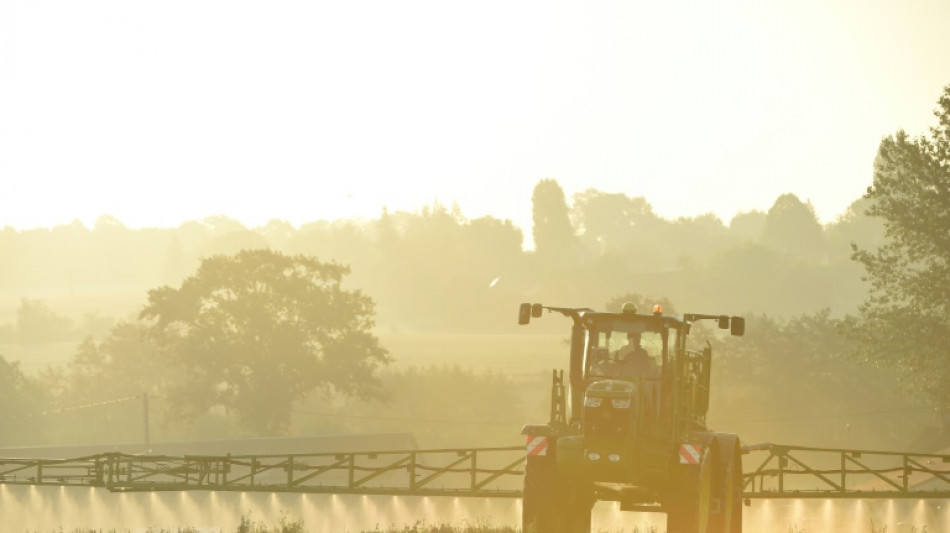
EU pushes 10-year renewal for controversial herbicide / Photo: © AFP/File

The European Commission proposed to renew the use of the controversial and widely used herbicide glyphosate in the EU for 10 years on Wednesday, after a report saw no reason to block it.
Glyphosate is one of the most widely used weedkillers in the world but critics point to evidence that says it may cause cancer and constitutes a risk to biodiversity.
The European Union's 27 member states will discuss the proposal on Friday. It has to be approved by a weighted majority of countries during a meeting on October 13.
The proposal comes after the European Food Safety Authority (EFSA) in July said it had not found "any critical areas of concern" preventing glyphosate from being reauthorised, sparking a backlash from environmental groups.
Environmental activists said there was scientific evidence that glyphosate may cause cancer, poison aquatic life and can be fatal to key pollinators like bees.
The previous authorisation expired in December 2022 but was extended by a year pending a scientific study of the herbicide.
The proposal would authorise its usage until December 15, 2033, double the previous five-year authorisation but less than the 15-year period initially planned.
Authorisation can be withdrawn if any development warrants a change in position.
Environmental defenders accused the EU of putting people's health at risk.
"Industry interests clearly prevail over health and the environment," said Angeliki Lysimachou, head of science and policy at ecologist group PAN Europe.
European Parliament members also hit out at the plans.
"By destroying biodiversity, glyphosate endangers our long-term food security. This proposal is irresponsible," said Green MEP Benoit Biteau.
But the European Chemicals Agency last year said scientific evidence did not justify classifying glyphosate as a carcinogen.
- Mitigating risk -
The commission's proposal says the use of glyphosate must be accompanied by "risk mitigation measures".
For example, there must be a "non-sprayed buffer strip" of five to 10 metres (16 to 33 feet) in a field and equipment used to drastically reduce "spray drift".
The EFSA agency's report noted there were gaps in the data in some areas, and "identified a high long-term risk to mammals" in 12 of 23 of the proposed uses of glyphosate.
To address this, the commission urged member states, in charge of issuing permits at a national level and setting conditions of use, to "pay particular attention" to effects on the environment.
The countries must "pay attention" to the impact on small mammals and consider whether it is "necessary" to impose mitigating measures like limiting the timing of use or maximum dose rate.
The text also now bans glyphosate's use for desiccation -- drying a crop before harvest.
Pascal Canfin, the head of the parliament's environment committee, criticised the lack of restrictions on use in the "unacceptable" proposal that was "not in accordance with the EFSA's conclusions".
Luxembourg had prohibited glyphosate in 2020 before the courts forced it to lift the ban earlier this year.
The proposal comes as the parliament and member states are bogged down in negotiations for a law that imposes binding pesticide reduction targets in the EU.
H.Carroll--TFWP