The Fort Worth Press - Lab-grown human 'embryos' offer new research hope

USD -
AED 3.67315
AFN 63.493234
ALL 82.893849
AMD 377.199436
ANG 1.790083
AOA 917.000252
ARS 1376.779803
AUD 1.436255
AWG 1.80225
AZN 1.696542
BAM 1.686202
BBD 2.015182
BDT 122.789623
BGN 1.709309
BHD 0.377512
BIF 2970
BMD 1
BND 1.279061
BOB 6.913944
BRL 5.223696
BSD 1.000522
BTN 94.115213
BWP 13.635619
BYN 2.965482
BYR 19600
BZD 2.012485
CAD 1.380855
CDF 2279.999898
CHF 0.791075
CLF 0.023239
CLP 917.594531
CNY 6.901497
CNH 6.90132
COP 3702.49
CRC 465.236584
CUC 1
CUP 26.5
CVE 95.624984
CZK 21.130199
DJF 177.720054
DKK 6.45369
DOP 60.375008
DZD 132.589624
EGP 52.529501
ERN 15
ETB 157.299098
EUR 0.863701
FJD 2.245988
FKP 0.747226
GBP 0.74735
GEL 2.694981
GGP 0.747226
GHS 10.950161
GIP 0.747226
GMD 73.498543
GNF 8780.000028
GTQ 7.657854
GYD 209.347342
HKD 7.81702
HNL 26.519668
HRK 6.508302
HTG 131.207187
HUF 333.793973
IDR 16846.35
ILS 3.11585
IMP 0.747226
INR 94.243603
IQD 1310
IRR 1313149.999755
ISK 123.67991
JEP 0.747226
JMD 157.605908
JOD 0.70903
JPY 159.263503
KES 129.749591
KGS 87.449199
KHR 4012.999815
KMF 427.000536
KPW 900.014346
KRW 1500.779793
KWD 0.30652
KYD 0.833829
KZT 482.773486
LAK 21585.000114
LBP 89550.000464
LKR 314.680461
LRD 183.649834
LSL 16.94008
LTL 2.95274
LVL 0.60489
LYD 6.374992
MAD 9.327504
MDL 17.495667
MGA 4170.000275
MKD 53.241151
MMK 2100.167588
MNT 3569.46809
MOP 8.057787
MRU 40.129923
MUR 46.469729
MVR 15.449832
MWK 1736.999516
MXN 17.730698
MYR 3.964499
MZN 63.952774
NAD 16.929973
NGN 1386.309982
NIO 36.720102
NOK 9.68736
NPR 150.586937
NZD 1.71787
OMR 0.384499
PAB 1.000578
PEN 3.460503
PGK 4.309501
PHP 60.0285
PKR 279.050244
PLN 3.69196
PYG 6510.184287
QAR 3.644048
RON 4.400402
RSD 101.435012
RUB 80.994805
RWF 1460
SAR 3.751581
SBD 8.042037
SCR 14.729951
SDG 601.000356
SEK 9.334045
SGD 1.279855
SHP 0.750259
SLE 24.549765
SLL 20969.510825
SOS 571.000338
SRD 37.340498
STD 20697.981008
STN 21.4
SVC 8.755292
SYP 110.948257
SZL 16.897857
THB 32.638498
TJS 9.58109
TMT 3.5
TND 2.9375
TOP 2.40776
TRY 44.358965
TTD 6.803525
TWD 31.907949
TZS 2570.05902
UAH 43.92958
UGX 3702.186911
UYU 40.504889
UZS 12199.999554
VES 462.09036
VND 26350
VUV 119.508072
WST 2.738201
XAF 565.560619
XAG 0.013803
XAU 0.00022
XCD 2.70255
XCG 1.803352
XDR 0.702492
XOF 563.498164
XPF 103.449958
YER 238.649993
ZAR 16.916097
ZMK 9001.198562
ZMW 18.736367
ZWL 321.999592
  • RBGPF

    -13.5000

    69

    -19.57%

  • RYCEF

    0.3000

    15.9

    +1.89%

  • CMSC

    0.0400

    22.91

    +0.17%

  • VOD

    0.0600

    14.72

    +0.41%

  • RELX

    0.0100

    32.47

    +0.03%

  • CMSD

    0.0500

    22.68

    +0.22%

  • NGG

    1.9600

    84.29

    +2.33%

  • BCE

    -0.3400

    25.49

    -1.33%

  • RIO

    0.7700

    87.54

    +0.88%

  • JRI

    0.2400

    12.1

    +1.98%

  • BCC

    1.0800

    74.65

    +1.45%

  • GSK

    1.7500

    54.7

    +3.2%

  • AZN

    1.3600

    187.14

    +0.73%

  • BTI

    0.6900

    58.45

    +1.18%

  • BP

    0.6200

    45.41

    +1.37%

Lab-grown human 'embryos' offer new research hope
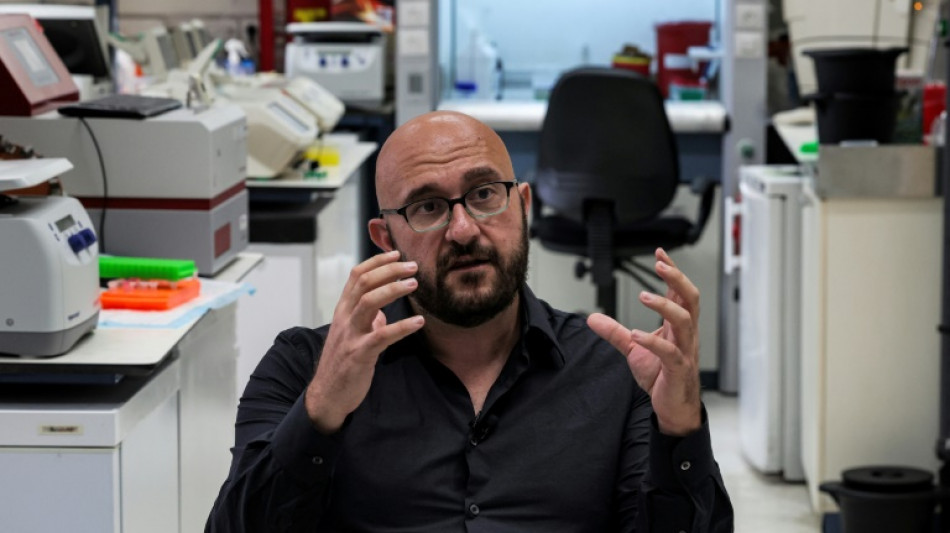
Lab-grown human 'embryos' offer new research hope / Photo: © AFP

Lab-grown human 'embryos' offer new research hope

Scientists have developed human embryo-like structures without using sperm, an egg or fertilisation, offering hope for research on miscarriage and birth defects but also raising fresh ethical concerns.

Text size:

Earlier this year, several labs around the world released pre-print studies describing their development of early human embryo-like structures.

That work has not yet been peer-reviewed, but now one group's research has been published in the journal Nature, describing how they coaxed human embryonic stem cells to self-organise into a model resembling an early embryo.

The research was welcomed by some scientists as an "impressive" advance that could help unlock secrets about the precarious early stages of pregnancies, when failure is most common.

The work will however renew debate on the need for clearer ethical rules on development of lab-grown human embryo models.

The researchers, led by Palestinian scientist Jacob Hanna at the Weizmann Institute in Israel, harnesses the power of embryonic stem cells, which can become any kind of cell.

They produced embryo models up to 14 days old, which is the legal limit for such research in many countries, and the point at which organs like the brain begin to develop.

The researchers say their work differs from those of other teams because it uses chemically rather than genetically modified embryonic stem cells and produces models more like real human embryos, complete with yolk sac and amniotic cavity.

These similarities could make the models more useful for research into conditions like miscarriage, birth defects and infertility, said James Briscoe of Britain's Francis Crick Institute.

The model "seems to produce all of the different types of cells that form tissues at this early stage of development," said Briscoe, principal group leader and associate research director at the biomedical research charity.

The research "is a step towards opening a window on the period of human development where many pregnancies fail and which has been really difficult to study up until now."

Both the researchers and scientists not involved in the work emphasised that the models should not be considered human embryos.

The structure "highly resembles, but (is) not identical, to the in utero situation", the research notes.

The success rate on generating the models was also low, with the stem cells organising correctly just a small percentage of the time.

Still, the research and other recent work shows "that models of human embryos are getting more sophisticated and closer to events that occur during normal development," said Darius Widera, an expert in stem cell biology at the UK's University of Reading.

The work highlights "that a robust regulatory framework is more needed than ever before", he added.

In Britain, Cambridge University has begun developing the first governance framework for stem cell-based human embryo models.

The Weizmann Institute research does not involve transferring the models into a human or animal womb, or developing the structures beyond 14 days.

M.Delgado--TFWP