Covid pandemic 'nowhere near over': WHO

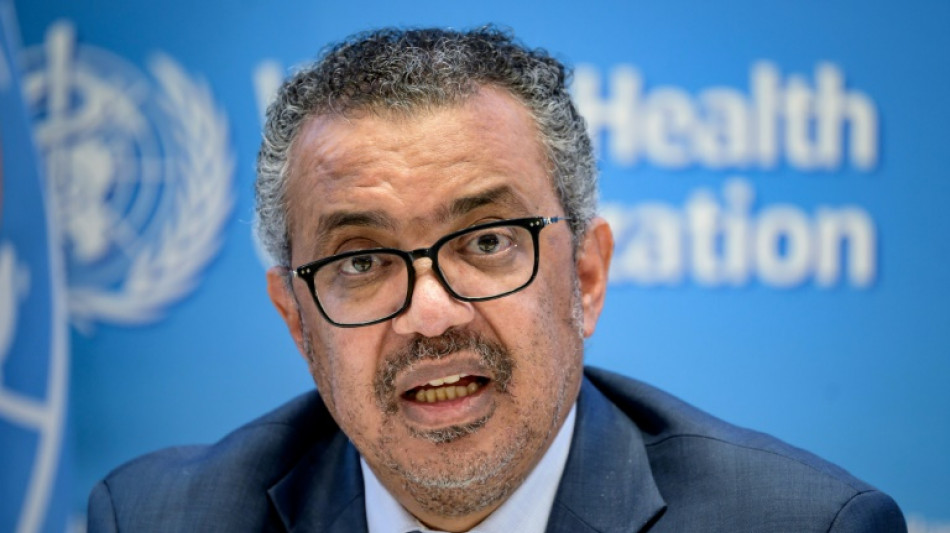
The Covid-19 pandemic is far from over, the World Health Organization chief said Tuesday, cautioning against a narrative that the fast-spreading Omicron variant is risk-free.
"This pandemic is nowhere near over," Tedros Adhanom Ghebreyesus told reporters from the WHO's headquarters in Geneva.
The UN health agency chief warned against dismissing as mild the coronavirus variant Omicron, which has spread like wildfire around the globe since it was first detected in southern Africa in November.
The Omicron variant of Covid-19 is much more contagious than previous strains but seems to cause less serious disease.
That has triggered a debate on whether the virus is on the verge of passing from the pandemic phase to becoming an endemic disease that humanity can live with -- with the implication that the danger will have passed.
But the WHO has warned that the sheer numbers of people infected will mean many people are still falling seriously ill and dying.
- Misleading narrative -
"An exponential rise in cases, regardless of the severity of the individual variants, leads to inevitable increase in hospitalisations and deaths," WHO emergencies director Michael Ryan told Tuesday's press conference.
Tedros agreed.
"Omicron may be less severe, on average, but the narrative that it is a mild disease is misleading," he said.
"Make no mistake: Omicron is causing hospitalisations and deaths, and even the less severe cases are inundating health facilities."
He said there were indications that the Omicron-fuelled surge of Covid cases may have peaked in some countries.
This, he said, "gives hope that the worst of this latest wave is done with, but no country is out of the woods yet."
Tedros said there was an urgent need to remove the pressure building on health systems, especially in countries that still have low vaccination coverage.
"Now is not the time to give up and wave the white flag," he said.
"We can still significantly reduce the impact of the current wave by sharing and using health tools effectively, and implementing public health and social measures that we know work."
- 45,000 weekly Covid deaths -
Maria Van Kerkhove, the WHO's technical lead on Covid, agreed, pointing out that some 45,000 deaths from the disease were still being registered worldwide every week.
"That shouldn't be happening, because we have tools at hand," she told reporters.
Data indicate that existing Covid vaccines are less effective in protecting against Omicron transmission than against previous strains.
Some pharmaceutical companies are in the process of making vaccines that better target the variant, but WHO said that was not necessarily the way out of the crisis.
While the idea of variant-specific vaccines might be enticing, WHO chief scientist Soumya Swaminathan cautioned that since they take months to develop, "the danger is that you will be always trying to play catch-up with the next variant."
A better approach, therefore, she said, might be to try to develop so-called "multivalent vaccines or, ideally, to have a pan-coronavirus vaccine."
In the meantime, WHO stressed that the existing vaccines still do a good job of protecting against developing severe Covid disease, reiterating the importance of ensuring broader, more equitable access to the jabs.
"Vaccines may be less effective at preventing infection and transmission of Omicron than they were for previous variants, but they still are exceptionally good at preventing serious disease and death," Tedros said.
Health experts warn that allowing Covid to spread unabated in some places dramatically increases the chance of new, more dangerous variants emerging.
"With the incredible growth of Omicron globally, new variants are likely to emerge," Tedros cautioned.
J.P.Cortez--TFWP